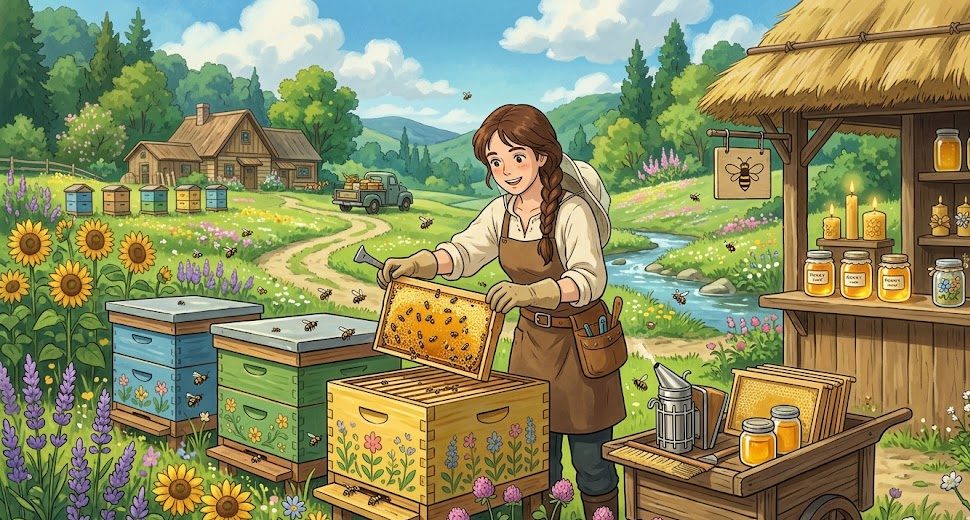
In 2026, the global demand for pure, raw, and sustainably sourced honey has reached an all-time high. Consumers are more educated than ever, moving away from mass-produced, sugar-syrup-heavy “honey” in favor of traceable, locally harvested products. For the ambitious farmer or side-hustler, beekeeping has evolved from a simple hobby into a legitimate, high-margin agricultural enterprise.
However, moving from “having a few hives” to “running a profitable business” requires a strategic pivot. It is no longer just about keeping bees alive; it is about managing a biological asset, optimizing production cycles, and building a brand that commands a premium price.
The New Economics of Beekeeping
The traditional beekeeping model focused solely on honey production. Today’s successful apiary is a multi-revenue powerhouse. To build a robust business in 2026, you must view your colonies as a diversified portfolio:
- Honey (The Core): Raw, unfiltered, and varietal honey remains the primary product. The secret to 2026 profitability is niche branding. Instead of generic “wildflower honey,” focus on specific sources like “Acacia Bloom,” “Forest Honey,” or “Monofloral Sunflower.” These specific profiles allow you to charge 3x to 5x the price of commodity honey.
- Pollination Services: Large-scale vegetable and fruit farmers are desperate for reliable pollination. Renting your hives to nearby orchards or berry farms during blooming season can generate significant passive income without you having to touch the honey production side of things.
- High-Value Byproducts: Don’t let the “waste” go to market. Beeswax (used for high-end candles, cosmetics, and food wraps), propolis (a powerful natural health supplement), and royal jelly are all in high demand. These products often have higher profit margins than honey itself because they require less processing and have a longer shelf life.
Leveraging Technology for Hive Management
The 2026 beekeeper has a distinct advantage over their predecessors: Data.
- IoT Hive Monitoring: Sensors that track hive weight, temperature, and acoustic signatures can save your business. By monitoring the acoustic frequency of the hive, AI-powered apps can now alert you before a swarm occurs. Swarming is essentially losing half your “workforce” and inventory; preventing it is direct money in your pocket.
- Predictive Bloom Tracking: Use satellite data and local climate apps to track exactly when major nectar flows are beginning in your region. Moving your hives to the right location at the right time ensures you maximize the honey-gathering window.
Building Your Brand: From Producer to Provider
In 2026, your label is as important as the honey inside the jar. The “small-scale, local” narrative is a powerful marketing tool.
- Traceability is Key: Use QR codes on your labels. A customer who scans it should see a map of where the hives are located, the date of harvest, and perhaps even a short video of you working the bees. This builds immense trust and justifies a premium price.
- Direct-to-Consumer (D2C) Sales: Skip the middlemen. Sell through your own website, your social media channels, or local high-end farmer’s markets. Building an email list of customers who buy your seasonal harvests allows you to sell out your entire inventory before the honey even hits the jar.
- The Subscription Model: Honey is a staple. Why not create a “Honey Club” subscription? Your customers pay a flat fee per year to receive three shipments of seasonal honey. This guarantees you cash flow in the “off-season” and turns occasional buyers into loyal brand advocates.
Scaling Responsibly: The “Hub and Spoke” Model
Scaling beekeeping is not as simple as adding more hives. The risk of disease (like Varroa mites) increases exponentially with hive density.
The smartest way to scale is the Hub and Spoke model:
- Maintain a “Hub” (your central apiary) where you do all your processing, storage, and queen rearing.
- Place “Spokes” (satellite apiary sites) in different geographical locations.
Why? Because different regions have different blooming cycles. While one location is in a “dearth” (lack of flowers), another might be in a peak “nectar flow.” By distributing your hives, you smooth out your production curve and ensure a more consistent annual harvest.
The Reality Check: Risk and Resilience
Beekeeping is a volatile business. Disease, climate change, and pesticides are constant threats. To be successful in 2026, your business plan must include:
- Diversified Genetics: Don’t rely on one type of bee. Use survivor-stock queens that have proven resistance to local diseases.
- The “Insurance” Colony: Always keep 10–20% more hives than you need to reach your profit targets. This buffer accounts for winter losses, which are an inevitable part of the business.
- Education as Revenue: Because you have learned to manage bees profitably, your knowledge is a product. Offering workshops, beginner kits, or mentoring to new beekeepers is a fantastic way to generate income during the winter months when the bees are dormant.
Starting Your Journey in 2026
If you are just starting, don’t buy 50 hives. Start with 3 to 5. Master the art of colony health, learn the specific nectar flows of your local region, and build your brand identity.
The successful beekeeper of 2026 is a blend of an ecologist and an entrepreneur. You are protecting a vital species, and in exchange, they are providing a high-value product that people are willing to pay for. It is one of the few businesses left where you can build a sustainable, scalable income while actively participating in the restoration of local biodiversity.
The bees are working; make sure you have the systems in place to capture the value they create.