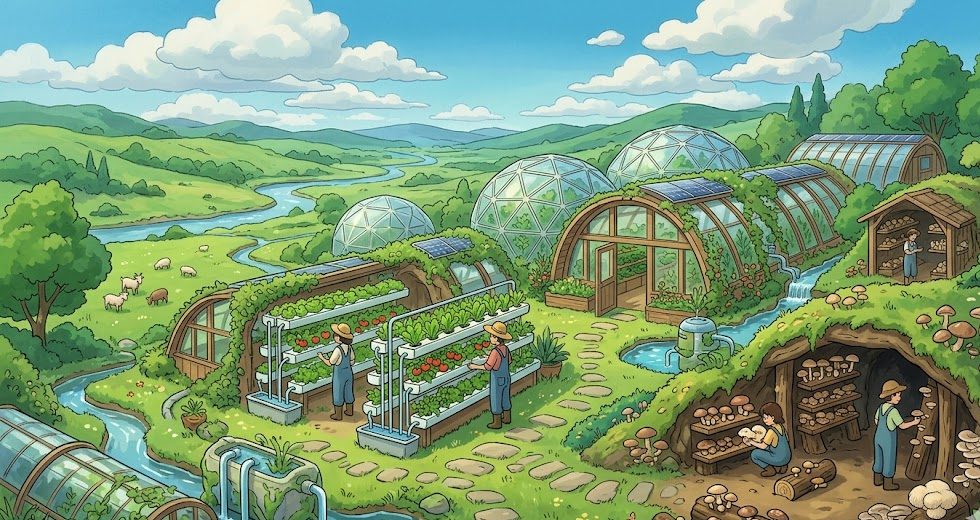
The global agricultural landscape is standing at a critical crossroads where traditional industrial methods are facing the limits of chemical dependency and soil depletion. As we move toward a more sustainable future, a new movement is emerging—one that combines AgriTech & Innovation with deep-rooted biological wisdom. For the modern farmer and the digital entrepreneur, the goal is no longer just about volume; it is about “Smart Farming” that ensures long-term profitability and ecological health.
Phase 1: High-Value Cultivation through Hydroponics
To increase revenue and maximize profits, many modern cultivators are turning toward specialized “Smart Crop Farming”. Hydroponics is a soil-less method that allows for year-round production of high-value crops in controlled environments.
- Resource Efficiency: This method allows for the consistent quality and yield of “Exotic Vegetable Farming” regardless of external weather conditions.
- Water Conservation: Utilizing automated irrigation ensures that “Water Saving Farming” becomes a reality, using significantly less water than traditional field farming.
- Precision Management: Sensors and data analytics can monitor moisture levels and nutrient requirements in real-time, reducing waste and maximizing efficiency.
- Space Optimization: Hydroponics is a key component of “Micro Farming,” allowing for intense productivity by utilizing vertical space and high-density planting techniques.
Phase 2: The Profitable World of Mushroom Farming
Mushroom cultivation is a perfect example of a “Sustainable Farming” venture that requires minimal land and resources. It offers a reliable path to wealth generation within the agricultural niche.
- Low Input, High Output: Mushroom farming requires minimal land and can be a highly profitable business model that fits into almost any existing farm setup.
- Sustainable Integration: This practice is a cornerstone of modern eco-farming, focusing on specialized techniques for high market returns.
- Year-Round Yield: Like hydroponics, mushrooms can be grown in controlled environments, providing a steady income stream regardless of the season.
- Waste Utilization: Mushroom farming contributes to a circular economy by often utilizing organic waste materials as a growing medium.
Phase 3: Building a Farming Innovation Hub
For the digital entrepreneur, farming is no longer just about the field; it is about the “Farming Innovation Hub”. This involves creating a strategic “Digital Wealth Blueprint” around agricultural knowledge.
- AgriTech and AI: Utilizing “AI and Smart Technology” allows for precision agriculture where sensors monitor plant requirements in real-time.
- Smart Planning: Before planting, a successful hub requires a strategic blueprint that coordinates modern tech with localized environmental data.
- Diversification: Transitioning to “High-Value Cash Crops” like “Herbal & Medicinal Plants” alongside hydroponics and mushrooms increases overall financial stability.
- Passive Income: Digital entrepreneurs can leverage these innovations to create “Passive Income” through automated farm management systems and earning applications.
Phase 4: Healing the Soil and Natural Protection
Even when focusing on hydroponics and mushrooms, the principles of “Sustainable Farming” and natural restoration remain vital for any integrated outdoor sections.
- Natural Soil Healing: Instead of relying on synthetic inputs, the focus is on natural restoration and soil science to enhance microbial health and long-term productivity.
- Climate & Soil Management: Implementing advanced management strategies allows farmers to prepare for and adapt to unpredictable weather patterns, minimizing risk.
- Natural Protection: Protecting high-value investments involves creating a balanced environment where pests are managed by biological competitors rather than harsh chemicals.
- Weed Control: Utilizing mulching, cover cropping, and practical manual techniques keeps the production area protected and healthy.
Phase 5: The Integrated Circular Economy
A truly modern and sustainable farm is a “Hub” of various activities that support one another through a circular economy.
- Livestock & Dairy Hub: Integrating “Poultry Farming” or dairy animals provides a natural source of fertilizer for soil restoration, reducing the need for synthetic inputs.
- Aqua Integration: “Fish & Aqua Farming” can be integrated into sustainable loops to provide nutrient-rich water for crops, creating a symbiotic growth relationship.
- Animal Health: Maintaining high standards of animal care ensures that livestock side-businesses contribute effectively to the overall “Sustainable Business” model.
Conclusion: The Green Revolution 2.0
The future of farming lies in the balance between the precision of AgriTech & Innovation and the foundational principles of soil and water conservation. By mastering these “Smart Farming” techniques, including hydroponics and mushroom cultivation, we can ensure that our harvests are not only bountiful today but sustainable for generations to come.
Whether you are an established cultivator or a digital entrepreneur building an “Innovation Hub,” the digital revolution offers the tools needed for success in the agricultural sector. The era of smart, sustainable, and high-yield farming has arrived.