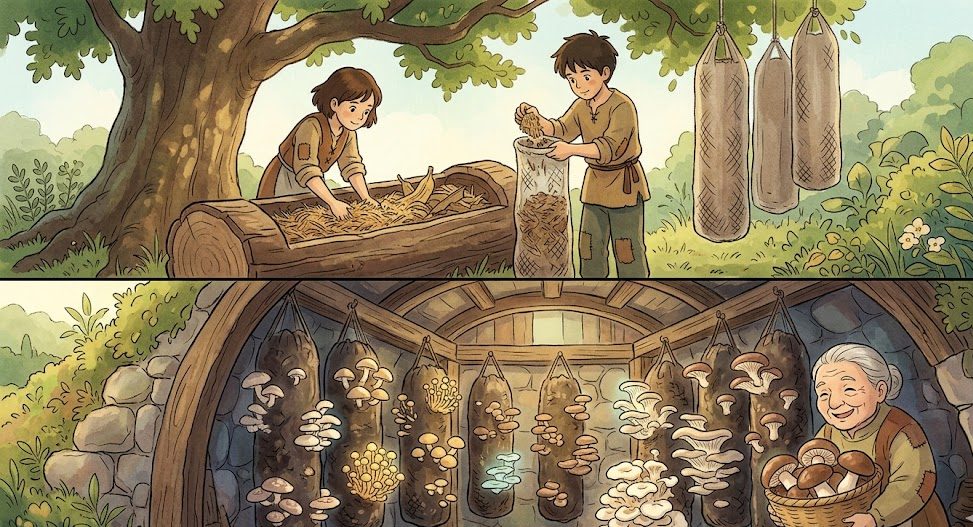
In the world of agriculture, few crops offer the rapid turnaround and high profit margins of mushrooms. Often referred to as the “garbage recyclers of nature,” mushrooms have the unique ability to transform agricultural waste—such as wheat straw, rice husk, sawdust, and cotton waste—into a gourmet, high-value food product.
For farmers and entrepreneurs looking to diversify their income, mushroom cultivation represents one of the most efficient “waste-to-wealth” business models available. It requires minimal land, can be started with a low initial investment, and caters to a rapidly growing market for plant-based proteins and exotic ingredients.
The Business Case for Mushrooms
Why are mushrooms becoming the crop of choice for small-to-medium-scale entrepreneurs?
- Speed to Market: Unlike traditional crops that take months to mature, most mushroom varieties (like Oyster mushrooms) can be harvested just 30 to 45 days after spawning.
- Land Efficiency: Mushrooms are grown vertically on shelves or in bags. You can produce hundreds of kilograms of mushrooms in a space that would yield only a few kilograms of traditional vegetables.
- Low Input Costs: Your primary raw material is “waste.” By sourcing agricultural byproducts from local farms, you keep your production costs low while providing a disposal solution for other farmers.
- High Demand: With the rising trend of veganism and healthy eating, demand for varieties like Shiitake, Oyster, and Button mushrooms is surging in hotels, restaurants, and retail markets.
Selecting the Right Variety
Success in mushroom farming starts with choosing the variety that suits your climate and market:
- Oyster Mushrooms (Pleurotus): The beginner’s favorite. They are extremely hardy, grow on a wide variety of substrates (straw, sawdust, waste paper), and have a short growth cycle.
- Button Mushrooms (Agaricus bisporus): The most popular in retail. These require more controlled environments (specifically temperature and humidity) but command a consistent market price.
- Shiitake/Milky Mushrooms: These are high-value gourmet varieties. They often require specialized training and slightly longer incubation times but offer premium pricing for restaurant supply.
The Production Process: Turning Waste to Gold
The cultivation process is essentially a controlled bio-conversion. Here are the core stages:
1. Substrate Preparation (The Foundation)
You must prepare the agricultural waste to provide the right nutrients and eliminate competing molds. This is usually done through:
- Pasteurization/Sterilization: Using heat (hot water or steam) to kill off unwanted fungi and bacteria while retaining beneficial microbes.
- Conditioning: Ensuring the substrate has the correct moisture content (usually around 65-70%).
2. Spawning (Inoculation)
“Spawn” is essentially the mushroom equivalent of seeds. You mix the spawn into your prepared substrate and pack it into plastic bags or beds. This is a critical stage; it must be done in a hygienic environment to prevent contamination.
3. Incubation (The “Dark Phase”)
The bags are placed in a dark, warm, and humid room. During this phase, the mushroom mycelium (the white, thread-like growth) colonizes the entire substrate. This usually takes 2–3 weeks.
4. Fruiting (The Harvest)
Once the bag is fully colonized, you expose it to fresh air, light, and higher humidity. This “triggers” the mushroom to start pinning and forming fruit bodies. Within days, you will have a harvest-ready flush of mushrooms.
Scaling Your Profitability
To move from a hobbyist to a profitable business, you must focus on efficiency and consistency.
- Climate Control: As you scale, invest in basic climate control. Fans for fresh air exchange, humidifiers to keep moisture levels between 80–90%, and temperature controllers are essential to ensure you have mushrooms year-round, not just in the cool season.
- Vertical Integration: Don’t just sell fresh mushrooms. Mushrooms have a short shelf life. To maximize profits, invest in a simple dehydrator to sell dried mushrooms or create mushroom powder (a popular health supplement). These value-added products have a much longer shelf life and are easier to transport and store.
- Waste-to-Fertilizer: After you harvest your mushrooms, the “spent mushroom substrate” (SMS) is a highly fertile, decomposed organic material. You can sell this to local farmers as premium organic compost. You are literally getting paid for your waste twice.
Common Challenges and Solutions
- Contamination: The biggest enemy of mushroom farming is green mold. The solution is strictly hygienic practices—sanitize your tools, wear clean clothing, and keep your grow room clean.
- Market Fluctuations: Don’t rely on a single local market. Build relationships with hotels, high-end supermarkets, and health food stores. If you have a steady supply, you become a preferred vendor.
- Information Overload: Start small. Master the Oyster mushroom cycle first before attempting difficult varieties like Shiitake.
The Future of Circular Agriculture
The mushroom business is more than just farming; it is an exercise in circular economics. By converting agricultural waste that would otherwise be burned or dumped into a highly nutritious food source, you are participating in a truly sustainable model.
As the global food system faces pressure to become more resource-efficient, mushroom cultivation stands out as a beacon of what is possible when we work with nature rather than against it. Whether you are in a small shed or a large warehouse, the principles remain the same: clean conditions, high-quality spawn, and an eye for quality.
If you start with a commitment to quality and a plan for value-added processing, you will find that the “waste” in your community is actually a hidden gold mine, waiting to be unlocked.