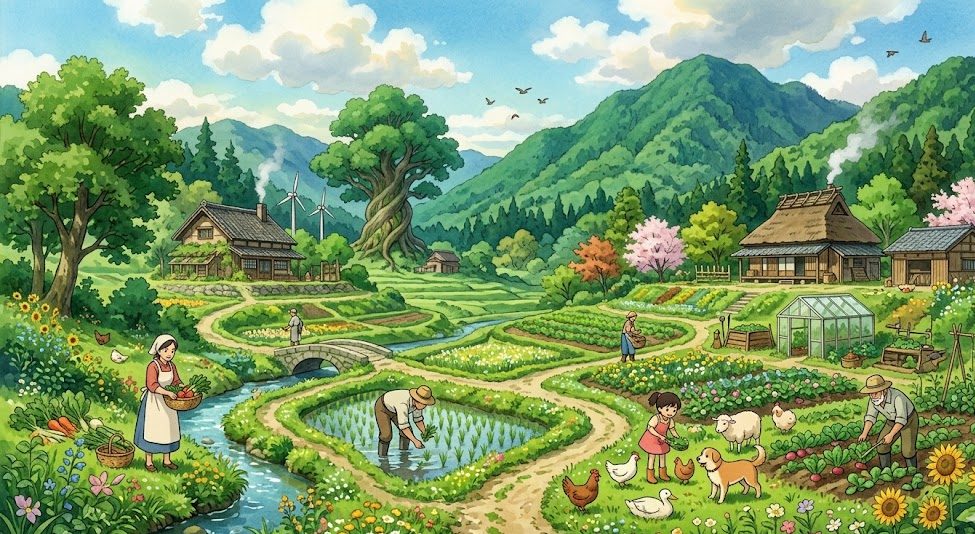
In an era where climate change, soil degradation, and food security are at the forefront of global concern, the way we produce our food has never been more critical. Sustainable farming—often referred to as regenerative or eco-friendly agriculture—is not just a trend; it is a fundamental shift in how we interact with the land. It is the practice of meeting today’s food needs without compromising the ability of future generations to meet their own.
This article explores the core principles, benefits, and practical techniques of sustainable farming, providing a roadmap for anyone looking to embrace more responsible agricultural practices.
1. The Core Philosophy: Working With Nature
At its heart, sustainable farming is about mimicking natural ecosystems. Industrial agriculture often relies on heavy chemical inputs and monocultures (growing one crop over vast areas), which can exhaust the soil and disrupt local biodiversity. Conversely, sustainable farming views the farm as a living, self-regulating system.
The goal is to maintain soil health, conserve water, minimize pollution, and ensure the farm remains profitable and socially responsible. It is a balancing act between economic viability and environmental stewardship.
2. Key Techniques for Sustainable Agriculture
To move toward a sustainable model, farmers can implement several proven strategies that restore the land rather than deplete it.
A. Crop Rotation and Diversification
Growing the same crop in the same soil year after year depletes specific nutrients and invites pests. Crop rotation—the practice of growing different types of crops in a sequence—breaks pest cycles and replenishes soil fertility naturally. For example, planting legumes (which fix nitrogen in the soil) followed by heavy feeders like corn helps maintain a nutrient balance without synthetic fertilizers.
B. Soil Health and Conservation Tillage
Healthy soil is the foundation of every farm. Sustainable farmers avoid aggressive plowing (tillage), which disrupts soil structure and leads to erosion. “No-till” or “reduced-tillage” methods keep the soil protected, increase organic matter, and improve water retention. Cover cropping—planting “off-season” crops like clover or rye—protects the soil from wind and water erosion while adding vital nutrients back into the dirt.
C. Integrated Pest Management (IPM)
Rather than spraying broad-spectrum pesticides, IPM focuses on long-term prevention. This involves:
- Biological Control: Introducing natural predators (like ladybugs to eat aphids).
- Habitat Creation: Planting borders of flowers that attract beneficial insects.
- Monitoring: Using traps and scouting to target only the specific areas affected by pests, rather than treating the entire farm.
D. Efficient Water Management
With water scarcity becoming a global issue, sustainable farmers use precision techniques. Drip irrigation, which delivers water directly to the root zone, significantly reduces evaporation and waste compared to traditional spray systems. Harvesting rainwater and using mulches to keep the soil cool also play a huge role in water conservation.
3. The Economic Benefits: Why Sustainability Pays
Many beginners fear that sustainable farming is less profitable, but the reality is often the opposite. While the transition period may require investment and learning, sustainable practices offer long-term financial security:
- Reduced Input Costs: By utilizing natural fertilizers (compost, manure) and natural pest management, farmers significantly decrease their reliance on expensive chemical inputs.
- Resilience Against Climate Change: Sustainable farms are generally more resilient. High organic matter in the soil acts like a sponge, helping crops survive droughts, while healthy soil structure handles heavy rainfall better, preventing costly runoff.
- Premium Market Access: Consumers are increasingly conscious of where their food comes from. Organic and sustainably labeled produce often commands a higher price in local markets, restaurants, and through direct-to-consumer subscription boxes.
4. Overcoming Challenges
Transitioning to sustainable farming is a journey that requires patience. Some common hurdles include:
- The Transition Gap: It can take 2–3 years for soil to fully recover from chemical dependency. During this time, yields may fluctuate.
- Knowledge Barrier: Shifting from a “chemical-first” mindset to a “biology-first” mindset requires ongoing research and learning.
- Labor Intensity: Some sustainable methods require more manual observation and care than industrial systems, which rely on automation and chemicals.
However, these challenges are mitigated by the growth of community support, government subsidies for green practices, and the increasing availability of “smart” agricultural tools that help track soil health and crop progress.
5. Taking the First Step
If you are looking to start or convert an existing plot, don’t try to change everything at once. Start small:
- Test your soil: Understand what your land actually needs.
- Start a small trial plot: Use one corner of your farm to test cover cropping or no-till methods before rolling them out everywhere.
- Compost everything: Create your own nutrient-rich fertilizer from farm waste.
- Connect with local networks: Learn from other farmers in your region who are already practicing sustainable methods.
Conclusion: The Path Forward
Sustainable farming is more than just a set of techniques; it is a commitment to the health of our planet and the quality of our food. As the population continues to grow, we must shift away from extraction-based agriculture and toward a model that gives back to the earth.
By improving soil vitality, managing resources wisely, and diversifying our crops, we can ensure that our farms remain productive for generations to come. Whether you are a small-scale gardener or an aspiring commercial farmer, adopting these principles today is the best investment you can make for a greener, more prosperous future.