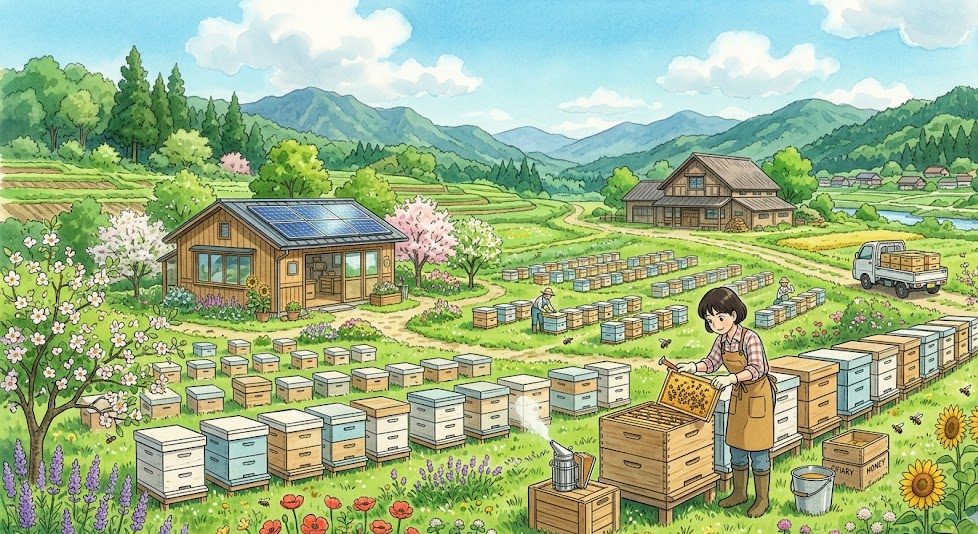
For many, beekeeping begins as a quiet hobby—a way to connect with nature and perhaps produce a few jars of honey for friends and family. But in 2026, the global demand for high-quality bee products, pollination services, and natural health remedies has turned apiary management into a serious, high-potential business venture. Scaling a beekeeping operation today requires moving beyond traditional practices and adopting a “Precision Apiculture” mindset.
Whether you are looking to turn your backyard hives into a commercial operation or expand an existing fleet, scaling successfully requires a blend of biology, technology, and strategic business management.
1. Moving to Precision Apiculture
Scaling a business means managing more units than one person can manually monitor. In 2026, the “Modern Apiary” relies on technology to maintain colony health.
- IoT Hive Monitoring: Sensors placed inside hives monitor real-time temperature, humidity, and acoustic signatures. A shift in the hive’s “hum” can alert you to a queen loss or the onset of a swarm weeks before it happens.
- The Benefit: Instead of inspecting every hive manually—which is labor-intensive and disruptive to the bees—you only intervene when the data suggests it is necessary. This drastically reduces labor costs and increases colony survival rates.
2. Beyond Honey: Diversifying Revenue Streams
One of the biggest pitfalls for small beekeepers is relying solely on honey production. Honey prices are subject to global market volatility. A profitable, scalable apiary treats the hive as a biological factory for multiple high-value products:
- Propolis and Royal Jelly: These health supplements command much higher margins per gram than honey.
- Beeswax: The demand for sustainable, plastic-free products in the cosmetic and candle industries has kept the value of wax high.
- Nucleus Colonies (Nucs): As interest in beekeeping grows, selling “nucs” (small starter colonies) to beginner beekeepers is often more profitable than harvesting honey. By breeding and selling healthy, disease-resistant queens, you can establish a premium reputation in the market.
3. The Lucrative World of Pollination Services
If you have a mobile operation, your biggest revenue potential may not be the products from the bees, but the service the bees provide. Modern industrial farming, particularly for high-value fruits and nuts, is heavily dependent on commercial pollination.
- Scaling the Logistics: Scaling up means investing in trailers, forklifts, and optimized hive-loading systems. By contracting your hives out to almond, apple, or berry growers during their peak blooming seasons, you can secure reliable, seasonal income that often far exceeds honey revenue.
4. Genetic Management and Breeding
A commercial beekeeper is essentially a livestock manager. If you are scaling, you cannot afford “weak” hives.
- Selecting for Traits: You must focus on breeding queens from your best-performing colonies—those that show natural resistance to Varroa mites, high honey production, and calm temperament.
- Sustainability: By maintaining your own breeding program, you reduce the cost of purchasing replacement packages and colonies, making your business more resilient and self-contained.
5. Smart Marketing and Branding
In 2026, the “local, raw, and artisanal” trend is stronger than ever. Scaling does not mean you have to sell your product to faceless wholesalers who pay commodity prices.
- The Storytelling Advantage: Use social media to document the health of your bees and your commitment to chemical-free practices. Customers are willing to pay a 30–50% premium for honey that comes with a “field-to-table” story.
- Direct-to-Consumer (DTC): Use e-commerce platforms to sell directly to consumers. This allows you to retain the entire retail margin, which is vital for building the capital needed to reinvest in more hives.
The Operational Challenges of Scaling
Scaling is not without risks. As you increase the number of hives, the “management load” increases exponentially.
- Disease Control: With more hives comes a higher risk of disease spread. Implementing a strict biosecurity protocol—cleaning tools, isolating new colonies, and regular health checks—is non-negotiable.
- Regulatory Compliance: As your business grows, so does the red tape. Ensure you are compliant with local agricultural regulations regarding hive placement, registration, and labeling for food products.
- Seasonal Labor: Beekeeping is highly seasonal. Plan your labor needs in advance—hire seasonal help for the intense extraction and pollination months so you don’t burn out.
Building for the Long Term
The most successful apiaries in 2026 are those that view their operation as a System. They track every input (sugar feed, medications, labor hours) and every output (honey volume, nuc sales, pollination contracts).
By using data to guide your decisions, diversifying your income streams, and focusing on high-quality genetic management, you can transition from being a “keeper of bees” to a “manager of a high-growth agricultural asset.”
The industry is evolving rapidly. Whether you are in India, the US, or elsewhere, the demand for sustainable agricultural services is at an all-time high. By positioning your apiary at the intersection of technology and natural production, you are not just building a business—you are contributing to the critical task of maintaining global biodiversity while building a profitable future.