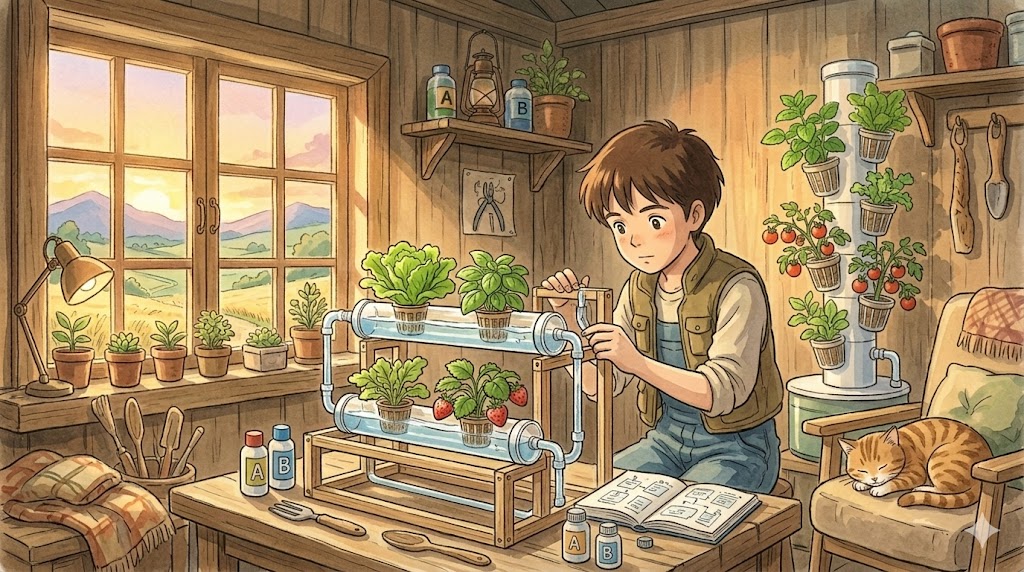
Did you know that you can grow a full salad’s worth of greens in a space no larger than a standard toaster? For millions of urban dwellers, the dream of gardening often hits a concrete wall—literally. High-rise apartments, tiny studios, and basement flats rarely offer the luxury of a backyard or even a sunny windowsill. This “spatial poverty” has long kept aspiring green thumbs from experiencing the joy of harvesting their own food.
The challenge is clear: traditional gardening is horizontal and messy, requiring vast tracts of soil and sunshine. However, compact hydroponic systems have emerged as the ultimate solution for the modern minimalist. By removing soil from the equation and utilising vertical space, these systems allow you to turn a dark corner or a kitchen counter into a high-yielding mini-farm. In this guide, we will explore the best hydroponic setups specifically designed for tight quarters, the science behind their efficiency, and a step-by-step plan to get your indoor oasis thriving.
Understanding Indoor Hydroponics: Key Concepts and Importance
At its core, hydroponics is the art of growing plants in a water-based, nutrient-rich solution rather than soil. In a small indoor environment, this isn’t just a fancy hobby; it’s a feat of engineering. The primary goal is nutrient delivery efficiency. When space is limited, you cannot afford to have plants competing for resources or growing massive, sprawling root systems.
Think of a traditional garden like a sprawling, chaotic marketplace where plants have to “walk” through the soil to find nutrients. An indoor hydroponic system is more like a high-end sushi conveyor belt. The nutrients are delivered directly to the roots in a controlled, oxygenated stream. Because the plant doesn’t have to work to find food, it stays compact while producing maximum foliage. Modern indoor systems often incorporate LED grow lights, which mimic the sun’s spectrum, allowing you to grow crops in rooms with zero natural light. This technology has evolved from industrial greenhouses into sleek, furniture-grade appliances that fit seamlessly into contemporary home decor.
Why It Matters: The Top Benefits of Compact Systems
Choosing a hydroponic system tailored for small spaces offers more than just aesthetic appeal. It provides a sustainable bridge between urban living and nature.
- Maximum Yield per Square Foot: Vertical hydroponic towers and tiered shelving allow you to grow up to 10 times more produce than traditional gardening in the same footprint.
- Year-Round Food Security: Unlike outdoor gardening, indoor systems are immune to frost, heatwaves, and seasonal changes. You can harvest fresh basil in December and crisp lettuce in July.
- Reduced Grocery Bills: While there is an initial setup cost, the “per-harvest” price of gourmet herbs and leafy greens drops significantly, often paying for the system within the first year.
- Superior Air Quality: Indoor plants act as natural air scrubbers. A hydroponic wall doesn’t just provide food; it increases humidity and oxygen levels in dry, recycled apartment air.
Pro Fact: Research shows that indoor plants can reduce stress levels by up to 37%. In a cramped apartment, a hydroponic system serves as both a food source and a vital “biophilic” mental health tool.
How to Get Started: A Practical Guide for Beginners
Transitioning from “no space” to “growing space” is easier than you think. Follow this 5-step implementation plan to launch your indoor farm.
Step 1: Assess Your “Dead Space”
Identify a 2×2 foot area. This could be a kitchen countertop, a bookshelf, or even the back of a door. Measure the height, as verticality is your best friend in small spaces.
Step 2: Select a Compact-Friendly System
For small spaces, choose one of these three:
- Countertop AeroGarden: Perfect for herbs.
- Vertical Tower: Great for corners; grows 20+ plants upward.
- NFT (Nutrient Film Technique) Rail: Slim enough to mount on a wall.
Step 3: Set Up Your “Artificial Sun”
In small indoor spaces, natural light is rarely enough. Invest in Full-Spectrum LED Grow Lights. Ensure they are adjustable so you can move them higher as your plants grow to prevent leaf burn.
Step 4: Automate the Feeding
Most modern small systems come with a built-in timer. Set your pump to run (if using active hydroponics) and your lights to stay on for 14–16 hours a day. Use a pre-mixed liquid nutrient solution to keep things mess-free.
Step 5: Start with “Quick Wins”
Don’t start with tomatoes or peppers, which take up too much room. Begin with Microgreens, Butterhead Lettuce, or Chives. These crops are low-profile and can be harvested in as little as 21 days.
Beginner’s Tip: In small spaces, airflow is critical. Because your plants are packed tightly, use a tiny USB fan to keep air moving. This prevents mould and strengthens the stems of your plants.
Overcoming Challenges and Looking into the Future
The biggest hurdle for small-space hydroponics is Nutrient Imbalance. In small reservoirs (under 5 litres), the nutrient concentration can change rapidly as the plant drinks. To solve this, check your water levels daily and perform a full “flush and refill” every two weeks to keep the chemistry stable. Another common issue is Noise; some pumps can hum loudly in a quiet studio. Look for “ultra-quiet” submersible pumps or consider “Passive” systems like the Kratky method which require no electricity.
The future of this field lies in App-Integrated Gardening. We are seeing the rise of “Smart Cubes”—fully enclosed, automated environments that you control from your phone. These systems use sensors to adjust light intensity and pH balance automatically, making the “black thumb” a thing of the past. As our cities get denser, these systems will likely become as common in kitchens as the microwave.
Conclusion
Small-space hydroponic systems represent a revolution in how we perceive our homes. You no longer need an acre of land to be a farmer; you just need a spare corner and a bit of curiosity. By choosing the right vertical or countertop system, you can enjoy ultra-fresh, pesticide-free produce while beautifying your living space.
Your Task: Measure that empty corner in your kitchen today. Look for a vertical tower or a small countertop starter kit that fits those dimensions, and commit to growing just one herb this month.
The journey to self-sufficiency starts with a single seed and a few drops of water; let’s get growing!
Frequently Asked Questions (FAQs)
1. Do hydroponic systems use a lot of electricity? Surprisingly, no. Modern LED grow lights and small water pumps are extremely energy-efficient. Running a standard countertop system usually costs less than £2–£3 per month on your electricity bill.
2. Is it messy to have a water-based garden in my living room? Unlike soil, which can spill and harbor bugs, hydroponics is very clean. As long as you don’t overfill the reservoir, the risk of leaks is minimal, and there is no dirt to track across your carpet.
3. Which plants are best for a very small apartment? Leafy greens like Arugula and Kale are excellent. Herbs like Basil, Cilantro, and Mint thrive in small setups. Avoid “vining” plants like cucumbers unless you have a trellis and significant vertical space.
4. Can I build my own system for a small space? Absolutely! Many people use PVC pipes or recycled plastic bins to create custom “window farms.” DIY systems are often cheaper and can be built to the exact dimensions of your available space.