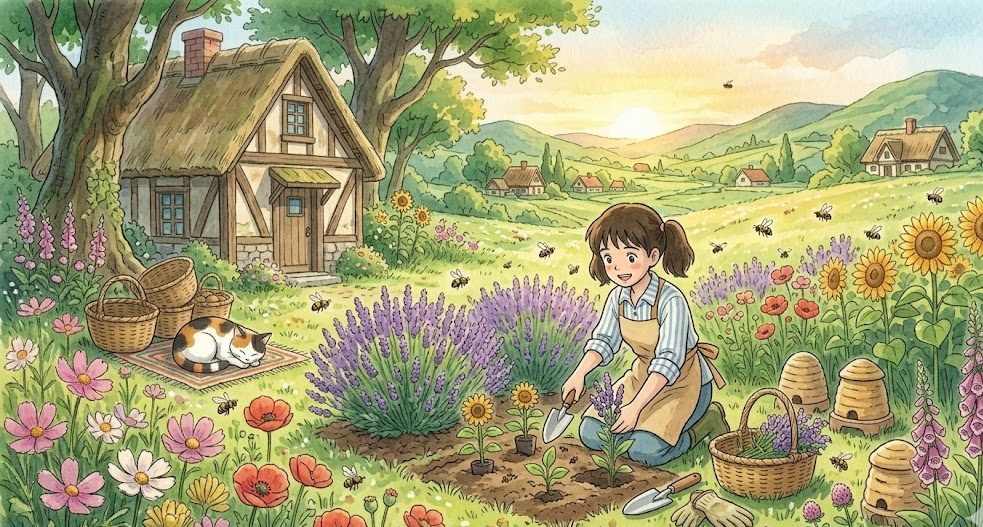
Did you know that a single honey bee colony must visit roughly two million flowers to produce just one pound of honey? It is a staggering biological demand that relies entirely on the floral diversity of the surrounding landscape. Yet, as our modern world leans toward manicured green lawns and concrete jungles, we are creating “green deserts”—vast areas where a bee can fly for miles without finding a single drop of nectar.
The challenge for gardeners and environmentalists is the “Pollinator Gap.” We often plant for aesthetics, choosing hybridized flowers that look beautiful but have had their nectar and pollen “bred out” of them. This “pain point” of food scarcity is a primary driver of colony stress and declining bee populations. Strategic Pollinator Gardening serves as the ultimate solution, transforming any backyard or balcony into a high-octane refueling station for these critical insects.
This article provides a roadmap for creating a bee-friendly sanctuary. You will learn the science of “bee vision,” the importance of seasonal bloom cycles, and a curated list of the high-value plants that provide the best nutritional ROI for your local honey bees.
Understanding Pollinator Planting: Key Concepts and Importance
To attract honey bees effectively, you must understand how they perceive the world. Bees do not see the world as we do; they see in the ultraviolet spectrum. To a bee, a plain yellow flower might have “UV bullseyes” or landing strips that are invisible to the human eye. They are particularly drawn to blue, purple, violet, white, and yellow blooms.
Think of your garden as a “Fungal and Floral Pharmacy.” In the same way humans need a balanced diet of proteins, fats, and vitamins, bees require diverse pollen for protein and varied nectar for carbohydrates. If you only plant one type of flower that blooms for two weeks in June, your “pharmacy” is closed for the rest of the year, leaving the bees to starve during the “July Dearth.”
Historically, our ancestors maintained “hedgerows” and wildflower meadows that provided a continuous flow of food. Modern relevance lies in reclaiming these spaces. An analogy for a bee-friendly garden is a busy airport hub. To keep the airport running, you need “gates” (flowers) that are open from dawn until dusk, through every season. By selecting “heirloom” or native species over highly modified “double-petaled” varieties, you ensure the “gate” is actually open, allowing the bee to reach the nectar reward hidden inside.
Why It Matters: The Top Benefits of a Bee-Friendly Garden
Planting for bees is one of the few hobbyist activities where the benefits ripple out to affect the entire local ecosystem and economy.
- Boosted Garden Yields: If you grow fruits or vegetables, attracting honey bees is the best “organic fertilizer” you can buy. Increased pollination leads to larger, more symmetrical apples, more abundant berries, and heavier squash.
- Economic Value of Honey: For beekeepers, the right floral profile directly impacts the flavor and quantity of the harvest. “Monofloral” honeys, like Lavender or Tupelo, fetch a significant market premium.
- Environmental Resilience: Bee-friendly plants often have deep root systems that stabilize soil and provide habitat for other beneficial insects, like butterflies and predatory wasps that eat garden pests.
- Educational Impact: A buzzing garden serves as a living classroom, teaching children about the interconnectedness of life and the importance of conservation.
Pro Fact: Honey bees are “flower constant.” This means a single bee will only visit one type of flower (e.g., only Lavender) during a single foraging trip. This is why planting in large clumps of the same species is more effective than scattered individual flowers.
How to Get Started: A Practical Guide for Beginners
Creating a bee sanctuary is simpler than you think. Follow this 5-step implementation plan to maximize your impact.
Step 1: Analyze Your Bloom Calendar
The biggest mistake is having a “one-season” garden. Map out your plants to ensure you have at least three different species blooming in Spring, Summer, and Autumn. Early spring (Crocus) and late autumn (Aster) are the most critical times for bee survival.
Step 2: Choose High-Nectar “Powerhouse” Plants
Focus your efforts on these proven winners:
- Lavender: A summer staple that provides high-quality nectar and essential oils.
- Borage: Often called “Bee Bread,” it refills its nectar cup every two minutes.
- Sunflowers: Provides massive amounts of protein-rich pollen.
- Sedum (Stonecrop): A vital “late-season” fuel source before winter.
Step 3: Plant in “Pollinator Targets”
Bees are efficient. They don’t want to hunt for a single flower. Plant your chosen species in groups or “drifts” at least 3 feet in diameter. This creates a visual target that bees can spot from high altitudes.
Step 4: Provide a “Bee Bar” (Water Source)
Bees get thirsty too! Place a shallow dish filled with pebbles and water in your garden. The pebbles give the bees a safe place to land so they don’t drown while drinking.
Step 5: Eliminate Pesticides
Systemic pesticides (neonicotinoids) can stay in a plant’s tissues for years, poisoning the nectar. Switch to Integrated Pest Management (IPM) or organic deterrents like neem oil, applied only in the evening when bees are back in their hives.
Beginner’s Tip: Don’t pull all your weeds! Dandelions and Clovers are among the most important early-season food sources for honey bees. A “perfect” lawn is a “dead” lawn for a pollinator.
Overcoming Challenges and Looking into the Future
One of the greatest hurdles is Climate Shift. Early warm spells can cause bees to wake up before their food sources have bloomed. The solution is to plant “Generalist” species like Hellebores or Willow trees, which provide ultra-early pollen. Another challenge is Urban Fragmentation; bees often have to fly across dangerous roads to reach small patches of flowers. We can solve this through “Pollinator Corridors”—collaborating with neighbors to create a continuous chain of gardens.
Looking into the future, “Smart Seed Mixes” are becoming a major trend. These are region-specific, non-invasive wildflower blends designed by ecologists to support specific local bee species. We are also seeing a rise in “Bee-scaping” as a professional landscaping niche, where homeowners pay to have their lawns replaced with low-maintenance, drought-resistant “Bee Lawns” made of creeping thyme and clover.
Conclusion
Transforming your landscape into a honey bee haven is a powerful act of environmental stewardship. By understanding “bee vision,” planting in concentrated drifts, and ensuring a continuous bloom from spring to autumn, you provide the vital calories these “engineers of the food system” need to survive. Every lavender sprig and sunflower head is a small but significant contribution to a more resilient world.
Your Next Step: Identify one corner of your yard (or one large pot) and commit to planting a “Bee Target” of three Lavender plants this week.
The hum of a healthy garden is the sound of a thriving planet—let’s make some noise!
Frequently Asked Questions (FAQs)
1. Will attracting bees to my garden increase my risk of being stung? Generally, no. Honey bees are non-aggressive when foraging. They are focused on their “job” and will only sting if stepped on or squashed. They are much less likely to bother you than social wasps (Yellowjackets).
2. Can I grow bee-friendly plants in pots? Absolutely! Herbs like Mint, Rosemary, and Thyme are excellent in containers and are absolute favorites for honey bees. Just let the herbs go to flower rather than harvesting all the leaves.
3. Why aren’t bees visiting my “Double” Roses or Peonies? Many “Double” flowers have been bred to have extra petals instead of stamens. This often physically blocks the bee from reaching the nectar, or the plant has stopped producing nectar altogether. Always look for “Single” or “Open-centered” varieties.
4. What is the single best plant for honey bees? While it depends on your region, Borage is often cited as the champion. It produces an incredible amount of nectar and has a very fast “refill rate,” meaning one plant can feed hundreds of bees in a single day.