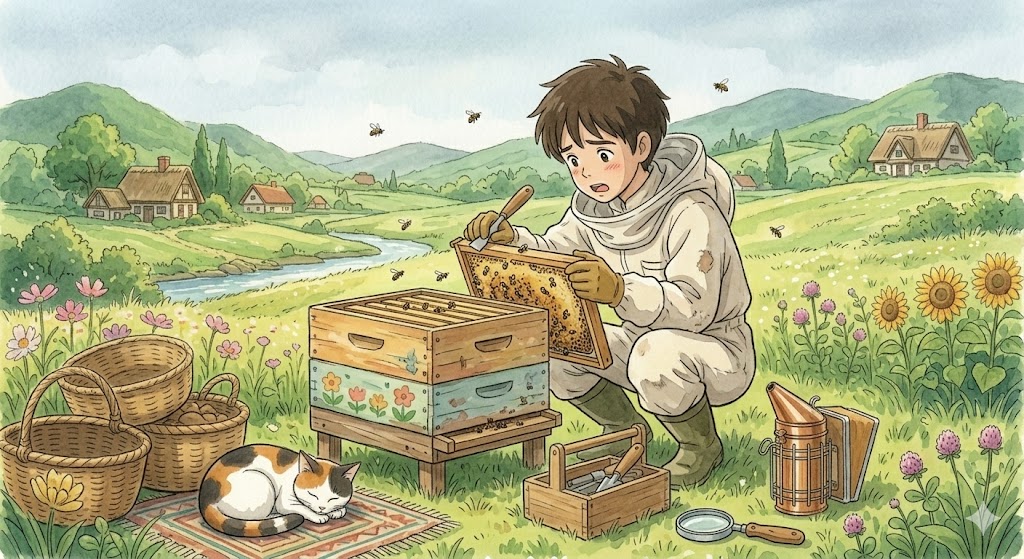
Did you know that in some regions, beekeepers lose up to 40% of their colonies every single winter? Imagine a farmer losing nearly half their livestock every year; it would be considered a national emergency. For the honeybee, the primary driver of this devastating “colony collapse” isn’t just one factor, but a complex web of pathogens, parasites, and viruses that turn a thriving hive into a silent wooden box in a matter of weeks.
The challenge for the modern beekeeper is that many of these threats are invisible to the naked eye until it is too late. The “pain point” is the feeling of helplessness when you open a hive to find a scattered handful of bees where a kingdom once stood. Proactive Health Management serves as the ultimate solution—shifting the beekeeper’s role from a honey harvester to a vigilant “hive doctor.” This article provides a comprehensive roadmap for identifying the most lethal bee diseases, understanding their transmission, and implementing a biological security plan. We will explore the “big players” like Varroa mites and Foulbrood, providing you with the diagnostic tools and preventative measures needed to keep your apiary resilient.
Understanding Bee Diseases: Key Concepts and Importance
To understand bee diseases, you must view the hive through the lens of a “Superorganism.” Because thousands of bees live in such close proximity, sharing food and grooming each other, a single sick bee can infect the entire colony within hours. Disease in a beehive is very much like a virus in a crowded subway system; the high density of the population makes transmission incredibly efficient.
Historically, beekeeping was much simpler. However, global trade has introduced “invasive” pathogens to areas where bees had no natural immunity. The most modern example is the Varroa destructor mite, which jumped from the Asian honeybee to the Western honeybee in the mid-20th century. These mites act as “vectors,” much like mosquitoes do for humans, carrying and injecting deadly viruses directly into the bees’ circulatory system.
Beyond parasites, we deal with bacterial infections like American Foulbrood (AFB) and European Foulbrood (EFB), which attack the “brood” (the developing bee larvae). AFB is particularly dreaded because its spores can remain dormant and infectious for over 40 years. Understanding the difference between a “parasitic” threat (mites) and a “bacterial” threat (foulbrood) is the cornerstone of effective apiary management. By identifying these issues early, you prevent your yard from becoming a “disease reservoir” that infects your neighbors’ bees.
Why It Matters: The Top Benefits of Disease Prevention
Prioritizing hive health over honey production isn’t just ethical; it’s the only way to maintain a profitable and sustainable business or hobby.
- Increased Honey Yields: A healthy colony has a larger foraging force. Bees that aren’t spending their energy fighting off Nosema (a gut parasite) or mites can collect significantly more nectar, leading to fuller supers in the summer.
- Winter Survival Rates: Most “winter losses” are actually autumn disease issues. By treating for mites and ensuring gut health in August, you ensure the “winter bees” are fat and healthy enough to survive six months of cold.
- Cost Savings on Replacements: A “package” of bees or a “nuc” can cost between $150 and $250. Preventing disease saves you from the recurring expense of restocking empty equipment every spring.
- Environmental Stewardship: Honeybees are the primary pollinators for our local ecosystems. Keeping your bees healthy ensures they can perform their “ecological job,” boosting the yields of local gardens and wild flora.
Pro Fact: Bees have a “social immune system.” They practice “hygienic behavior,” where certain worker bees can “smell” a sick larva through the wax capping and remove it from the hive before the disease spreads.
How to Get Started: A Practical Guide for Beginners
Protecting your apiary requires a disciplined, seasonal approach. Follow this 5-step plan to implement a disease prevention strategy.
Step 1: Conduct a “Mite Wash” Every Month
You cannot manage what you do not measure. Use an Alcohol Wash or Sugar Shake kit to sample 300 bees. If you find more than 3 mites per 100 bees (a 3% infestation), it is time to intervene. Waiting until you see “Deformed Wing Virus” (DWV) is usually too late.
Step 2: Inspect the “Brood Pattern”
A healthy queen lays eggs in a tight, solid pattern. If you see a “pepperbox” pattern (many empty cells mixed with capped ones), it could be a sign of EFB or AFB. Pull a frame and look for “cappings” that are dark, sunken, or have tiny pinholes.
Step 3: Use the “Matchstick Test” for AFB
If you see a suspicious sunken cell, take a toothpick or matchstick and poke the larva. If it “ropes out” in a brown, glue-like string longer than an inch, you likely have American Foulbrood. This is a “notifiable” disease and usually requires burning the equipment to prevent a local epidemic.
Step 4: Ensure Proper Ventilation and Nutrition
Many diseases, like Chalkbrood (a fungus), thrive in damp, cold conditions. Ensure your hives are tilted slightly forward so water drains out, and use a “quilt box” or upper vent to prevent moisture buildup. If the forage is low, provide pollen patties to boost their immune systems.
Step 5: Practice Tool Hygiene
Never move a frame from a “weak” hive to a “strong” hive without a full health inspection. Clean your hive tool with 70% isopropyl alcohol or a torch between different apiary sites to avoid acting as a human vector for pathogens.
Beginner’s Tip: Buy “Hygienic” or “VSH” (Varroa Sensitive Hygiene) queens. These bees are genetically bred to detect and remove mite-infested brood, doing half the work of disease prevention for you.
Overcoming Challenges and Looking into the Future
The biggest hurdle for new beekeepers is Treatment Resistance. For years, beekeepers relied on harsh chemicals, and now some mites have evolved to survive them. The solution is Integrated Pest Management (IPM), which uses mechanical controls (like screened bottom boards) alongside organic acids (like Formic or Oxalic acid) to keep mites off-balance. Another challenge is the “re-infestation” from nearby unmanaged hives, often called “Mite Bombs.” Collaborative beekeeping and community monitoring are the only ways to solve this.
Looking toward the future, we are seeing the rise of RNAi technology, which could potentially “switch off” the reproductive genes of the Varroa mite without harming the bee. Additionally, Probiotic Supplements for bees are becoming a major trend. Just as humans take yogurt for gut health, beekeepers are now using specialized bacterial sprays to outcompete pathogens like Nosema. The “Smart Hive” of the future will likely have sensors that “sniff” the air for the chemical signature of foulbrood, alerting the keeper before the first larva dies.
Conclusion
Bee diseases are an unfortunate reality of modern apiculture, but they do not have to mean the end of your journey. By shifting your mindset from a passive observer to an active health manager, you provide your colonies with the shield they need to survive. Disease prevention is about the small, consistent actions: the monthly mite check, the sterilized hive tool, and the keen eye for a healthy brood pattern.
Your Task: Go to your apiary this week and perform one Alcohol Wash. Knowing your mite count is the single most important step you can take toward a successful winter.
The bees are the heart of our food system; protect them with the care and vigilance they deserve.
Frequently Asked Questions (FAQs)
1. Is it possible to be a “Treatment-Free” beekeeper? It is possible, but extremely difficult for beginners. Without intervention, 95% of colonies will die from Varroa mites within 2 years. If you choose this path, you must start with specialized genetics (like Russian or VSH bees) and be prepared for high loss rates.
2. What does a “healthy” hive smell like? A healthy hive should smell like warm beeswax, honey, and a hint of old wood. If you detect a foul, “locker room” or rotting fish smell, it is a major red flag for American Foulbrood.
3. Why are my bees crawling on the ground in front of the hive? This is often a sign of Tracheal Mites or a virus like Chronic Bee Paralysis Virus (CBPV). The bees’ wings may look “disjointed” (K-wing), and they are unable to take flight.
4. Can I use antibiotics to prevent bee diseases? In many regions, using antibiotics for prevention is discouraged or illegal because it can lead to resistant bacteria and contaminate honey. Most beekeepers only use treatments when a specific infection is diagnosed.