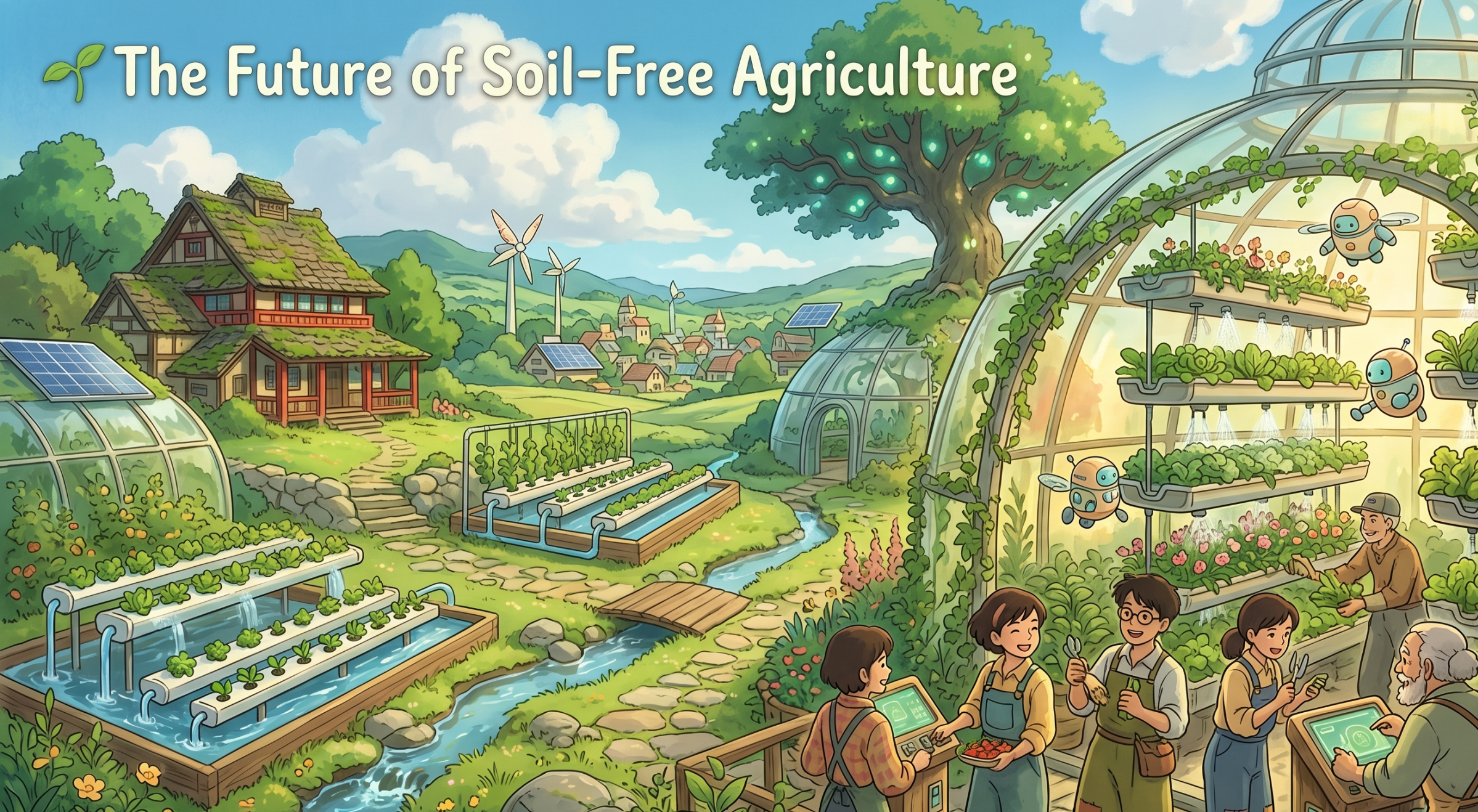
Introduction
Hydroponics farming is transforming the way we grow food by eliminating the need for soil and replacing it with nutrient-rich water solutions. In today’s world, where land availability is decreasing and water conservation is becoming critical, hydroponics offers an innovative and sustainable solution. This method allows farmers to grow crops in controlled environments, ensuring higher yields and better quality produce.
Unlike traditional farming, hydroponics uses significantly less water and space, making it ideal for urban farming and indoor agriculture. With the rise of smart farming technologies, hydroponics is quickly becoming one of the most efficient methods of food production worldwide.
Key Benefits of Hydroponics Farming
Hydroponics farming provides several advantages over conventional farming methods:
- Uses up to 90% less water than soil farming
- Faster plant growth due to direct nutrient absorption
- Requires less space, suitable for vertical farming
- Reduces the risk of soil-borne diseases
- Allows year-round crop production
1. How Hydroponics Works
In hydroponics, plants grow in a water-based solution enriched with essential nutrients such as nitrogen, phosphorus, and potassium. Instead of searching for nutrients in the soil, roots directly absorb them from the solution. This results in faster growth and higher efficiency.
The roots are supported using inert materials like coconut coir, perlite, or rock wool. These materials provide stability without interfering with nutrient delivery.
2. Types of Hydroponic Systems
There are several hydroponic systems used worldwide:
- Deep Water Culture (DWC): Roots are submerged in nutrient solution
- Nutrient Film Technique (NFT): A thin film of nutrients flows over roots
- Drip System: Nutrients are delivered drop by drop
- Aeroponics: Roots are suspended in air and misted with nutrients
Each system has its own advantages depending on the type of crops and scale of farming.
3. Best Crops for Hydroponics
Hydroponics is ideal for growing a wide range of crops, especially:
- Leafy greens like lettuce, spinach, and kale
- Herbs such as basil, mint, and parsley
- Fruits like strawberries and tomatoes
These crops grow faster and produce higher yields in hydroponic systems.
4. Challenges in Hydroponics Farming
Despite its benefits, hydroponics has some challenges:
- High initial setup cost
- Requires technical knowledge
- Dependence on electricity and equipment
- Regular monitoring of nutrient levels
However, with proper planning and training, these challenges can be managed effectively.
Conclusion
Hydroponics farming represents the future of agriculture by combining sustainability with efficiency. As global food demand increases, this innovative method provides a reliable way to grow high-quality crops with minimal resources.