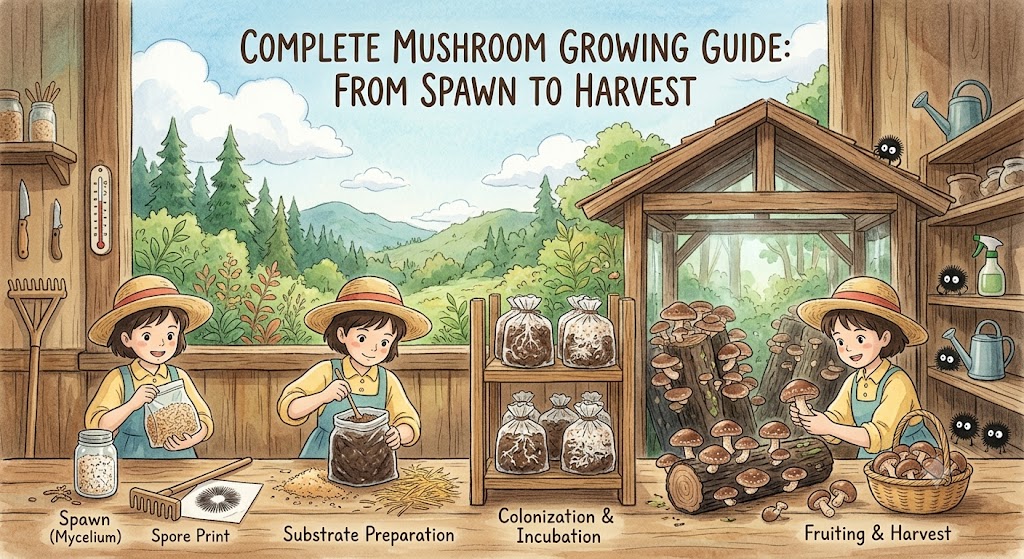
Mushroom cultivation has become one of the most profitable forms of indoor farming due to its low land requirements, short production cycle, and increasing consumer demand. Unlike traditional crops that rely on fertile soil and changing weather conditions, mushrooms grow on organic materials such as straw, sawdust, or compost in controlled environments. This makes mushroom farming suitable for both beginners and commercial growers looking to diversify their agricultural income.
Whether your goal is to produce fresh mushrooms for local markets or build a commercial farming business, understanding every stage of cultivation is essential. From selecting quality spawn to harvesting mature mushrooms, each step directly influences yield, quality, and profitability.
This complete guide explains the mushroom-growing process in a simple, practical, and professional manner.
Understanding How Mushrooms Grow
Unlike green plants, mushrooms do not produce their own food through photosynthesis. Instead, they obtain nutrients by breaking down organic matter.
The underground network known as mycelium is the actual growing organism. When environmental conditions become favorable, the mycelium develops fruiting bodies that we recognize as mushrooms.
Healthy mycelium is the key to successful cultivation. Strong mycelial growth leads to better colonization, healthier crops, and higher yields.
Choosing the Right Mushroom Variety
Different mushroom species require different growing conditions.
Some of the most popular commercial varieties include:
Oyster Mushrooms
Oyster mushrooms are among the easiest varieties to cultivate. They grow quickly, require relatively simple management, and perform well on agricultural waste such as wheat straw or rice straw.
Ideal for beginners and small-scale commercial farms.
Button Mushrooms
Button mushrooms are one of the world’s most widely consumed mushrooms. They require compost preparation, casing soil, and more controlled environmental conditions than oyster mushrooms.
Suitable for growers seeking large commercial production.
Milky Mushrooms
Milky mushrooms thrive in warm climates and produce attractive white fruiting bodies with good shelf life.
Popular in tropical and subtropical regions.
Shiitake Mushrooms
Shiitake mushrooms are premium products valued for their rich flavor and high market price. They are generally cultivated on hardwood sawdust blocks or logs.
Selecting High-Quality Spawn
Spawn is the planting material used in mushroom cultivation.
It contains healthy mushroom mycelium growing on sterilized grain or another suitable carrier.
Choosing quality spawn is critical because poor spawn often results in:
- Slow colonization
- Low yields
- Increased contamination
- Uneven crop growth
- Crop failure
Purchase spawn only from trusted laboratories, agricultural institutions, or certified suppliers.
Healthy spawn should have:
- Bright white mycelium
- Uniform growth
- Fresh smell
- No green, black, or orange contamination
- Proper packaging and labeling
Always use spawn before its recommended expiry date.
Preparing the Growing Substrate
The substrate supplies nutrients that support mushroom growth.
Different mushroom species require different substrate materials.
Common substrates include:
- Wheat straw
- Rice straw
- Cotton waste
- Sawdust
- Corn stalks
- Sugarcane bagasse
- Hardwood chips
- Compost
For oyster mushrooms, chopped straw is commonly used because it is inexpensive and widely available.
The substrate should be clean, free from mold, and properly prepared before spawning.
Pasteurization or Sterilization
One of the biggest reasons for crop failure is contamination.
Before adding spawn, the growing material must be treated to reduce harmful fungi, bacteria, insects, and competing microorganisms.
Small-scale growers often pasteurize straw using hot water.
Commercial farms may use steam or specialized sterilization equipment depending on the mushroom variety.
Proper treatment greatly improves colonization success.
Spawning the Substrate
Once the substrate has cooled after treatment, it is ready for spawning.
Spawn is mixed evenly throughout the growing material or layered between substrate layers.
Uniform distribution allows the mycelium to colonize the substrate more efficiently.
Avoid handling spawn with dirty hands or contaminated equipment.
Clean working conditions reduce the risk of infection.
Filling Growing Bags or Containers
The prepared substrate is packed into growing bags, bottles, trays, or containers depending on the cultivation method.
Growing bags are widely used because they:
- Save space
- Maintain moisture
- Reduce contamination
- Simplify handling
The substrate should be firm but not compressed excessively because the mycelium still requires oxygen.
Incubation Stage
After spawning, bags are placed in an incubation room.
During this stage, the mycelium spreads throughout the substrate.
Important conditions include:
- Stable temperature
- Moderate humidity
- Clean environment
- Limited disturbance
- Proper air circulation
Most varieties require darkness or very low light during incubation.
Healthy colonization usually appears as white mycelium spreading evenly through the substrate.
Monitoring Mycelium Growth
Inspect bags regularly.
Healthy colonization appears:
- Bright white
- Dense
- Evenly distributed
Warning signs include:
- Green patches
- Black spots
- Orange growth
- Bad odors
- Slimy texture
Contaminated bags should be removed immediately to prevent the spread of disease.
Creating Fruiting Conditions
Once the substrate has been fully colonized, environmental conditions are adjusted to encourage mushroom formation.
The fruiting stage generally requires:
- Higher humidity
- Fresh air exchange
- Suitable temperature
- Gentle lighting
- Reduced carbon dioxide
These environmental changes signal the mycelium to begin producing mushrooms.
Different mushroom species require different fruiting conditions, so always follow recommendations for your chosen variety.
Managing Temperature
Temperature strongly affects mushroom growth.
Excessively high temperatures may:
- Reduce yields
- Increase contamination
- Slow development
Extremely low temperatures may delay production.
Use thermometers to monitor growing rooms regularly.
Heating or cooling systems may be necessary depending on the climate and mushroom species.
Maintaining Proper Humidity
Humidity plays a major role in mushroom quality.
Low humidity can cause:
- Dry caps
- Cracking
- Small mushrooms
Excessive humidity may encourage bacterial diseases and poor air quality.
Use fine mist sprayers or humidifiers when necessary.
Avoid spraying water directly onto developing mushrooms because standing water may increase disease risk.
Providing Fresh Air
Growing mushrooms release carbon dioxide.
Without proper ventilation:
- Stems become long
- Caps remain small
- Growth becomes weak
Fresh air exchange removes excess carbon dioxide while supplying oxygen required for healthy development.
Proper ventilation also reduces humidity buildup and disease pressure.
Managing Light
Most edible mushrooms do not require strong sunlight.
However, complete darkness is not always ideal during fruiting.
Gentle indirect light helps mushrooms develop proper shape and color.
Avoid direct sunlight because it may overheat the growing room and dry the substrate.
Water Management
The substrate should remain moist throughout production.
Too much water may encourage bacterial contamination.
Too little moisture can stop mushroom development.
Monitor moisture levels daily instead of watering on a fixed schedule.
Environmental conditions often determine how much moisture is required.
Harvesting Mushrooms
Harvest timing influences both quality and market value.
Mushrooms should be collected before becoming overmature.
Signs of proper harvest include:
- Well-developed caps
- Fresh appearance
- Firm texture
- Bright natural color
Harvest by gently twisting the mushroom from the substrate or cutting it cleanly with a sanitized knife depending on the variety.
Handle mushrooms carefully to avoid bruising.
Sorting and Grading
After harvesting, mushrooms should be sorted according to:
- Size
- Shape
- Freshness
- Color
- Damage
Remove broken, diseased, or overmature mushrooms.
Uniform grading improves customer satisfaction and often attracts better market prices.
Packaging Fresh Mushrooms
Fresh mushrooms have high moisture content and limited shelf life.
Proper packaging helps maintain quality during transportation.
Common packaging includes:
- Food-grade trays
- Ventilated plastic pouches
- Cartons
- Paper boxes
Avoid overcrowding packages because pressure may damage the mushrooms.
Label products clearly with harvest date, storage instructions, and farm information where applicable.
Storage and Transportation
Fresh mushrooms should be cooled as soon as possible after harvest.
Proper cold storage slows deterioration and preserves freshness.
During transportation:
- Protect mushrooms from direct sunlight.
- Avoid rough handling.
- Maintain clean packaging.
- Deliver products quickly.
Fast delivery improves customer satisfaction and reduces spoilage.
Preventing Common Growing Problems
Many production issues can be avoided through regular monitoring.
Common problems include:
- Poor-quality spawn
- Contaminated substrate
- Incorrect temperature
- Low humidity
- Poor ventilation
- Overwatering
- Pest infestation
- Delayed harvesting
Daily inspection allows growers to identify small problems before they become major losses.
Marketing Your Mushroom Crop
Successful production must be supported by effective marketing.
Potential buyers include:
- Supermarkets
- Grocery stores
- Restaurants
- Hotels
- Catering businesses
- Local vegetable markets
- Organic food stores
- Online grocery platforms
- Farmers’ markets
Building long-term relationships with regular buyers creates more stable income than relying only on wholesale markets.
Tips for Increasing Profit
Improve profitability by focusing on efficiency rather than simply increasing production.
Helpful strategies include:
- Purchase quality spawn from reliable suppliers.
- Maintain excellent hygiene.
- Monitor temperature and humidity daily.
- Reduce contamination through clean practices.
- Harvest at the correct maturity stage.
- Produce consistent quality.
- Explore value-added products such as dried mushrooms or mushroom powder.
- Keep detailed production records.
- Expand production gradually as experience increases.
Frequently Asked Questions
Which mushroom is easiest for beginners?
Oyster mushrooms are widely considered the easiest variety because they grow quickly, require relatively simple management, and perform well on inexpensive agricultural waste.
How long does mushroom cultivation take?
The production period varies by mushroom species, environmental conditions, and cultivation method. Oyster mushrooms generally have one of the shortest production cycles.
Can mushrooms be grown throughout the year?
Yes. Indoor mushroom farms can produce throughout the year when temperature, humidity, ventilation, and hygiene are properly controlled.
Why do mushroom bags become contaminated?
Contamination often results from poor sanitation, low-quality spawn, improperly treated substrate, or unclean equipment.
Is mushroom farming profitable on a small scale?
Yes. With proper management, reliable buyers, and consistent production quality, even a small mushroom farm can generate regular income while requiring relatively little land.
Conclusion
Mushroom cultivation is a rewarding agricultural business that combines scientific knowledge with practical farm management. Success begins with selecting healthy spawn, preparing a clean substrate, maintaining proper environmental conditions, and harvesting mushrooms at the correct stage. Every step—from incubation to packaging—affects both crop quality and profitability.
Beginners should start with easy-to-grow varieties such as oyster mushrooms, focus on cleanliness, and monitor their growing conditions closely. As experience grows, farmers can expand into premium varieties and value-added products. With careful planning, continuous learning, and consistent quality, mushroom farming can become a reliable source of year-round income and a sustainable agricultural enterprise.