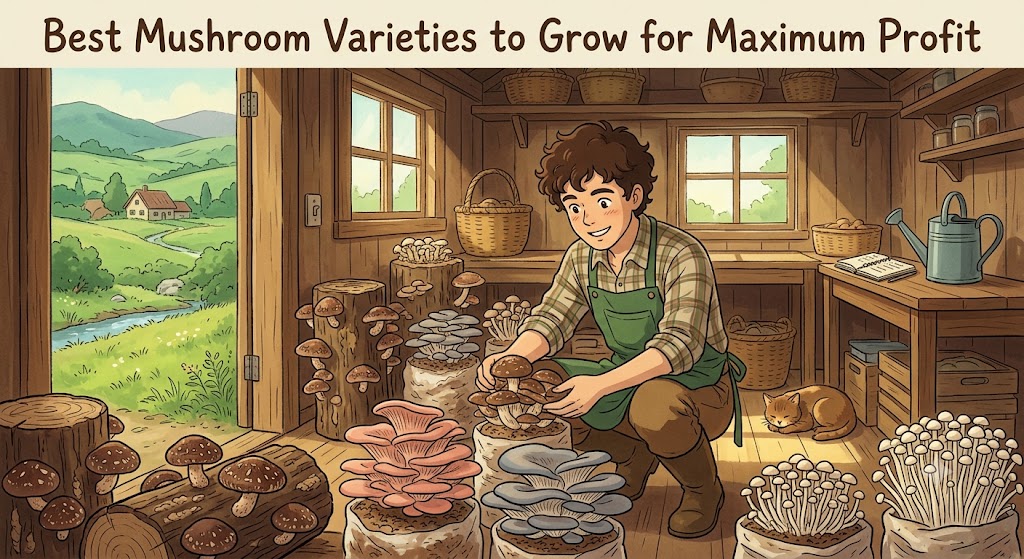
Mushroom farming has become one of the fastest-growing sectors in modern agriculture. Compared to many traditional crops, mushrooms require less land, shorter production cycles, and relatively low water consumption. With proper planning, growers can produce multiple harvests throughout the year while supplying fresh produce to supermarkets, restaurants, hotels, food processors, and local markets.
However, profitability depends heavily on choosing the right mushroom variety. Some mushrooms grow quickly and require simple management, while others command premium prices but demand controlled environments and advanced cultivation techniques. Market demand, climate, production costs, shelf life, and available resources should all be considered before starting a mushroom farming business.
This guide explores the most profitable mushroom varieties and explains how to select the best option for your farming goals.
Why Variety Selection Matters
Many new growers believe all mushrooms generate similar profits. In reality, different mushroom species vary greatly in production cost, yield potential, cultivation difficulty, and market value.
Choosing the wrong variety may result in slow growth, high production expenses, poor local demand, or lower selling prices. Selecting a variety that matches your climate, experience, and target market significantly improves the chances of long-term success.
Before investing, research local buyers, wholesale prices, consumer preferences, and seasonal demand.
1. Oyster Mushrooms – The Best Choice for Beginners
Oyster mushrooms are among the easiest and most profitable mushrooms for new growers. They grow rapidly, require relatively inexpensive materials, and can be cultivated on agricultural waste such as wheat straw, rice straw, sugarcane bagasse, cotton waste, and corn stalks.
Advantages
- Low startup investment
- Fast production cycle
- High biological efficiency
- Easy cultivation process
- Strong local market demand
- Suitable for indoor farming
Oyster mushrooms are available in several varieties, including white, grey, pink, yellow, blue, and king oyster mushrooms. This diversity allows growers to target different customer preferences.
Because production costs are relatively low, oyster mushrooms often provide excellent profit margins for small-scale farms.
2. Button Mushrooms – Strong Commercial Demand
Button mushrooms remain the most widely consumed mushrooms in many countries. Their popularity creates stable demand from supermarkets, restaurants, hotels, pizza chains, and food processors.
Commercial button mushroom farms usually operate throughout the year under controlled environmental conditions.
Benefits
- Large consumer market
- Stable wholesale demand
- High production volume
- Suitable for commercial-scale farming
- Strong processing industry support
However, button mushroom cultivation requires compost preparation, casing soil, controlled temperature, humidity management, and careful disease prevention. Beginners should receive proper training before making large investments.
Although production costs are higher than oyster mushrooms, commercial farms often generate substantial revenue due to consistent demand.
3. Shiitake Mushrooms – Premium Market Opportunity
Shiitake mushrooms are considered a premium specialty product and are highly valued in gourmet restaurants, Asian cuisine, and health-food markets.
Consumers appreciate their rich flavor, firm texture, and nutritional profile.
Why They Are Profitable
- Premium selling price
- Growing international demand
- Suitable for dried mushroom production
- Long storage life after drying
- High-value export opportunities
Shiitake mushrooms usually require hardwood logs or specialized sawdust substrate. Their production cycle is longer than oyster mushrooms, but higher market prices often compensate for the additional time.
Growers targeting premium retail stores or export markets frequently include shiitake mushrooms in their production plans.
4. Milky Mushrooms – Ideal for Warm Climates
Milky mushrooms perform particularly well in tropical and subtropical regions where temperatures remain relatively warm.
They produce attractive white fruiting bodies with good shelf life and transport quality.
Major Advantages
- Performs well in warmer climates
- Attractive appearance
- Better shelf life than several fresh varieties
- Good market acceptance
- Strong retail value
Milky mushrooms are becoming increasingly popular among commercial growers because they require less cooling compared to varieties that prefer lower temperatures.
5. Lion’s Mane Mushrooms – High-Value Specialty Crop
Lion’s Mane mushrooms have gained attention because of their unique appearance and increasing popularity among health-conscious consumers.
Many people purchase them for culinary use, while others seek them for functional food products.
Profit Potential
- Premium retail prices
- Limited competition in many regions
- Strong demand from specialty food stores
- Increasing popularity in health markets
Although cultivation requires careful environmental control, Lion’s Mane mushrooms often command significantly higher prices than common varieties.
For growers serving specialty markets, this mushroom can become an excellent niche product.
6. Enoki Mushrooms – Popular in Premium Markets
Enoki mushrooms are recognized by their long white stems and small caps.
They are widely used in soups, salads, noodles, and Asian cuisine.
Commercial cultivation requires precise temperature, humidity, and lighting control.
Advantages
- Premium pricing
- Attractive appearance
- High demand in restaurants
- Suitable for urban farming systems
Because production conditions are specialized, competition is often lower than with common mushrooms.
7. King Oyster Mushrooms – Excellent Commercial Value
King oyster mushrooms produce thick stems and large caps with excellent texture.
Their longer shelf life makes transportation easier, reducing losses during distribution.
Reasons Growers Choose King Oyster
- High market value
- Better storage life
- Lower transportation losses
- Premium restaurant demand
- Attractive appearance
Although they require more careful environmental management than standard oyster mushrooms, many growers find the additional profit worthwhile.
8. Reishi Mushrooms – Medicinal Market
Unlike edible mushrooms primarily sold fresh, Reishi mushrooms are generally processed into powders, capsules, extracts, or herbal products.
Demand comes from the wellness and nutraceutical industries.
Commercial Advantages
- High-value processed products
- Long storage life
- Expanding wellness market
- Multiple value-added opportunities
Reishi cultivation requires patience because the production cycle is longer than common edible mushrooms.
However, value-added processing often increases profit considerably.
Comparing Popular Mushroom Varieties
| Mushroom Variety | Difficulty | Production Speed | Market Value | Best For |
|---|---|---|---|---|
| Oyster | Easy | Very Fast | High | Beginners |
| Button | Medium | Medium | High | Commercial farms |
| Shiitake | Medium | Slow | Premium | Specialty markets |
| Milky | Easy | Medium | High | Warm climates |
| King Oyster | Medium | Medium | Premium | Restaurants |
| Lion’s Mane | Medium | Medium | Premium | Health markets |
| Enoki | Advanced | Medium | Premium | Urban farming |
| Reishi | Advanced | Slow | Very High | Medicinal products |
Factors That Influence Profitability
Choosing a profitable mushroom variety involves more than selecting the highest selling price.
Several important factors determine actual income.
Local Demand
Growing expensive mushrooms means little if local buyers are unavailable.
Visit supermarkets, vegetable markets, hotels, restaurants, wholesalers, and distributors before selecting a variety.
Climate
Growing mushrooms that naturally suit your climate reduces cooling or heating costs.
For example, milky mushrooms perform well in warmer environments, while button mushrooms often require cooler controlled conditions.
Production Cost
Calculate all expenses including:
- Spawn
- Growing substrate
- Packaging
- Labor
- Electricity
- Water
- Transportation
- Equipment maintenance
Sometimes a mushroom with a lower selling price generates greater profit because production costs remain much lower.
Shelf Life
Fresh mushrooms spoil quickly.
Varieties with better storage life reduce waste and allow growers to supply more distant markets.
Value Addition
Profit can increase significantly when mushrooms are processed into:
- Dried mushrooms
- Mushroom powder
- Soup mixes
- Seasoning blends
- Pickles
- Ready-to-cook products
- Mushroom growing kits
Value-added products also reduce losses from unsold fresh mushrooms.
Marketing Strategies for Higher Profit
Even the highest-yielding mushroom farm cannot succeed without effective marketing.
Successful growers usually sell through multiple channels.
Potential customers include:
- Supermarkets
- Local vegetable markets
- Restaurants
- Hotels
- Food delivery businesses
- Organic food stores
- Farmers’ markets
- Online grocery platforms
- Direct home delivery
- Food processors
Building long-term relationships with regular buyers provides greater income stability than relying only on daily market prices.
Tips for Maximizing Mushroom Farm Profits
Start with a variety that matches your experience level rather than the highest market price.
Purchase high-quality spawn from reliable suppliers to reduce contamination and improve yields.
Maintain strict hygiene throughout production because contamination can destroy an entire crop.
Monitor temperature, humidity, ventilation, and cleanliness every day.
Harvest mushrooms at the correct maturity stage to maximize appearance, freshness, and shelf life.
Use attractive food-grade packaging that protects the product during transport.
Keep detailed production records to identify the most profitable varieties and growing methods.
Expand gradually after gaining practical experience instead of investing heavily at the beginning.
Common Mistakes to Avoid
Many beginners choose premium mushrooms without understanding the technical requirements.
Other common mistakes include:
- Ignoring local market demand
- Buying poor-quality spawn
- Overcrowding growing bags
- Poor sanitation
- Inadequate ventilation
- Incorrect humidity management
- Delayed harvesting
- Weak marketing strategy
Avoiding these mistakes can significantly improve profitability during the first few production cycles.
Frequently Asked Questions
Which mushroom is the most profitable for beginners?
Oyster mushrooms are generally considered the best option because they grow quickly, require relatively low investment, and have consistent market demand.
Which mushroom has the highest selling price?
Specialty mushrooms such as Lion’s Mane, Shiitake, King Oyster, and certain medicinal mushrooms often sell at premium prices depending on local demand.
Can different mushroom varieties be grown on the same farm?
Yes, but different varieties often require different environmental conditions. Separate growing rooms or production schedules may be necessary.
Which mushroom grows the fastest?
Oyster mushrooms usually have one of the shortest production cycles among commercially cultivated edible mushrooms.
Is mushroom farming profitable on a small scale?
Yes. A well-managed small mushroom farm with reliable buyers, proper hygiene, and quality production can generate consistent income while requiring relatively little land.
Conclusion
Selecting the right mushroom variety is the foundation of a profitable mushroom farming business. Oyster mushrooms provide an excellent starting point for beginners due to their low production costs and fast growth. Button mushrooms offer stable commercial demand, while Shiitake, Lion’s Mane, King Oyster, and Enoki mushrooms can deliver premium prices in specialty markets. Milky mushrooms are an excellent choice for warm climates, and Reishi mushrooms open opportunities in the growing medicinal products sector.
Before expanding production, study your local market, calculate production costs, secure reliable buyers, and begin with a manageable scale. As experience grows, adding premium mushroom varieties and value-added products can significantly increase long-term profitability while creating a resilient and sustainable farming business.