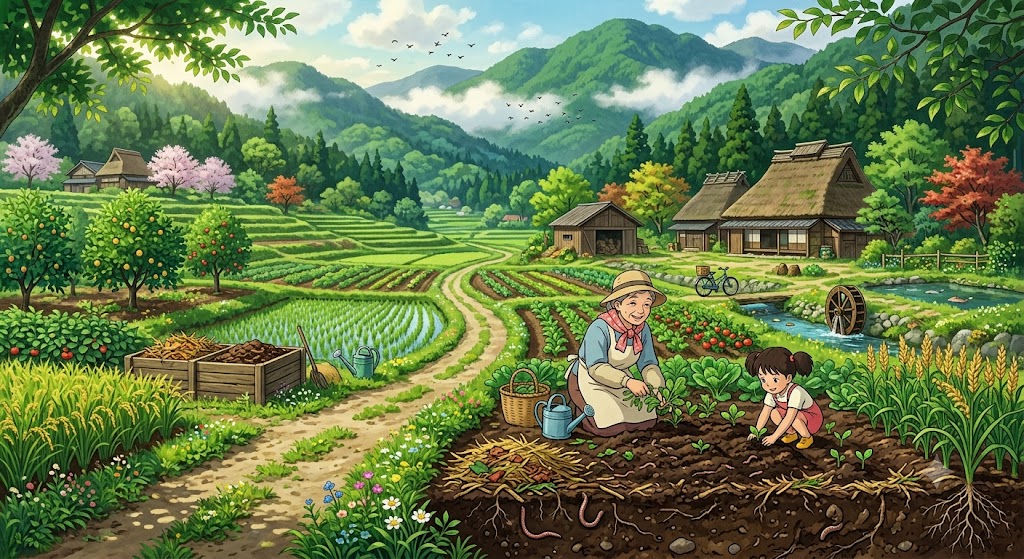
Healthy soil is one of the most important foundations of successful farming. It supports plant roots, stores water, cycles nutrients, and provides a home for countless microorganisms and soil organisms. When soil is repeatedly cultivated without replacing nutrients or protecting its structure, problems such as erosion, compaction, declining fertility, and poor water retention can gradually develop.
Sustainable farming focuses on producing crops while protecting the natural resources that make future production possible. Instead of relying on a single practice, sustainable agriculture combines several methods that work together to maintain productive soil, use water efficiently, reduce unnecessary inputs, and protect the surrounding environment.
For farmers in the United States, the United Kingdom, and other agricultural regions, these practices can be adapted to different soil types, climates, crops, and farm sizes.
Why Soil Health Matters for Long-Term Farming
Soil is much more than the material that holds a plant upright. A healthy soil system contains minerals, organic matter, air, water, microorganisms, fungi, insects, and other living organisms.
Good soil health can contribute to:
- Stronger root development
- Better water infiltration
- Improved moisture retention
- More efficient nutrient cycling
- Reduced erosion
- Better soil structure
- Greater resilience during dry or wet conditions
- More consistent crop growth
Soil health can decline when land is continuously disturbed, left bare, overworked, or managed without considering nutrient replacement and organic matter.
The goal of sustainable farming is therefore not simply to grow one successful crop. It is to maintain a productive growing environment year after year.
1. Keep the Soil Covered Whenever Possible
Bare soil is exposed to wind, rain, temperature changes, and moisture loss. During heavy rainfall, exposed soil can be washed away, taking valuable topsoil and nutrients with it.
Cover crops and crop residues can help protect the surface between growing seasons.
Common cover crops include:
- Rye
- Oats
- Barley
- Clover
- Vetch
- Radishes
- Peas
- Certain grasses and legumes
The most suitable choice depends on the local climate, soil conditions, farming system, and following crop.
A layer of plant residue left on the field can also reduce the impact of raindrops and slow water movement across the surface. In dry periods, surface cover may help reduce evaporation.
Farmers should manage residues carefully, however. Excessive residue can interfere with planting equipment or create other management challenges. The objective is to maintain useful soil protection without creating new problems.
2. Use Crop Rotation Instead of Growing the Same Crop Repeatedly
Growing the same crop in the same field year after year can increase pressure from particular pests and diseases and may repeatedly remove similar nutrients from the soil.
Crop rotation changes the crops grown on a field over time.
For example, a simple rotation might include:
Year 1: Corn
Year 2: Soybeans
Year 3: Small grains or a cover crop
Year 4: Another suitable crop or forage
The exact rotation should be designed around the farm’s climate, markets, soil characteristics, and available equipment.
Legumes can be especially useful in rotations because certain legumes form relationships with nitrogen-fixing bacteria that help supply nitrogen to the plant. After appropriate management, legume residues can contribute organic material and nutrients to the soil.
Rotation also creates changes in root patterns, residue types, planting dates, and crop management. This can make the farming system more diverse than continuous monocropping.
3. Reduce Unnecessary Soil Disturbance
Traditional intensive tillage can loosen soil temporarily, but repeated disturbance can damage soil structure and accelerate the breakdown of organic matter.
Conservation tillage, reduced tillage, and no-till systems attempt to minimize unnecessary soil disturbance.
Instead of repeatedly turning the entire soil surface, farmers may use equipment that places seeds into relatively undisturbed soil.
Potential advantages include:
- Less soil erosion
- Lower fuel consumption
- Improved soil structure over time
- Greater protection of soil organisms
- Better retention of crop residues
- Reduced field passes
However, reduced tillage is not automatically suitable for every farm. Weed pressure, soil type, drainage, climate, equipment availability, and crop selection all influence the results.
Farmers transitioning to reduced tillage may need several seasons to understand how their fields respond.
4. Add Organic Matter to the Soil
Organic matter plays an important role in soil structure and nutrient cycling. It comes from decomposing plant material, roots, manure, compost, and other biological sources.
Adding well-managed organic materials can support soil quality, particularly when combined with other conservation practices.
Possible sources include:
- Mature compost
- Properly managed animal manure
- Crop residues
- Cover crop biomass
- Green manure
- Plant-based organic materials
Organic amendments should be used carefully. Applying too much material can create nutrient imbalances or environmental problems.
Farmers should consider nutrient content, application rates, timing, and local regulations before applying manure or other amendments.
A soil test can help determine whether additional nutrients or amendments are actually needed.
5. Use Soil Testing Before Applying Fertilizers
Fertilizer is an important agricultural input, but more fertilizer does not necessarily mean better crop production.
Applying nutrients without knowing what the soil needs can waste money and may contribute to nutrient losses.
Regular soil testing can provide information about factors such as:
- Soil pH
- Phosphorus
- Potassium
- Organic matter
- Other nutrients, depending on the test
- Certain soil characteristics
Testing should be interpreted according to the crop being grown and local recommendations.
Instead of applying the same fertilizer rate across an entire farm, farmers can use soil-test information to make more informed decisions.
This approach can improve nutrient-use efficiency while reducing unnecessary applications.
6. Improve Water Management
Water management and soil health are closely connected.
Healthy soil with good structure can allow rainfall or irrigation water to enter the soil rather than immediately running across the surface.
Farmers can support water management through practices such as:
- Maintaining ground cover
- Using appropriate irrigation schedules
- Improving soil organic matter
- Protecting waterways
- Using drip or other efficient irrigation systems where appropriate
- Avoiding unnecessary irrigation
- Maintaining suitable drainage
Overwatering can reduce oxygen availability around roots and increase nutrient losses, while insufficient water can restrict crop development.
The goal is to supply crops with enough water while avoiding unnecessary waste.
In regions where water availability is becoming more challenging, efficient irrigation and moisture conservation can become especially important parts of farm planning.
7. Prevent Soil Compaction
Heavy machinery can place significant pressure on agricultural soil, particularly when fields are entered when the soil is wet.
Compacted soil may have fewer large pores, which can restrict root growth and reduce the movement of air and water.
Farmers can reduce compaction risk by:
- Avoiding unnecessary field traffic
- Staying off fields when soil is excessively wet
- Using controlled traffic systems where practical
- Reducing the number of machinery passes
- Maintaining appropriate tire pressure
- Planning field operations efficiently
The correct approach depends on soil texture and equipment.
A field that looks dry on the surface may still contain wet soil underneath, so timing machinery operations carefully can make a meaningful difference.
8. Encourage Beneficial Soil Biology
A productive soil contains a complex community of microorganisms and other organisms.
Bacteria, fungi, earthworms, insects, and other organisms participate in decomposition and nutrient cycling.
Practices that provide organic material and reduce unnecessary disturbance can create conditions that support soil biological activity.
This is one reason why sustainable farming is often approached as a whole system rather than a collection of individual techniques.
Instead of focusing only on the amount of fertilizer added, farmers can also consider:
What happens to the roots?
What happens to crop residues?
How much organic material returns to the soil?
How frequently is the soil disturbed?
These questions help farmers think about the biological processes happening below the surface.
9. Use Integrated Weed Management
Weed control is necessary for successful crop production, but sustainable management does not have to depend on a single control method.
Integrated weed management combines different approaches, such as:
- Crop rotation
- Cover crops
- Mulching
- Mechanical control
- Appropriate cultivation
- Competitive crop varieties
- Timely planting
- Targeted herbicide use when appropriate
The objective is to prevent weeds from becoming difficult to manage while reducing unnecessary reliance on any one technique.
Good weed management should also consider herbicide resistance. Repeatedly using the same herbicide mode of action can increase selection pressure for resistant weeds.
Using multiple management strategies can make weed control more resilient.
10. Create Habitat for Beneficial Insects and Wildlife
Farms do not have to function as completely isolated production zones.
Hedgerows, field margins, flowering plants, buffer areas, and other habitat features can provide resources for pollinators, birds, and beneficial insects.
Some insects prey on agricultural pests, while others contribute to pollination.
A farm might incorporate:
- Flowering strips
- Hedgerows
- Grass buffer zones
- Tree lines
- Ponds or wetland areas where appropriate
- Uncultivated field margins
These features need to be planned carefully so that they complement agricultural production rather than interfere with field operations.
Biodiversity can be part of a broader farm-management strategy that protects soil, water, and surrounding ecosystems.
11. Protect Soil From Erosion
Erosion can remove the most valuable part of agricultural soil: the nutrient-rich topsoil.
Wind erosion can be particularly important in dry, exposed areas, while water erosion can become severe during heavy rainfall or on sloping land.
Farmers can use several erosion-control techniques.
Contour Farming
On sloping fields, planting and field operations along the natural contour can slow water movement.
Terracing
Terraces can divide long slopes into smaller sections and reduce the speed of runoff where appropriate.
Vegetative Buffer Strips
Grass or other vegetation can slow runoff before it reaches waterways.
Cover Crops
Living plants protect the soil surface and their roots help hold soil in place.
Residue Management
Keeping suitable crop residue on the field can reduce exposure to wind and rain.
The most appropriate method depends heavily on the landscape and local conditions.
12. Consider Precision Agriculture
Technology can help farmers manage inputs more efficiently.
GPS guidance, soil sensors, satellite imagery, drones, yield monitors, and variable-rate equipment can provide information about differences within a field.
Instead of treating every part of a field exactly the same, precision agriculture can help identify areas that may require different management.
For example, one part of a field may have lower nutrient levels while another already has sufficient fertility.
Variable-rate applications can potentially help match certain inputs to field conditions.
Technology does not replace agricultural knowledge, but it can provide better information for making management decisions.
13. Manage Livestock and Cropland Together
Where appropriate, integrating livestock with crop production can create additional opportunities for nutrient cycling.
Crop residues can provide feed or grazing resources, while properly managed livestock manure can return nutrients and organic matter to fields.
However, livestock integration requires careful planning.
Overgrazing can damage vegetation and expose soil, while poorly managed manure can contribute to nutrient runoff.
Rotational grazing and appropriate stocking levels can help protect pasture vegetation and soil structure.
The key is management. Simply adding livestock to a farming system does not automatically make it sustainable.
14. Monitor Soil Health Over Time
Sustainable farming works best when farmers measure results instead of relying entirely on assumptions.
A soil-health monitoring program might include:
| What to Monitor | Why It Matters |
|---|---|
| Soil organic matter | Indicates changes in soil condition over time |
| Soil pH | Influences nutrient availability |
| Nutrient levels | Helps guide fertilizer decisions |
| Soil structure | Affects water and root movement |
| Infiltration | Shows how easily water enters soil |
| Crop performance | Provides practical evidence from the field |
| Erosion | Helps identify areas losing valuable soil |
| Compaction | Can reveal restrictions to root growth |
Not every measurement needs to be performed every season. Farmers can work with local agronomists, soil laboratories, extension services, or agricultural advisers to establish a practical monitoring schedule.
A Practical Sustainable Farming Combination
Sustainable practices become more powerful when they are combined.
For example, a farmer might use:
Crop rotation
↓
Cover crops
↓
Reduced tillage
↓
Soil testing
↓
Targeted nutrient application
↓
Efficient irrigation
↓
Regular soil-health monitoring
Each practice addresses a different part of the farming system.
Cover crops protect the surface. Crop rotation increases diversity. Reduced tillage protects soil structure. Soil testing improves nutrient decisions. Efficient irrigation manages water. Monitoring shows whether the overall system is improving.
How Farmers Can Start Without Changing Everything at Once
One common mistake is trying to introduce too many new practices simultaneously.
A better approach may be to start with one field or a small section of a farm.
For example:
Step 1: Conduct a soil test.
Step 2: Identify the biggest soil-management problem.
Step 3: Select one practical conservation practice.
Step 4: Test it on a manageable area.
Step 5: Record crop performance, costs, labor, and soil observations.
Step 6: Compare the results with conventional management.
Step 7: Adjust the approach before expanding it.
This makes it easier to identify which practices actually work under local conditions.
Sustainable Farming in the USA and UK
Farm conditions vary considerably across the United States and United Kingdom.
In the USA, farmers may deal with challenges ranging from drought and wind erosion in western regions to heavy rainfall and nutrient runoff in parts of the Midwest and Southeast.
In the UK, farmers often need to consider wet conditions, soil drainage, erosion, nutrient management, and changing weather patterns.
Because conditions differ even within the same country, there is no universal sustainable farming formula.
Local soil tests, agricultural extension services, farming organizations, weather information, and professional agronomic advice can help farmers adapt conservation practices to their own land.
Common Mistakes to Avoid
Sustainable farming is not simply about adopting practices that sound environmentally friendly. Poor implementation can reduce their effectiveness.
Farmers should avoid:
- Applying compost or manure without considering nutrient content
- Irrigating based only on a fixed schedule
- Entering wet fields with heavy machinery unnecessarily
- Planting unsuitable cover crops
- Ignoring weed and pest resistance
- Assuming one conservation method works everywhere
- Making major changes without monitoring results
- Treating soil fertility as only a fertilizer issue
Good sustainable management combines observation, measurement, planning, and gradual improvement.
A Simple Long-Term Soil Health Checklist
Before each growing season, farmers can ask:
- Is the soil protected from erosion?
- What crop was grown previously?
- Does the next crop fit the rotation?
- Does the soil test show nutrient deficiencies?
- Is organic matter being maintained?
- Can unnecessary tillage be reduced?
- Is machinery likely to cause compaction?
- Can irrigation be improved?
- Are weeds becoming resistant to current control methods?
- Are field margins or buffer areas needed?
- What soil-health measurements should be recorded this season?
These questions can turn sustainability into a practical management routine rather than an abstract goal.
Final Thoughts
Sustainable farming is fundamentally about maintaining the ability of land to produce crops in the future.
Healthy soil does not develop from one fertilizer application, one cover crop, or one season of reduced tillage. It is built gradually through consistent management.
Crop rotation, cover crops, reduced soil disturbance, organic matter management, responsible fertilizer use, efficient irrigation, erosion control, biodiversity, and soil monitoring can all contribute to a stronger agricultural system.
The best approach will vary from farm to farm. What matters most is understanding the condition of the soil, identifying the biggest risks, choosing practical improvements, and measuring the results over time.
By treating soil as a living and valuable resource rather than simply a growing medium, farmers can work toward productive fields that remain useful for many seasons to come.