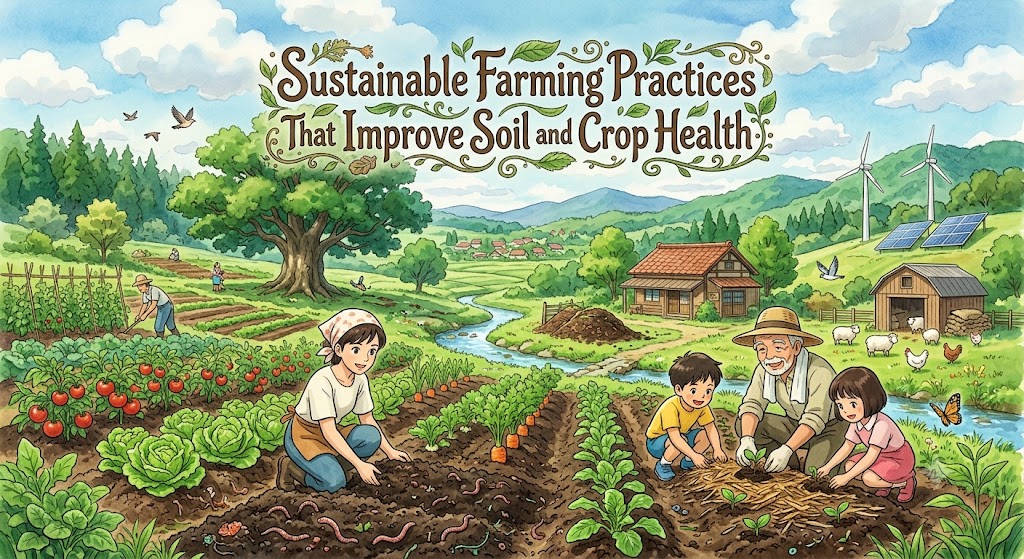
Sustainable farming is more than an environmentally friendly approach to agriculture—it is a practical system for producing healthy crops while protecting the natural resources that farming depends on. Healthy soil, clean water, beneficial microorganisms, and biodiversity all play essential roles in long-term agricultural success. When these resources are managed responsibly, farms become more productive, resilient, and profitable over time.
Many conventional farming challenges, including declining soil fertility, erosion, nutrient loss, water shortages, and increasing pest pressure, can often be reduced through sustainable management practices. Instead of relying solely on synthetic inputs, sustainable farming focuses on improving the natural health of the farming ecosystem.
Whether you manage a small family farm or a large commercial operation, adopting sustainable practices can improve crop quality, reduce production costs, and build healthier soils for future generations.
Why Sustainable Farming Matters
Healthy soil is the foundation of successful agriculture. It supplies nutrients, stores water, supports beneficial organisms, and anchors plant roots.
When soil becomes degraded through excessive tillage, erosion, nutrient depletion, or poor management, crop productivity often declines. Farmers may then become increasingly dependent on fertilizers and other costly inputs.
Sustainable farming aims to restore natural soil functions while maintaining profitable crop production. Over time, healthy soils become easier to manage, more resistant to drought, and better able to support strong plant growth.
Long-term sustainability also helps protect nearby rivers, groundwater, wildlife habitats, and surrounding ecosystems.
Build Soil Organic Matter
One of the most important goals in sustainable farming is increasing soil organic matter.
Organic matter improves nearly every aspect of soil quality.
Benefits include:
- Better water retention
- Improved soil structure
- Enhanced nutrient availability
- Increased microbial activity
- Reduced soil erosion
- Stronger root development
Farmers can increase organic matter by incorporating compost, well-decomposed manure, crop residues, and other organic materials into the soil.
Rather than removing or burning crop residues after harvest, returning them to the field allows nutrients to recycle naturally.
Over time, soils rich in organic matter become more fertile and resilient.
Practice Crop Rotation
Growing the same crop continuously on the same land can lead to nutrient depletion, increased disease pressure, and higher pest populations.
Crop rotation helps break these cycles.
Different crops have different nutrient requirements and root structures. Rotating cereals, legumes, vegetables, and cover crops allows soil nutrients to recover while reducing the buildup of crop-specific pests and diseases.
Legumes such as beans and peas can also contribute nitrogen to the soil through their relationship with beneficial bacteria.
A well-planned rotation improves both soil fertility and long-term crop performance.
Plant Cover Crops
Cover crops are grown primarily to improve soil rather than for harvest.
Popular cover crops include:
- Clover
- Rye
- Oats
- Mustard
- Vetch
- Cowpea
These crops provide numerous benefits.
Their roots reduce erosion, improve soil structure, suppress weeds, and increase organic matter.
Some cover crops capture leftover nutrients, preventing them from washing away during heavy rainfall.
Legume cover crops also contribute nitrogen that becomes available for future crops.
Keeping living roots in the soil for more months of the year supports healthier microbial communities.
Reduce Excessive Tillage
Frequent deep tillage can damage soil structure, destroy beneficial organisms, increase erosion, and reduce organic matter over time.
Conservation tillage or minimum tillage helps preserve soil health.
Reducing unnecessary soil disturbance allows beneficial fungi, earthworms, and microorganisms to remain active.
Healthy soil structure improves water infiltration and reduces surface runoff.
While some tillage may still be necessary depending on local conditions, minimizing disturbance often improves long-term soil quality.
Apply Compost and Organic Fertilizers
Compost provides both nutrients and valuable organic matter.
Unlike many synthetic fertilizers that primarily supply plant nutrients, compost also improves soil biology and physical structure.
Well-made compost supports beneficial microorganisms that help decompose organic material and make nutrients available to crops.
Other organic nutrient sources may include:
- Well-aged farmyard manure
- Vermicompost
- Poultry manure
- Green manure
- Crop residue compost
These materials should be properly composted before application to reduce pathogens and weed seeds.
Balanced nutrient management remains important even when using organic materials.
Improve Water Management
Efficient water use benefits both crop production and environmental sustainability.
Water-saving practices include:
- Drip irrigation
- Mulching
- Rainwater harvesting
- Proper irrigation scheduling
- Soil moisture monitoring
Applying water only when crops actually need it reduces waste while lowering pumping costs.
Healthy soils containing higher organic matter also retain moisture more effectively, helping crops withstand short periods of drought.
Proper drainage is equally important because waterlogged soils may damage roots and encourage disease.
Use Mulching
Mulch covers the soil surface with organic or biodegradable materials.
Common mulch materials include:
- Straw
- Dry leaves
- Grass clippings
- Wood chips
- Compost
- Crop residues
Mulching provides several important benefits.
It reduces weed growth, conserves soil moisture, moderates soil temperature, and decreases erosion caused by rainfall.
As organic mulch decomposes, it gradually contributes nutrients and improves soil organic matter.
Mulching also reduces evaporation, allowing irrigation water to be used more efficiently.
Encourage Beneficial Soil Organisms
Healthy soil contains millions of living organisms that support crop growth.
These include:
- Earthworms
- Beneficial bacteria
- Fungi
- Nematodes
- Arthropods
These organisms decompose organic matter, recycle nutrients, improve soil structure, and support healthy root systems.
Avoiding excessive chemical use helps maintain balanced soil biology.
Adding compost and minimizing soil disturbance encourage these beneficial organisms to thrive.
Healthy biological activity is one of the strongest indicators of productive soil.
Practice Integrated Pest Management
Sustainable farming does not rely solely on pesticides.
Integrated Pest Management (IPM) combines multiple methods to reduce pest damage while minimizing environmental impact.
Effective IPM practices include:
- Crop monitoring
- Pest identification
- Biological control
- Crop rotation
- Resistant crop varieties
- Mechanical control
- Targeted pesticide use only when necessary
Natural predators such as ladybirds, lacewings, parasitic wasps, and certain birds help control harmful insect populations.
Maintaining ecological balance often reduces long-term pest problems.
Improve Biodiversity on the Farm
Biodiversity strengthens agricultural ecosystems.
Growing different crops, maintaining hedgerows, planting flowering borders, and preserving natural habitats encourage beneficial insects and pollinators.
Pollinators such as bees are essential for many fruit and vegetable crops.
Diverse farms also reduce the risk associated with disease outbreaks or market fluctuations affecting a single crop.
Plant diversity improves soil biology while creating more resilient farming systems.
Test Soil Regularly
Many farmers apply fertilizers without knowing the actual nutrient status of their soil.
Regular soil testing provides valuable information about:
- pH
- Organic matter
- Nitrogen
- Phosphorus
- Potassium
- Micronutrients
Testing helps farmers apply fertilizers more accurately, reducing unnecessary costs while avoiding nutrient deficiencies or excesses.
Balanced nutrition supports stronger crop growth and healthier soils.
Soil testing should become a routine part of long-term farm management.
Prevent Soil Erosion
Soil erosion removes valuable topsoil that may take decades to replace naturally.
Common erosion control measures include:
- Cover crops
- Contour farming
- Terracing
- Windbreaks
- Mulching
- Permanent vegetation
- Reduced tillage
Protecting topsoil preserves nutrients, organic matter, and water-holding capacity.
Preventing erosion is usually much less expensive than restoring degraded farmland.
Manage Nutrients Responsibly
Applying excessive fertilizer does not necessarily increase crop yields.
Overapplication may:
- Waste money
- Pollute waterways
- Damage soil biology
- Reduce nutrient efficiency
Instead, nutrient management should match crop needs.
Combining soil testing, organic matter, crop rotation, and responsible fertilizer use improves nutrient efficiency while protecting the environment.
Split fertilizer applications often improve nutrient uptake compared with applying the entire amount at once.
Integrate Livestock and Crops
Where appropriate, combining crop production with livestock creates a more balanced farming system.
Livestock provide manure that improves soil fertility.
Crop residues may become animal feed.
Properly managed integrated farming reduces waste while recycling nutrients within the farm.
Rotational grazing can also improve pasture health when managed responsibly.
Adopt Precision Agriculture
Modern technology supports sustainable farming by improving resource efficiency.
Useful technologies include:
- GPS-guided equipment
- Soil moisture sensors
- Drones
- Satellite imagery
- Smart irrigation systems
- Variable-rate fertilizer application
These tools allow farmers to apply water, fertilizer, and crop protection products only where needed.
Precision agriculture reduces waste while improving productivity.
Maintain Detailed Farm Records
Accurate records support better decision-making.
Farm records should include:
- Crop varieties
- Planting dates
- Soil test results
- Fertilizer applications
- Irrigation schedules
- Pest observations
- Harvest yields
- Weather conditions
Reviewing historical records helps identify successful practices and areas needing improvement.
Good documentation also supports sustainability certification programs where applicable.
Long-Term Benefits of Sustainable Farming
Farmers adopting sustainable practices often experience improvements that extend beyond immediate crop production.
Long-term advantages include:
- Improved soil fertility
- Better water conservation
- Higher organic matter
- Increased biodiversity
- Reduced erosion
- Lower input costs
- Greater resilience during drought
- Improved crop quality
- Enhanced farm profitability
- Stronger environmental protection
Although some improvements take time to become visible, consistent management usually produces lasting benefits.
Frequently Asked Questions
What is sustainable farming?
Sustainable farming is an agricultural approach that produces crops while protecting soil, water, biodiversity, and other natural resources for future generations.
How does crop rotation improve soil health?
Crop rotation reduces nutrient depletion, interrupts pest and disease cycles, improves soil structure, and supports balanced nutrient availability.
Why is organic matter important?
Organic matter improves water retention, nutrient availability, soil structure, microbial activity, and overall soil fertility.
Can sustainable farming reduce production costs?
Yes. Better soil health, efficient water use, improved nutrient management, and reduced pest pressure can lower long-term production expenses.
Is sustainable farming suitable for small farms?
Absolutely. Many sustainable practices—including composting, mulching, crop rotation, cover cropping, and efficient irrigation—can be successfully adopted by both small and large farms.
Conclusion
Sustainable farming is not simply a trend—it is a practical investment in the future of agriculture. By improving soil health, conserving water, increasing biodiversity, and using natural resources responsibly, farmers can produce healthier crops while protecting the land that supports their livelihoods. Practices such as crop rotation, cover cropping, compost application, reduced tillage, efficient irrigation, and integrated pest management create stronger farming systems that are better prepared to handle changing climates and growing food demands.
Success in sustainable agriculture comes from consistent management rather than quick solutions. Farmers who focus on building healthy soils today are laying the foundation for higher productivity, greater profitability, and long-term farm resilience for years to come.