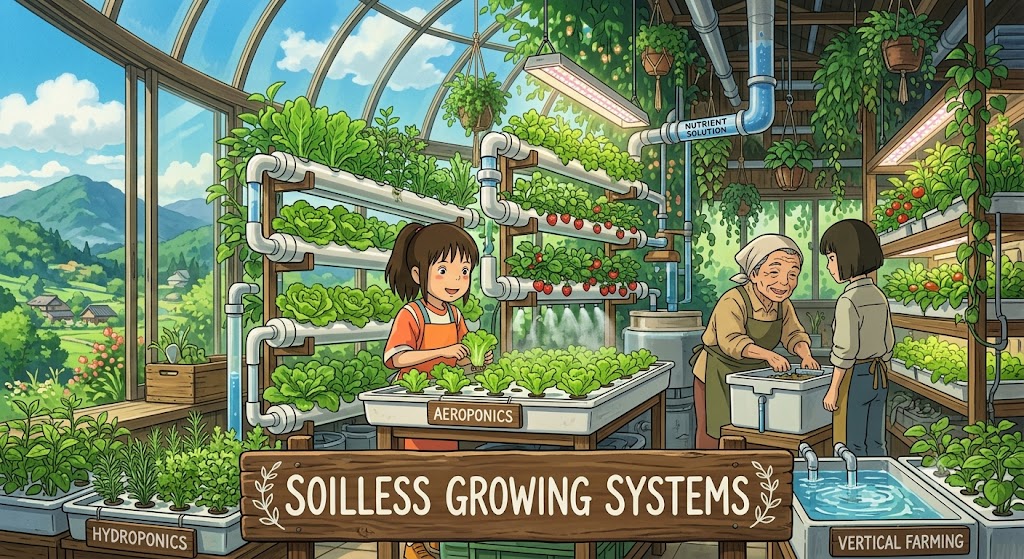
As global food demand continues to rise, farmers and agricultural innovators are exploring new methods of food production that require fewer natural resources while delivering higher yields. Traditional farming has supported food production for centuries, but challenges such as land scarcity, soil degradation, water shortages, and climate change are driving the adoption of alternative cultivation systems.
One of the most promising innovations in modern agriculture is soilless growing. These systems allow crops to grow without conventional soil by supplying plants with water, nutrients, and oxygen through carefully managed environments. Soilless cultivation methods are increasingly being used in commercial farming, urban agriculture, greenhouses, and controlled-environment production systems.
By maximizing resource efficiency and reducing environmental limitations, soilless growing systems are helping shape the future of sustainable food production.
Understanding Soilless Growing Systems
Soilless growing refers to agricultural methods that cultivate plants without using natural soil as the primary growing medium.
Instead, plants receive nutrients through:
- Water-based nutrient solutions
- Inert growing media
- Controlled root environments
The primary goal is to provide crops with precisely what they need for optimal growth while minimizing waste and environmental stress.
Common soilless growing methods include:
- Hydroponics
- Aeroponics
- Aquaponics
- Substrate-based systems
Each approach offers unique advantages depending on production goals and available resources.
Why Soilless Farming Is Growing in Popularity
Several global challenges are increasing interest in soilless agriculture.
These include:
- Declining arable land
- Soil degradation
- Water scarcity
- Urban population growth
- Climate variability
- Demand for year-round production
Soilless systems help address these challenges by producing crops efficiently in controlled environments.
Benefits include:
- Higher yields
- Reduced water use
- Faster plant growth
- Improved resource efficiency
- Reduced disease pressure
- Better production consistency
These advantages make soilless farming attractive for both small-scale and commercial producers.
Hydroponics: The Most Common Soilless System
Hydroponics is one of the most widely used forms of soilless cultivation.
In hydroponic systems, plant roots receive nutrients through a water-based solution rather than soil.
Popular hydroponic techniques include:
Nutrient Film Technique (NFT)
A thin stream of nutrient solution continuously flows past plant roots.
Deep Water Culture (DWC)
Plant roots remain suspended in oxygenated nutrient-rich water.
Drip Hydroponics
Nutrient solutions are delivered directly to individual plants.
Ebb and Flow Systems
Growing beds are periodically flooded and drained with nutrient solution.
Hydroponics offers precise control over nutrient delivery and supports rapid plant growth.
Aeroponics: Growing Plants in Air
Aeroponics is an advanced growing system where plant roots are suspended in the air and regularly misted with nutrient-rich water.
Benefits include:
- Excellent oxygen availability
- Faster growth rates
- Efficient nutrient absorption
- Reduced water consumption
Aeroponic systems are often used for high-value crops and research applications due to their exceptional efficiency.
Although setup costs can be higher, aeroponics offers impressive production potential.
Aquaponics: Combining Fish and Plant Production
Aquaponics integrates aquaculture and hydroponics into a single production system.
In this system:
- Fish produce waste.
- Beneficial bacteria convert waste into plant nutrients.
- Plants absorb nutrients and help purify the water.
Benefits include:
- Efficient nutrient recycling
- Reduced fertilizer requirements
- Dual income opportunities
- Sustainable resource utilization
Aquaponics supports both fish and crop production while minimizing waste.
Substrate-Based Growing Systems
Some soilless systems use inert growing media to support plant roots.
Common growing media include:
- Coconut coir
- Perlite
- Vermiculite
- Rockwool
- Expanded clay pellets
These materials provide physical support while allowing precise nutrient management.
Substrate systems are widely used in greenhouse vegetable production.
Improved Water Efficiency
One of the greatest advantages of soilless systems is their efficient use of water.
Traditional agriculture often loses water through:
- Evaporation
- Runoff
- Deep percolation
Soilless systems recycle and reuse water more effectively.
In many cases, hydroponic systems use significantly less water than conventional field production.
This makes them especially valuable in regions facing water scarcity.
Higher Crop Productivity
Soilless cultivation often produces higher yields compared to traditional farming.
This occurs because:
- Nutrients are delivered directly to roots.
- Plants experience less stress.
- Environmental conditions can be optimized.
- Water availability remains consistent.
Many crops grow faster and produce more harvestable products in controlled systems.
Higher productivity improves profitability and food production efficiency.
Reduced Land Requirements
Soilless systems can be established in locations where conventional agriculture may be difficult.
Examples include:
- Urban environments
- Rooftops
- Warehouses
- Greenhouses
- Areas with poor soil quality
Vertical farming technologies often combine soilless cultivation with stacked production systems, maximizing output from limited space.
This creates opportunities for food production in densely populated regions.
Better Pest and Disease Management
Many soil-borne diseases are eliminated in soilless production systems.
Advantages include:
- Reduced pathogen exposure
- Cleaner growing environments
- Lower pesticide requirements
- Improved crop health
Controlled growing conditions allow farmers to identify and manage problems more effectively.
This often results in higher-quality produce.
Year-Round Crop Production
Traditional farming is heavily influenced by seasonal conditions.
Soilless systems can operate continuously within controlled environments.
Benefits include:
- Consistent harvests
- Stable supply chains
- Improved market access
- Better financial planning
Year-round production is particularly valuable for commercial growers serving retail and food service markets.
Popular Crops for Soilless Production
Many crops perform exceptionally well in soilless systems.
Examples include:
Leafy Greens
- Lettuce
- Spinach
- Kale
- Arugula
Herbs
- Basil
- Mint
- Parsley
- Cilantro
Fruiting Vegetables
- Tomatoes
- Cucumbers
- Peppers
- Strawberries
High-value crops often provide the best economic returns in controlled environments.
Nutrient Management in Soilless Systems
Proper nutrient management is critical for success.
Essential plant nutrients include:
- Nitrogen
- Phosphorus
- Potassium
- Calcium
- Magnesium
- Trace elements
Growers must regularly monitor nutrient concentrations and adjust formulations as crops develop.
Balanced nutrition supports healthy growth and maximum productivity.
Challenges of Soilless Farming
Despite its advantages, soilless cultivation presents certain challenges.
These may include:
- Initial investment costs
- Technical knowledge requirements
- Equipment maintenance
- Power dependency
- Water quality management
Proper training and management are essential for long-term success.
Fortunately, advances in technology are making these systems increasingly accessible.
Environmental Benefits
Soilless growing systems contribute to sustainability through:
- Reduced water use
- Lower land requirements
- Reduced soil degradation
- Improved nutrient efficiency
- Reduced agricultural runoff
These environmental benefits support responsible food production and resource conservation.
Future Developments in Soilless Agriculture
Emerging innovations include:
- Automated nutrient management
- Artificial intelligence monitoring systems
- Advanced climate control technologies
- Smart sensors
- Vertical farming integration
These advancements are expected to improve efficiency and further expand the role of soilless cultivation in global agriculture.
Conclusion
Soilless growing systems are transforming modern agriculture by providing efficient, sustainable, and highly productive alternatives to traditional soil-based farming. Through methods such as hydroponics, aeroponics, aquaponics, and substrate-based cultivation, growers can produce high-quality crops while conserving water, reducing land requirements, and improving resource efficiency.
As global food production challenges continue to evolve, soilless farming offers a practical solution for increasing agricultural productivity while protecting natural resources. Farmers and entrepreneurs who adopt these innovative systems are positioning themselves at the forefront of the future of food production.