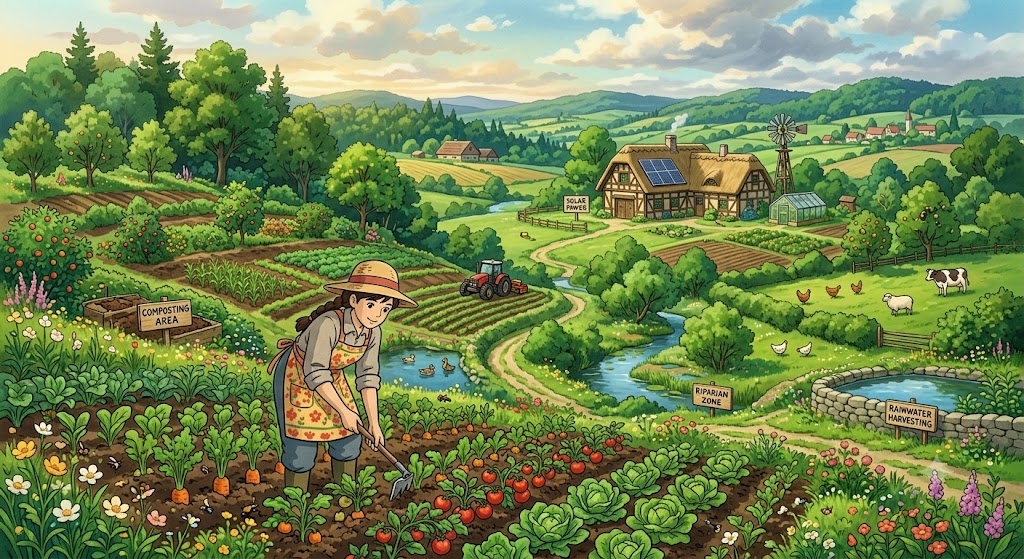
Agriculture is essential for feeding the world’s growing population, but modern farming faces increasing challenges. Soil degradation, water scarcity, climate change, biodiversity loss, and rising production costs are forcing farmers to rethink traditional approaches. To ensure long-term productivity and profitability, many growers are turning to sustainable farming practices that protect natural resources while maintaining healthy crop yields.
Sustainable agriculture focuses on meeting current food production needs without compromising the ability of future generations to produce food. It encourages responsible use of land, water, energy, and other resources while supporting environmental health and economic viability.
By adopting sustainable farming methods, farmers can build more resilient agricultural systems, reduce production risks, and improve long-term farm success. This guide explores some of the most effective sustainable farming practices that contribute to lasting agricultural productivity.
What Is Sustainable Farming?
Sustainable farming is an agricultural approach that balances productivity, profitability, and environmental responsibility.
The primary goals of sustainable agriculture include:
- Protecting soil health
- Conserving water resources
- Reducing environmental impact
- Enhancing biodiversity
- Supporting long-term productivity
- Improving farm profitability
Rather than focusing only on short-term yields, sustainable farming emphasizes long-term resource management and resilience.
Why Sustainable Agriculture Matters
Agricultural land and natural resources are not unlimited. Unsustainable farming practices can gradually reduce soil fertility, increase erosion, and create environmental problems that affect future production.
Benefits of Sustainable Farming
- Improved soil health
- Better water conservation
- Reduced production costs
- Increased biodiversity
- Greater climate resilience
- Long-term profitability
Farmers who invest in sustainability often build stronger and more productive farming operations over time.
Maintain Healthy Soil
Healthy soil is the foundation of successful agriculture.
Soil supports plant growth by providing:
- Nutrients
- Water
- Oxygen
- Beneficial microorganisms
Ways to Improve Soil Health
- Add compost and organic matter
- Reduce soil erosion
- Grow cover crops
- Practice crop rotation
- Minimize excessive tillage
Healthy soils improve crop performance while supporting long-term farm productivity.
Practice Crop Rotation
Growing the same crop repeatedly in the same field can deplete nutrients and increase pest and disease pressure.
Crop rotation helps maintain soil fertility by alternating crops with different nutrient requirements and growth characteristics.
Benefits of Crop Rotation
- Improved nutrient balance
- Better pest management
- Reduced disease outbreaks
- Enhanced soil structure
- Increased productivity
A well-designed crop rotation plan is a key component of sustainable agriculture.
Use Cover Crops
Cover crops are grown primarily to improve soil health rather than for harvest.
Common cover crops include:
- Clover
- Rye
- Vetch
- Mustard
- Alfalfa
Advantages of Cover Cropping
- Prevents soil erosion
- Improves soil structure
- Adds organic matter
- Conserves moisture
- Suppresses weeds
Cover crops help protect and enrich the soil between production seasons.
Conserve Water Resources
Water is one of agriculture’s most valuable resources.
Efficient water management is essential for long-term sustainability.
Water Conservation Strategies
- Drip irrigation
- Rainwater harvesting
- Soil moisture monitoring
- Mulching
- Efficient irrigation scheduling
Using water wisely helps reduce waste and improve crop performance.
Reduce Soil Disturbance
Excessive tillage can damage soil structure and reduce beneficial microbial activity.
Conservation tillage methods aim to minimize soil disturbance while maintaining productivity.
Benefits of Reduced Tillage
- Lower erosion rates
- Improved moisture retention
- Increased organic matter
- Better soil structure
- Enhanced microbial activity
Many sustainable farms use reduced-till or no-till systems to protect soil health.
Incorporate Organic Matter
Organic matter improves both soil fertility and structure.
Common sources include:
- Compost
- Animal manure
- Crop residues
- Green manure
- Plant materials
Benefits of Organic Matter
- Improved nutrient availability
- Better water retention
- Increased biological activity
- Enhanced soil structure
Regular additions of organic matter contribute significantly to sustainable crop production.
Implement Integrated Pest Management
Pests can cause major crop losses if not managed effectively.
Integrated Pest Management (IPM) combines multiple techniques to control pests while reducing dependence on chemical pesticides.
IPM Strategies
- Biological control
- Crop rotation
- Pest monitoring
- Resistant crop varieties
- Cultural practices
This balanced approach protects crops while minimizing environmental impacts.
Promote Biodiversity on the Farm
Biodiversity plays a critical role in healthy agricultural ecosystems.
A diverse farm environment supports:
- Pollinators
- Beneficial insects
- Soil organisms
- Wildlife habitats
Ways to Increase Biodiversity
- Plant native vegetation
- Maintain hedgerows
- Diversify crops
- Protect natural habitats
- Reduce unnecessary chemical use
Greater biodiversity often leads to more resilient farming systems.
Adopt Agroforestry Practices
Agroforestry combines trees and agricultural production on the same land.
Examples include:
- Windbreaks
- Alley cropping
- Silvopasture systems
- Tree-crop integration
Benefits of Agroforestry
- Improved soil conservation
- Enhanced biodiversity
- Carbon sequestration
- Better water management
- Additional income opportunities
Trees provide environmental and economic benefits within farming systems.
Utilize Renewable Energy
Many farms are adopting renewable energy technologies to reduce operating costs and environmental impact.
Popular options include:
- Solar power
- Wind energy
- Biogas systems
- Energy-efficient equipment
Advantages of Renewable Energy
- Lower utility costs
- Reduced carbon emissions
- Improved energy independence
- Long-term savings
Renewable energy contributes to more sustainable farm operations.
Manage Livestock Sustainably
Livestock can play an important role in sustainable agriculture when managed responsibly.
Sustainable Livestock Practices
- Rotational grazing
- Proper manure management
- Adequate animal welfare
- Efficient feed utilization
- Integrated crop-livestock systems
These practices improve productivity while reducing environmental pressure.
Reduce Waste Through Recycling
Sustainable farms aim to maximize resource efficiency and minimize waste.
Examples include:
- Composting crop residues
- Recycling organic materials
- Utilizing livestock manure
- Reusing farm by-products
Benefits
- Reduced waste disposal costs
- Improved soil fertility
- Better nutrient cycling
- Increased sustainability
Resource recycling supports both economic and environmental goals.
Use Technology to Improve Efficiency
Modern technologies can support sustainable farming by improving resource management.
Examples include:
- Precision agriculture
- Soil sensors
- Weather monitoring systems
- Smart irrigation technologies
- Farm management software
Technology helps farmers make informed decisions while reducing waste.
Building Climate Resilience
Climate change is creating new challenges for agricultural production.
Sustainable farming practices help farms adapt to:
- Droughts
- Floods
- Extreme temperatures
- Unpredictable weather patterns
Climate-Resilient Strategies
- Diversified crop systems
- Water conservation
- Soil improvement
- Agroforestry
- Improved risk management
Resilient farms are better equipped to withstand environmental challenges.
Frequently Asked Questions
1. What is sustainable farming?
Sustainable farming is an agricultural approach that protects natural resources while maintaining productive and profitable farming systems.
2. Why is soil health important in sustainable agriculture?
Healthy soil supports plant growth, improves water retention, increases nutrient availability, and contributes to long-term productivity.
3. How does crop rotation support sustainability?
Crop rotation improves soil fertility, reduces pest pressure, and helps maintain balanced nutrient use.
4. What is Integrated Pest Management?
Integrated Pest Management combines multiple pest control methods to reduce crop damage while minimizing environmental impact.
5. Can sustainable farming be profitable?
Yes. Sustainable farming often reduces input costs, improves resource efficiency, and supports long-term productivity and profitability.
Conclusion
Sustainable farming practices are essential for ensuring the future success of agriculture. By focusing on soil health, water conservation, biodiversity, responsible pest management, renewable energy, and efficient resource use, farmers can build productive systems that remain profitable and environmentally responsible over the long term.
While implementing sustainable practices may require planning and commitment, the benefits often extend far beyond immediate crop yields. Healthier soils, improved resilience, reduced costs, and stronger ecosystems contribute to long-term agricultural success and food security. As farming continues to evolve, sustainability will remain one of the most important foundations for productive and resilient agricultural systems.
Explore more helpful articles on our website for additional farming guides, agricultural innovations, and sustainable crop production strategies.