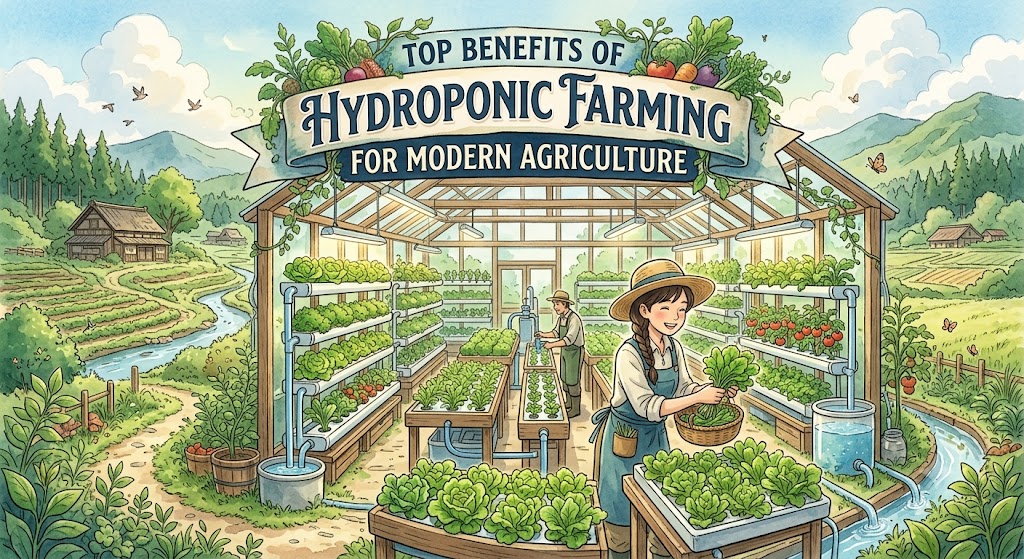
Agriculture is entering a new era where innovation is becoming just as important as fertile land and favorable weather. With rapid urbanization, shrinking farmland, climate change, and increasing food demand, farmers are searching for smarter ways to grow crops efficiently. One technology that has gained worldwide attention is hydroponic farming—a method of cultivating plants without soil by supplying nutrients directly through water.
Unlike conventional farming, hydroponics offers precise control over growing conditions, allowing farmers to produce fresh vegetables, herbs, and fruits throughout the year. From rooftop gardens and urban farms to large commercial greenhouses, hydroponic systems are proving that high-quality food can be produced using fewer natural resources while maintaining excellent productivity.
Although hydroponics requires careful management and an initial investment, its long-term advantages make it one of the most promising agricultural technologies for the future. This article explores the key benefits of hydroponic farming and explains why it is becoming an essential part of modern agriculture.
Understanding Hydroponic Farming
Hydroponics is a cultivation method in which plants grow without soil. Instead, their roots receive water enriched with carefully balanced nutrients that support healthy growth. Depending on the system, roots may be suspended directly in nutrient solution or supported by growing media such as coco peat, perlite, clay pellets, or rockwool.
Since nutrients are delivered directly to the roots, plants use less energy searching for food, allowing them to grow more efficiently than many soil-grown crops.
Faster Plant Growth
One of the biggest advantages of hydroponic farming is accelerated plant growth.
Because plants receive:
- Constant access to nutrients
- Adequate oxygen
- Consistent moisture
- Ideal environmental conditions
they spend more energy producing leaves, stems, flowers, and fruits instead of developing extensive root systems.
Many leafy vegetables mature significantly faster than those grown in traditional fields, allowing farmers to harvest more frequently.
Higher Crop Yields
Hydroponic systems often produce greater yields within the same area compared to conventional farming.
Higher productivity results from:
- Precise nutrient management
- Controlled irrigation
- Reduced plant stress
- Better spacing
- Continuous growing conditions
This makes hydroponics especially valuable where agricultural land is limited.
Commercial growers can maximize production without expanding farmland.
Significant Water Savings
Water scarcity is becoming one of agriculture’s greatest challenges.
Hydroponic farming addresses this issue by recycling nutrient solutions rather than allowing water to drain away.
Benefits include:
- Lower water consumption
- Minimal evaporation
- Reduced runoff
- Efficient irrigation
Compared to conventional farming, hydroponic systems can dramatically reduce water usage while maintaining excellent crop growth.
This makes the technology particularly suitable for regions facing drought or limited freshwater supplies.
Efficient Use of Space
Hydroponic farming is ideal for areas where land is expensive or unavailable.
Systems can be installed in:
- Greenhouses
- Rooftops
- Warehouses
- Balconies
- Urban buildings
- Indoor farms
Vertical farming techniques allow multiple layers of crops to be grown in the same footprint, greatly increasing productivity per square meter.
Urban agriculture has become more practical because of this space efficiency.
Year-Round Crop Production
Traditional farming depends heavily on seasonal weather conditions.
Hydroponic systems can operate throughout the year because growers control:
- Temperature
- Humidity
- Lighting
- Irrigation
- Nutrient supply
Continuous production provides several advantages:
- Regular harvests
- Stable income
- Reliable supply for customers
- Improved market opportunities
Farmers no longer need to rely entirely on favorable weather.
Reduced Soil-Borne Diseases
Many crop diseases originate in contaminated soil.
Since hydroponics eliminates soil entirely, growers avoid many common problems such as:
- Root rot caused by poor soil drainage
- Soil fungi
- Nematodes
- Certain bacterial infections
Although hydroponic systems still require disease management, the absence of soil reduces many traditional agricultural challenges.
Fewer Weed Problems
Weeds compete with crops for nutrients, sunlight, and water.
Because hydroponic systems do not use open soil:
- Weed growth is greatly reduced.
- Labor costs decline.
- Herbicide use decreases.
- Crop management becomes easier.
Farmers can spend more time improving production instead of controlling unwanted vegetation.
Better Nutrient Management
Hydroponics allows farmers to deliver nutrients with remarkable precision.
Essential nutrients such as nitrogen, phosphorus, potassium, calcium, magnesium, and micronutrients are dissolved directly into irrigation water.
Advantages include:
- Balanced nutrition
- Reduced fertilizer waste
- Faster nutrient absorption
- Healthier plant growth
Adjustments can be made quickly if nutrient deficiencies appear.
Cleaner Food Production
Hydroponically grown vegetables are often cleaner because they are not exposed to soil.
This reduces:
- Dirt contamination
- Soil residues
- Washing requirements
Fresh produce reaches consumers with an attractive appearance and excellent quality.
Many premium restaurants and supermarkets value hydroponic vegetables for their consistent cleanliness.
Improved Crop Quality
Controlled growing environments help produce vegetables with:
- Uniform size
- Better color
- Improved texture
- Consistent flavor
- Attractive appearance
Uniform produce meets commercial grading standards more easily, increasing market value.
Quality consistency also strengthens customer confidence.
Reduced Chemical Usage
Healthy hydroponic environments often reduce the need for excessive chemical applications.
Since there is no soil, many soil-related pests and diseases disappear.
Growers frequently combine hydroponics with:
- Biological pest control
- Integrated Pest Management (IPM)
- Beneficial insects
- Physical barriers
Reducing unnecessary pesticide use benefits both consumers and the environment.
Lower Environmental Impact
Hydroponic farming supports more sustainable agriculture by minimizing waste and improving resource efficiency.
Environmental benefits include:
- Reduced water pollution
- Lower fertilizer runoff
- Less soil degradation
- Efficient land use
- Reduced erosion
Responsible nutrient management also helps protect nearby rivers and groundwater.
Greater Climate Resilience
Climate change has made weather patterns increasingly unpredictable.
Floods, droughts, heatwaves, and storms can severely impact traditional farming.
Hydroponic systems offer protection through controlled environments where growers regulate:
- Temperature
- Water supply
- Humidity
- Light intensity
This stability improves production even during adverse weather conditions.
Better Profit Opportunities
Hydroponic farming often targets premium markets that value fresh, high-quality produce.
Popular buyers include:
- Restaurants
- Hotels
- Supermarkets
- Organic food stores
- Local farmers’ markets
- Online grocery services
High-value crops commonly grown hydroponically include:
- Lettuce
- Basil
- Spinach
- Kale
- Tomatoes
- Bell peppers
- Strawberries
Consistent quality and year-round availability help farmers secure long-term customers.
Supports Urban Agriculture
Cities continue to expand while farmland decreases.
Hydroponics makes local food production possible in urban environments.
Benefits include:
- Reduced transportation costs
- Fresher vegetables
- Lower carbon emissions
- Improved food security
Urban farms also create educational and employment opportunities within communities.
Compatible with Modern Technology
Hydroponic systems integrate easily with advanced agricultural technologies.
Many commercial farms now use:
- Automated irrigation
- Nutrient dosing systems
- Environmental sensors
- Smart controllers
- Artificial intelligence
- Remote monitoring apps
Automation reduces labor while improving production accuracy.
Challenges to Consider
Although hydroponic farming offers numerous benefits, successful management requires attention to detail.
Potential challenges include:
- Initial setup costs
- Electricity dependence
- Equipment maintenance
- Technical knowledge
- Water quality management
- Regular monitoring of pH and nutrient levels
Proper training and routine maintenance help minimize these challenges.
Tips for Maximizing Hydroponic Success
To achieve the best results:
- Start with beginner-friendly crops.
- Use clean, high-quality water.
- Monitor pH and EC regularly.
- Keep equipment clean.
- Ensure proper ventilation.
- Maintain stable temperatures.
- Inspect plants frequently.
- Replace nutrient solutions as recommended.
- Choose reliable seed varieties.
- Continue learning modern hydroponic techniques.
Careful management leads to healthier plants and higher productivity.
The Future of Hydroponic Farming
As the global population grows and natural resources become more limited, hydroponic farming is expected to play an increasingly important role in food production. Advances in renewable energy, automation, artificial intelligence, and vertical farming are making hydroponic systems more efficient and accessible than ever before.
Governments, researchers, and private companies continue investing in controlled-environment agriculture to improve food security while reducing environmental impact. With continuous technological innovation, hydroponics is likely to become a key component of sustainable agriculture in both urban and rural settings.
Conclusion
Hydroponic farming offers a modern solution to many of the challenges facing conventional agriculture. By conserving water, maximizing space, reducing soil-related problems, improving crop quality, and enabling year-round production, it provides farmers with an efficient and sustainable method of growing high-value crops.
Although success requires careful planning, technical knowledge, and consistent monitoring, the long-term benefits often outweigh the initial investment. Whether used for home gardening, commercial greenhouses, or urban farming projects, hydroponics represents an exciting opportunity to produce fresh, nutritious food while using natural resources more responsibly.
Frequently Asked Questions (FAQs)
1. What is the biggest advantage of hydroponic farming?
The biggest advantage is the ability to produce high-quality crops using less water and space while achieving faster growth and higher yields.
2. Does hydroponic farming save water?
Yes. Hydroponic systems recycle nutrient solutions, allowing them to use significantly less water than traditional soil-based farming.
3. Which crops are most suitable for hydroponics?
Leafy greens such as lettuce, spinach, kale, basil, and herbs are excellent choices, while tomatoes, cucumbers, bell peppers, and strawberries are also commonly grown.
4. Is hydroponic farming environmentally friendly?
Yes. It reduces water consumption, minimizes fertilizer runoff, lowers soil degradation, and supports more sustainable food production.
5. Can hydroponic farming be profitable?
Yes. With proper management, high-value crop selection, and access to reliable markets, hydroponic farming can provide consistent income and strong long-term profitability.