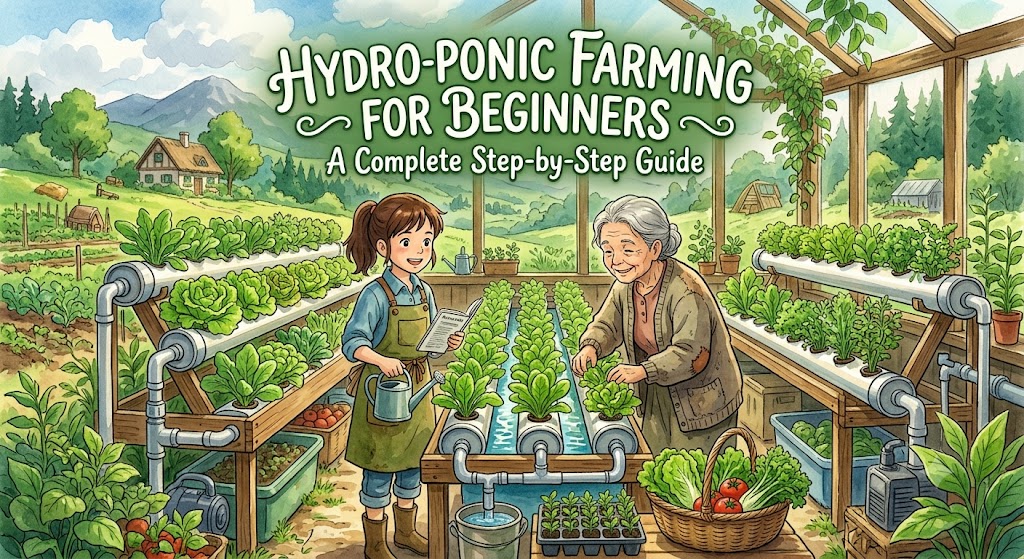
Hydroponic farming is transforming the way food is grown. Instead of relying on traditional soil-based cultivation, hydroponics allows plants to grow using nutrient-rich water, making it possible to produce fresh vegetables and herbs in limited spaces with remarkable efficiency. As urban populations expand and agricultural land becomes more limited, hydroponic farming has emerged as a practical solution for producing high-quality crops throughout the year.
From home gardeners growing lettuce on a balcony to commercial greenhouse operators supplying supermarkets, hydroponics offers flexibility, higher productivity, and efficient resource use. While the technology may seem complex at first, beginners can successfully start hydroponic farming by understanding the basic principles and following a well-planned approach.
This complete guide explains everything you need to know to begin hydroponic farming, including system selection, equipment, nutrient management, maintenance, and common mistakes to avoid.
What Is Hydroponic Farming?
Hydroponic farming is a method of growing plants without soil. Instead of obtaining nutrients from the ground, plant roots receive a carefully balanced nutrient solution dissolved in water. The roots may be supported by inert growing media such as coco peat, perlite, rockwool, or clay pellets, while the water supplies all essential nutrients required for healthy growth.
Because plants receive nutrients directly, they expend less energy searching for food, allowing them to grow faster and often produce higher yields than conventional farming methods.
Why Hydroponics Is Gaining Popularity
Hydroponic farming has become increasingly popular because it addresses many challenges associated with traditional agriculture.
Major advantages include:
- Faster plant growth
- Higher yields in small spaces
- Efficient water use
- Reduced weed problems
- Lower soil-borne disease risk
- Year-round cultivation
- Better control over plant nutrition
- Cleaner produce
These benefits make hydroponics attractive for both hobby growers and commercial farmers.
Step 1: Learn the Basics Before Investing
Before purchasing equipment, take time to understand how hydroponic systems work.
Important concepts include:
- Plant nutrition
- Water circulation
- Root oxygenation
- Light requirements
- pH management
- Electrical Conductivity (EC)
- Temperature control
A strong understanding of these basics helps prevent costly mistakes later.
Step 2: Choose the Right Hydroponic System
Several hydroponic systems are available, each with different levels of complexity.
Deep Water Culture (DWC)
In this system, plant roots remain suspended in oxygen-rich nutrient water.
Advantages:
- Easy to build
- Affordable
- Ideal for beginners
- Low maintenance
Suitable crops:
- Lettuce
- Spinach
- Basil
- Mint
Nutrient Film Technique (NFT)
A thin stream of nutrient solution continuously flows over plant roots.
Benefits:
- Excellent oxygen supply
- Efficient nutrient delivery
- Suitable for leafy vegetables
Popular crops:
- Lettuce
- Herbs
- Kale
- Bok choy
Drip Hydroponic System
Nutrient solution is delivered directly to each plant through small drip emitters.
Advantages:
- Good for larger plants
- Easy nutrient control
- Commercial applications
Suitable crops:
- Tomatoes
- Cucumbers
- Bell peppers
Ebb and Flow System
Growing trays are periodically flooded with nutrient solution before draining back into the reservoir.
Advantages:
- Good oxygen availability
- Supports various crops
- Flexible system
Wick System
The simplest hydroponic design uses absorbent wicks to transport nutrient solution to plant roots.
Advantages:
- No electricity required
- Very affordable
- Beginner friendly
Best suited for herbs and small leafy vegetables.
Step 3: Select an Appropriate Growing Location
Hydroponic systems can be installed in:
- Greenhouses
- Balconies
- Rooftops
- Backyards
- Indoor growing rooms
- Commercial sheds
The location should provide:
- Adequate sunlight or grow lights
- Good ventilation
- Stable temperatures
- Reliable electricity
- Clean water supply
A controlled environment helps maintain consistent plant growth.
Step 4: Gather Essential Equipment
A basic hydroponic setup typically includes:
- Growing containers
- Water reservoir
- Water pump
- Air pump
- Air stones
- Growing medium
- Net pots
- Nutrient solution
- pH meter
- EC meter
- Thermometer
- Tubing and connectors
Purchasing quality equipment reduces maintenance problems over time.
Step 5: Choose Suitable Crops
Some vegetables perform exceptionally well in hydroponic systems.
Excellent Beginner Crops
- Lettuce
- Spinach
- Kale
- Basil
- Mint
- Cilantro
- Pak Choi
- Arugula
Intermediate Crops
- Tomatoes
- Cucumbers
- Bell peppers
- Strawberries
- Eggplant
Leafy vegetables generally produce faster harvests and require less maintenance than fruiting crops.
Step 6: Prepare the Nutrient Solution
Plants depend entirely on nutrient solution for growth.
Essential nutrients include:
Macronutrients
- Nitrogen
- Phosphorus
- Potassium
- Calcium
- Magnesium
- Sulfur
Micronutrients
- Iron
- Zinc
- Copper
- Boron
- Manganese
- Molybdenum
Use commercially prepared hydroponic nutrient formulations designed for your chosen crops.
Always follow manufacturer recommendations when mixing nutrients.
Step 7: Monitor pH Levels
Maintaining proper pH is essential because it affects nutrient availability.
Most vegetables grow well within a pH range of:
5.5 to 6.5
If pH rises too high or falls too low, plants may develop nutrient deficiencies even when nutrients are present.
Regular monitoring helps maintain healthy growth.
Step 8: Monitor Electrical Conductivity (EC)
Electrical Conductivity measures nutrient concentration.
Too low:
- Slow growth
- Nutrient deficiencies
Too high:
- Root damage
- Leaf burn
- Poor water absorption
Each crop has its own recommended EC range.
Checking EC regularly prevents nutrient imbalances.
Step 9: Provide Adequate Lighting
Plants require sufficient light for photosynthesis.
Outdoor hydroponic farms rely on natural sunlight.
Indoor systems often use LED grow lights because they offer:
- Energy efficiency
- Low heat production
- Long lifespan
- Adjustable light intensity
Most leafy vegetables require approximately 12–16 hours of light daily.
Step 10: Maintain Proper Temperature
Temperature influences nutrient uptake and plant growth.
Recommended conditions include:
Air Temperature
18°C–26°C
Water Temperature
18°C–22°C
Extreme temperatures can reduce oxygen levels and slow plant development.
Maintaining stable conditions encourages healthy root systems.
Step 11: Ensure Good Oxygen Supply
Healthy roots require oxygen.
Air pumps continuously oxygenate nutrient solutions, preventing root diseases and promoting vigorous growth.
Poor oxygen supply often results in:
- Slow growth
- Yellow leaves
- Root rot
- Plant decline
Never overlook aeration.
Step 12: Regular System Maintenance
Routine maintenance keeps hydroponic systems operating efficiently.
Important tasks include:
- Cleaning reservoirs
- Checking pumps
- Replacing nutrient solution
- Inspecting tubing
- Monitoring pH and EC
- Removing dead leaves
- Preventing algae growth
Preventive maintenance reduces long-term problems.
Common Beginner Mistakes
Many new growers encounter similar challenges.
Avoid these mistakes:
Overfeeding Plants
Adding excessive nutrients can damage roots.
Ignoring pH
Incorrect pH prevents nutrient absorption.
Poor Water Quality
Use clean water with low contamination.
Inadequate Lighting
Insufficient light reduces growth and yields.
Neglecting System Cleaning
Dirty equipment encourages algae, bacteria, and disease.
Overcrowding Plants
Proper spacing improves airflow and reduces disease.
Pest and Disease Management
Although hydroponics reduces many soil-related problems, pests can still occur.
Common pests include:
- Aphids
- Whiteflies
- Spider mites
- Thrips
Preventive measures include:
- Keeping the growing area clean
- Inspecting plants regularly
- Using insect screens
- Introducing beneficial insects
- Applying safe biological controls when necessary
Healthy plants are naturally more resistant to pest attacks.
Water Conservation Benefits
Hydroponics is widely recognized for its efficient water use.
Compared with conventional farming:
- Water is continuously recycled.
- Evaporation losses are lower.
- Precise irrigation minimizes waste.
- Nutrient runoff is greatly reduced.
This makes hydroponics especially valuable in regions facing water scarcity.
Is Hydroponic Farming Profitable?
Hydroponic farming can be highly profitable when managed effectively.
Profitability depends on:
- Crop selection
- Local market demand
- Production scale
- Energy costs
- System efficiency
- Product quality
- Marketing strategy
Premium vegetables, herbs, and strawberries often command higher prices because of their freshness, consistency, and year-round availability.
Many growers increase profits by selling directly to restaurants, supermarkets, local markets, and consumers through subscription vegetable boxes.
Expanding Your Hydroponic Farm
Once you gain experience with a small setup, expansion becomes much easier.
Possible upgrades include:
- Greenhouse construction
- Automated nutrient dosing
- Climate control systems
- Smart irrigation controllers
- Solar-powered pumps
- Vertical farming structures
- Remote monitoring sensors
Gradual expansion reduces financial risk while improving production capacity.
The Future of Hydroponic Farming
Hydroponic farming is expected to become an increasingly important part of global food production. Rapid urbanization, shrinking farmland, climate change, and growing demand for fresh produce are encouraging investment in controlled-environment agriculture. Advances in automation, artificial intelligence, sensor technology, and renewable energy are making hydroponic systems more efficient and accessible than ever before.
As consumers continue to seek locally grown, pesticide-conscious, and high-quality vegetables, hydroponic farming offers an innovative solution that combines sustainability with commercial opportunity.
Conclusion
Hydroponic farming provides beginners with an exciting opportunity to grow healthy vegetables using less water, limited space, and carefully managed growing conditions. By understanding plant nutrition, selecting the right hydroponic system, maintaining proper pH and nutrient levels, and following regular maintenance practices, even first-time growers can achieve successful harvests.
Starting small allows you to build practical experience while minimizing investment and risk. As your knowledge grows, you can gradually expand into larger systems and diversify your crop selection. With patience, careful monitoring, and continuous learning, hydroponic farming can become a productive, sustainable, and profitable venture for years to come.
Frequently Asked Questions (FAQs)
1. Is hydroponic farming suitable for beginners?
Yes. Systems like Deep Water Culture (DWC) and Wick Systems are simple to set up and are ideal for beginners learning the basics of hydroponic cultivation.
2. Which vegetables grow best in hydroponics?
Lettuce, spinach, kale, basil, mint, bok choy, tomatoes, cucumbers, and bell peppers are among the most successful hydroponic crops.
3. Does hydroponic farming use less water than traditional farming?
Yes. Hydroponic systems recycle nutrient solutions, allowing them to use significantly less water than conventional soil-based farming.
4. Do hydroponic plants need sunlight?
Yes. Plants need light for photosynthesis. Outdoor systems use natural sunlight, while indoor setups commonly rely on LED grow lights.
5. Can hydroponic farming become a profitable business?
Yes. With proper crop selection, efficient management, and access to reliable markets, hydroponic farming can generate consistent income by producing high-quality vegetables throughout the year.