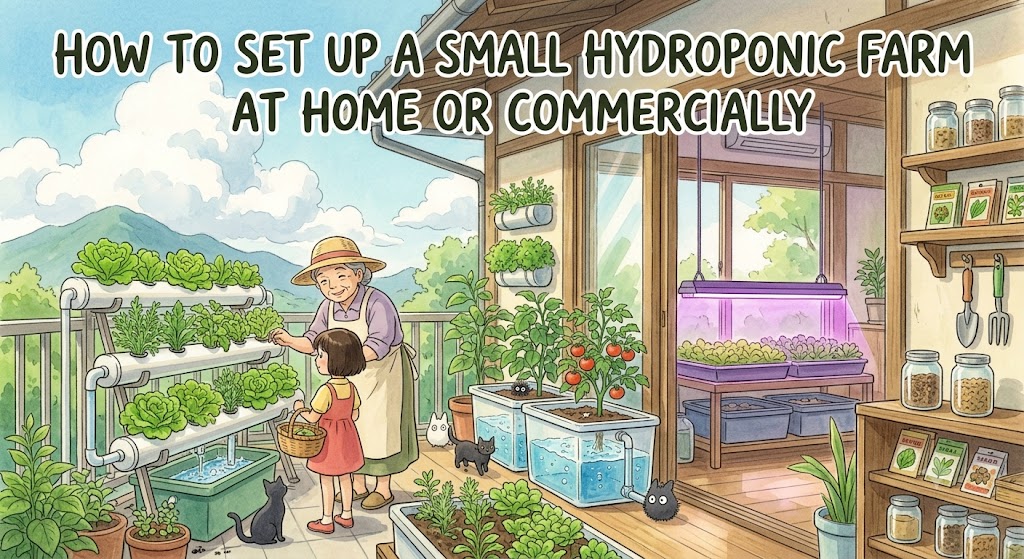
Starting a hydroponic farm is no longer limited to large agricultural companies or research facilities. Today, many homeowners, students, urban gardeners, and commercial farmers are successfully growing fresh vegetables without soil using compact hydroponic systems. Whether your goal is to supply your family with fresh produce or build a profitable farming business, a well-planned hydroponic setup can deliver consistent harvests throughout the year.
Unlike conventional farming, hydroponics allows plants to grow in a carefully controlled environment where water, nutrients, light, and temperature are managed with precision. Because every element of plant growth can be controlled, hydroponic farms often produce healthier crops while using less water and less space than traditional agriculture.
However, successful hydroponic farming does not begin with buying equipment. It begins with designing a system that matches your budget, available space, and production goals.
Define Your Farming Goal First
Before purchasing pumps, pipes, or growing trays, decide exactly what you want your hydroponic farm to achieve.
Ask yourself:
- Are you growing vegetables for your family?
- Do you plan to sell fresh produce?
- Will the system be indoors or outdoors?
- How much space is available?
- What budget have you set aside?
Clear goals make every future decision much easier.
Select the Right Location
The location of your hydroponic farm directly affects crop performance.
An ideal location should provide:
- Adequate sunlight or artificial lighting
- Reliable electricity
- Clean water supply
- Good ventilation
- Easy access for maintenance
- Protection from heavy rain and strong winds
For commercial production, choose a location close to transportation routes and potential buyers whenever possible.
Estimate the Space You Need
Hydroponic farming is highly flexible.
Different production goals require different amounts of space.
| Farm Type | Approximate Space Requirement |
|---|---|
| Kitchen garden | Balcony or small backyard |
| Home production | 10–30 square meters |
| Small commercial farm | 100–500 square meters |
| Greenhouse production | Larger customized structures |
Vertical growing systems allow farmers to maximize production even in limited spaces.
Choose the Most Suitable Hydroponic System
There is no single hydroponic system that fits every situation.
The choice depends on your crops, budget, and experience.
Common options include:
Deep Water Culture (DWC)
Simple and beginner-friendly.
Excellent for leafy vegetables.
Nutrient Film Technique (NFT)
Widely used for lettuce, herbs, and leafy greens.
Provides continuous nutrient circulation.
Drip System
Suitable for tomatoes, cucumbers, peppers, and strawberries.
Allows precise water and nutrient delivery.
Ebb and Flow
Ideal for growers wanting flexibility across different crop types.
Aeroponics
An advanced system where roots receive nutrient-rich mist.
Offers rapid growth but requires greater technical knowledge.
Gather Essential Equipment
Every hydroponic farm requires several basic components.
These include:
- Water reservoir
- Growing channels or trays
- Water pump
- Air pump (where required)
- PVC pipes or tubing
- Net pots
- Growing media
- Nutrient solution
- pH meter
- Electrical conductivity (EC) meter
- Timer
- LED grow lights for indoor systems
Purchasing reliable equipment reduces maintenance problems later.
Prepare the Nutrient Solution
Plants depend entirely on the nutrient solution for their growth.
A balanced solution normally contains:
- Nitrogen
- Phosphorus
- Potassium
- Calcium
- Magnesium
- Sulfur
- Iron
- Zinc
- Manganese
- Boron
- Copper
- Molybdenum
Maintaining the correct nutrient balance is essential for healthy plant development.
Start With Easy Crops
Beginners often achieve better results by choosing crops that are naturally well suited to hydroponics.
Recommended starter crops include:
- Lettuce
- Basil
- Mint
- Spinach
- Kale
- Green onions
These plants grow quickly and help beginners understand hydroponic management before expanding into more demanding crops.
Monitor the System Every Day
Unlike soil farming, hydroponic systems depend on continuous monitoring.
Daily checks should include:
✔ Water level
✔ Pump operation
✔ Root health
✔ Plant growth
✔ Nutrient concentration
✔ Water temperature
Small adjustments made early prevent larger problems later.
Maintain Proper Water Quality
Clean water is essential for healthy crops.
Monitor:
- pH level
- Electrical conductivity (EC)
- Water temperature
- Dissolved oxygen
- Water cleanliness
Replacing or refreshing nutrient solutions regularly helps maintain stable growing conditions.
Create the Right Growing Environment
Plants grow best when environmental conditions remain stable.
Important factors include:
- Adequate light
- Proper airflow
- Comfortable temperatures
- Controlled humidity
- Good sanitation
A healthy environment reduces disease risk while improving plant growth.
Harvest and Replant Efficiently
One advantage of hydroponics is continuous production.
After harvesting:
- Remove old roots.
- Clean growing channels.
- Sanitize equipment if necessary.
- Prepare fresh seedlings.
- Restart the growing cycle immediately.
Continuous planting allows year-round harvests.
Budget for Long-Term Success
Every hydroponic farm should have a financial plan.
Typical expenses include:
| Expense | Examples |
|---|---|
| Equipment | Pumps, pipes, reservoirs |
| Seeds | Quality planting material |
| Nutrient solution | Mineral nutrients |
| Electricity | Pumps and lighting |
| Water | System operation |
| Maintenance | Repairs and replacement parts |
Understanding costs helps maintain profitability.
Common Mistakes New Growers Make
Many hydroponic failures result from simple management errors.
Avoid these common mistakes:
- Starting with complex crop varieties
- Ignoring pH and nutrient levels
- Using poor-quality water
- Neglecting system cleaning
- Overcrowding plants
- Expanding too quickly
Learning gradually improves long-term success.
Scaling From Home to Commercial Production
Once the system operates successfully, expansion becomes much easier.
Many growers increase production by:
- Building larger greenhouses
- Adding vertical growing racks
- Installing automated irrigation
- Using climate control systems
- Growing higher-value crops
- Supplying supermarkets and restaurants
Growth should always be supported by market demand rather than simply increasing production.
Final Thoughts
Setting up a small hydroponic farm is an exciting opportunity for anyone interested in modern agriculture. Whether you want to grow fresh vegetables for personal use or establish a commercial farming business, success depends on careful planning, choosing the right system, maintaining proper water quality, and monitoring plants consistently.
Hydroponic farming offers the advantages of year-round production, efficient water use, higher crop quality, and excellent space utilization. By starting with simple crops, learning the basics of nutrient management, and expanding gradually, beginners can develop productive hydroponic systems that provide reliable harvests and long-term business opportunities.
Frequently Asked Questions
1. Can I start a hydroponic farm at home?
Yes. Many people successfully grow vegetables on balconies, rooftops, backyards, or indoor spaces using compact hydroponic systems.
2. Which hydroponic system is best for beginners?
Deep Water Culture (DWC) and Nutrient Film Technique (NFT) are among the easiest systems for beginners because they are simple to operate and suitable for leafy vegetables.
3. Is hydroponic farming expensive?
The initial investment is usually higher than traditional gardening, but efficient water use, continuous production, and higher crop quality can provide good long-term returns.
4. Which vegetables are easiest to grow hydroponically?
Lettuce, spinach, basil, mint, kale, and green onions are excellent choices for beginners.
5. Can hydroponic farming become a profitable business?
Yes. Commercial hydroponic farms can supply supermarkets, restaurants, hotels, and local markets with premium-quality vegetables throughout the year when managed efficiently.