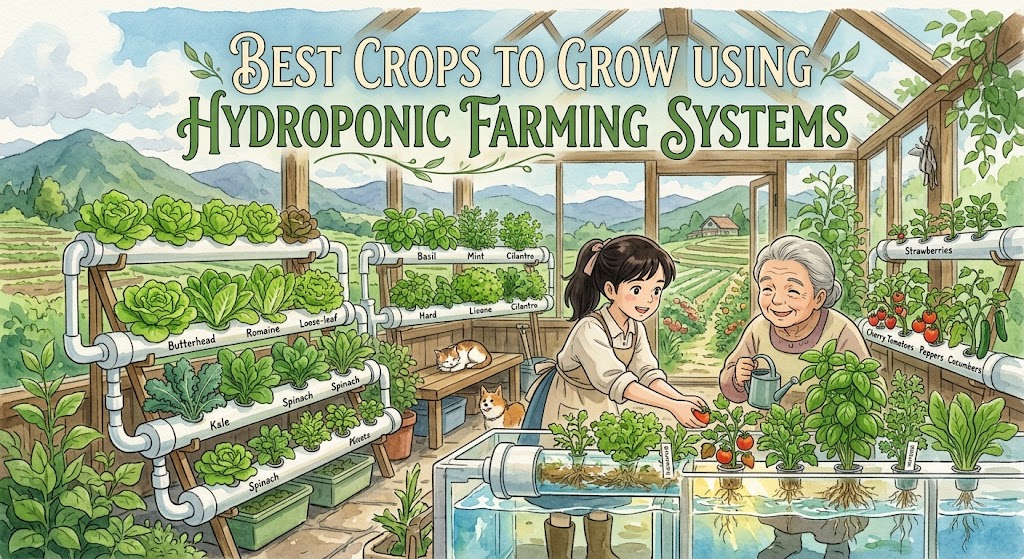
One of the biggest advantages of hydroponic farming is its flexibility. Unlike traditional agriculture, where crop selection is often limited by soil quality and seasonal conditions, hydroponic systems allow farmers to grow a wide variety of crops in carefully controlled environments. However, not every plant performs equally well in these systems.
Some crops grow quickly, require little maintenance, and provide frequent harvests, while others demand more attention but offer higher market value. Choosing the right crop is one of the most important decisions for anyone planning to start a hydroponic farm because it directly affects production costs, labor requirements, and overall profitability.
Whether you are building a small home system or launching a commercial greenhouse, selecting crops that match your experience, available space, and local market demand will significantly improve your chances of success.
What Makes a Crop Suitable for Hydroponics?
Experienced hydroponic growers rarely select crops based only on popularity.
Instead, they evaluate several practical factors.
The best hydroponic crops usually have:
- Fast growth cycles
- Strong market demand
- Efficient nutrient uptake
- Compact growth habits
- High productivity
- Consistent quality
- Good selling prices
These characteristics help maximize returns while making management easier.
Leafy Greens: The Ideal Starting Point
Leafy vegetables remain the most common hydroponic crops because they grow rapidly and require relatively simple management.
Popular leafy greens include:
- Lettuce
- Spinach
- Kale
- Swiss chard
- Arugula
- Romaine lettuce
These vegetables mature quickly, allowing several harvests throughout the year.
They are also widely accepted by supermarkets, restaurants, and health-conscious consumers.
Fresh Culinary Herbs
Herbs are among the most profitable hydroponic crops because they occupy little space while offering premium market prices.
Common hydroponic herbs include:
- Basil
- Mint
- Parsley
- Cilantro
- Dill
- Oregano
- Thyme
Restaurants and grocery stores often prefer fresh herbs because of their stronger aroma and longer shelf life.
Tomatoes
Tomatoes are one of the most valuable greenhouse crops grown in hydroponic systems.
Although they require greater management than leafy vegetables, they often provide excellent financial returns.
Advantages include:
✔ High consumer demand
✔ Premium fruit quality
✔ Long harvesting period
✔ Excellent greenhouse performance
Proper support systems and regular pruning help maximize production.
Bell Peppers
Hydroponic bell peppers produce colorful, uniform fruits that attract premium prices in many markets.
Farmers appreciate them because they:
- Produce high-quality fruits
- Respond well to controlled environments
- Have consistent market demand
- Can be harvested over several months
Balanced nutrition is especially important for pepper production.
Cucumbers
Cucumbers thrive in hydroponic greenhouses where temperature, humidity, and irrigation can be carefully managed.
Commercial growers benefit from:
- Rapid growth
- Continuous fruit production
- High productivity
- Strong consumer demand
Vertical growing systems help maximize space.
Strawberries
Hydroponic strawberries are becoming increasingly popular because they produce clean, attractive fruits with excellent flavor.
Major benefits include:
- Reduced soil diseases
- Cleaner harvesting
- Better fruit quality
- Efficient vertical production
Premium markets often reward high-quality strawberries with better prices.
Microgreens
Microgreens are harvested while still young, usually within a few weeks after planting.
Popular varieties include:
- Radish
- Sunflower
- Mustard
- Broccoli
- Pea shoots
Their short production cycle makes them attractive for urban farms and specialty markets.
Green Onions and Chives
These crops require limited growing space and mature relatively quickly.
They are widely used by:
- Restaurants
- Grocery stores
- Food service companies
Consistent harvesting provides regular income opportunities.
Specialty Lettuce Varieties
Beyond standard lettuce, premium varieties continue gaining popularity.
Examples include:
- Butterhead lettuce
- Oak leaf lettuce
- Red leaf lettuce
- Iceberg lettuce
- Lollo Rosso
These varieties appeal to restaurants, hotels, and salad producers.
Comparing Popular Hydroponic Crops
| Crop | Growth Speed | Market Demand | Profit Potential |
|---|---|---|---|
| Lettuce | Very Fast | High | High |
| Basil | Fast | High | High |
| Spinach | Fast | High | Good |
| Tomatoes | Moderate | Very High | Very High |
| Bell Peppers | Moderate | High | High |
| Cucumbers | Fast | High | High |
| Strawberries | Moderate | Premium | Very High |
| Kale | Fast | Growing | High |
| Microgreens | Very Fast | Premium | High |
| Green Onions | Fast | Stable | Good |
Selecting Crops Based on Your Experience
Beginners and experienced growers often have different priorities.
Suitable for Beginners
- Lettuce
- Spinach
- Basil
- Mint
- Kale
- Green onions
These crops are relatively easy to manage and provide quick harvests.
Suitable for Experienced Growers
- Tomatoes
- Strawberries
- Bell peppers
- Cucumbers
These crops require closer monitoring but usually offer higher financial returns.
Market Research Matters More Than Popularity
A crop may grow perfectly in a hydroponic system but still generate poor profits if local demand is weak.
Before planting, identify:
- Nearby supermarkets
- Restaurants
- Hotels
- Organic food stores
- Wholesale markets
- Online grocery businesses
Growing crops that buyers already need reduces marketing challenges.
Common Mistakes When Choosing Crops
Many beginners reduce profitability by making avoidable decisions.
Avoid:
- Growing too many crop varieties at once
- Ignoring local demand
- Choosing difficult crops first
- Planting without market research
- Expanding too quickly
Starting with a few reliable crops allows farmers to gain valuable experience.
Future Opportunities in Hydroponic Farming
Hydroponic agriculture continues expanding worldwide.
Emerging opportunities include:
- Vertical farming
- Urban agriculture
- Automated greenhouses
- Smart irrigation systems
- AI-assisted crop management
- Premium organic-style vegetable production
These developments are creating exciting possibilities for commercial growers.
Final Thoughts
Choosing the right crops is one of the most important decisions in hydroponic farming. Leafy greens, herbs, tomatoes, cucumbers, bell peppers, strawberries, microgreens, and specialty lettuces have proven to be among the most successful options because they combine strong market demand with efficient production in controlled environments.
Rather than trying to grow every crop available, successful hydroponic farmers focus on producing a small number of high-quality crops that meet local market needs. By combining careful crop selection with proper nutrient management, climate control, and reliable marketing channels, growers can build productive and profitable hydroponic farming businesses.
Frequently Asked Questions
1. Which crop is best for beginners in hydroponics?
Lettuce, basil, spinach, kale, and mint are excellent beginner-friendly crops because they grow quickly and require relatively simple management.
2. Which hydroponic crop is the most profitable?
Tomatoes, strawberries, basil, premium lettuce varieties, and microgreens often provide some of the highest returns when quality and market demand are strong.
3. Can fruit crops be grown hydroponically?
Yes. Strawberries, tomatoes, cucumbers, and bell peppers are commonly grown in commercial hydroponic systems.
4. Why are leafy greens so popular in hydroponics?
They grow quickly, require less space, produce multiple harvests, and have consistent consumer demand throughout the year.
5. How should farmers choose hydroponic crops?
They should consider local climate, available space, production experience, market demand, growth cycle, and expected profitability before making planting decisions.