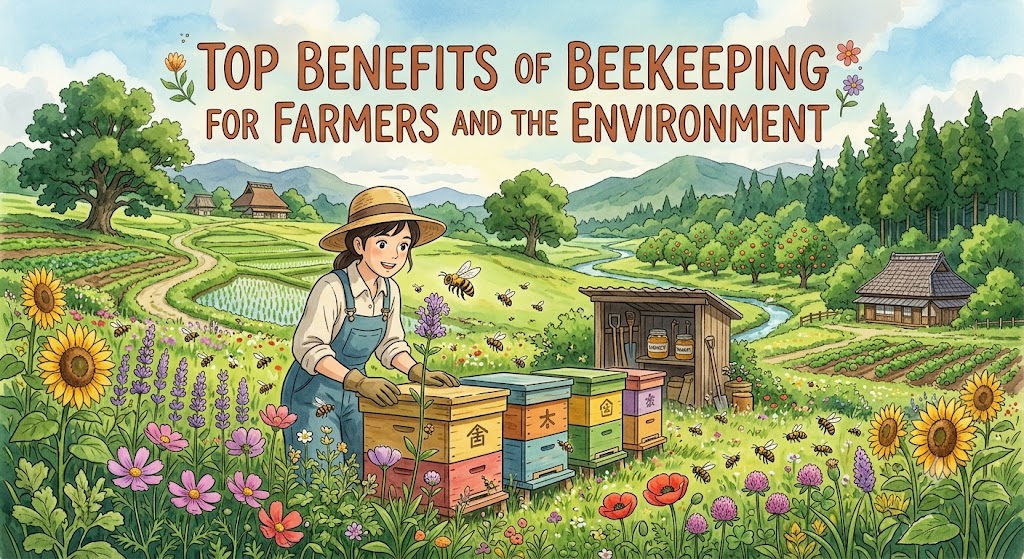
Every day, millions of honey bees quietly travel from flower to flower collecting nectar and pollen. While this activity may seem simple, it supports one of the most important natural processes on Earth—pollination. Without bees, many fruits, vegetables, nuts, and flowering crops would produce lower yields, directly affecting food production and farm income.
For centuries, farmers have kept bees mainly for honey. Today, however, beekeeping is recognized as much more than a source of natural sweeteners. Healthy bee colonies improve crop productivity, strengthen biodiversity, create additional farm income, and contribute to a healthier environment.
As agriculture faces increasing challenges from climate change, declining pollinator populations, and rising production costs, beekeeping has become an important part of sustainable farming systems around the world.
Bees Are Nature’s Most Efficient Pollinators
Pollination is essential for the reproduction of many flowering plants. When bees move between flowers collecting nectar, they transfer pollen that allows plants to produce fruits, seeds, and vegetables.
Thousands of crop species depend partially or completely on insect pollination.
Some of these include:
- Apples
- Almonds
- Sunflowers
- Cucumbers
- Pumpkins
- Watermelons
- Berries
- Mustard
- Coffee
- Many vegetable crops
Without effective pollination, harvest quality and quantity can decline significantly.
Better Pollination Means Better Harvests
One of the greatest advantages of keeping bees on a farm is improved crop production.
Healthy bee activity often leads to:
✔ Higher fruit set
✔ Larger fruits
✔ Better seed production
✔ Improved crop quality
✔ More uniform harvests
Many farmers notice higher yields simply because their crops receive more consistent pollination throughout the flowering season.
An Additional Source of Farm Income
Unlike many agricultural investments, beekeeping can generate income from several different products.
The most common sources include:
| Bee Product | Income Opportunity |
|---|---|
| Honey | Fresh and processed sales |
| Beeswax | Candles and cosmetics |
| Bee Pollen | Health products |
| Propolis | Natural wellness products |
| Royal Jelly | Premium nutritional products |
| Pollination Services | Renting colonies to farms |
These multiple income streams make beekeeping attractive for both small and large farms.
Requires Very Little Land
One of the biggest advantages of beekeeping is that it does not require large areas of farmland.
A few well-managed hives can be placed:
- Near orchards
- Along field borders
- In gardens
- Around vegetable farms
- Close to flowering trees
This makes beekeeping suitable even for farmers with limited land.
Supports Sustainable Agriculture
Sustainable farming depends on maintaining healthy ecosystems.
Bees contribute naturally by:
- Increasing pollination
- Supporting plant reproduction
- Improving biodiversity
- Encouraging healthy ecosystems
- Reducing dependence on artificial pollination methods
Their role extends far beyond honey production.
Improves Biodiversity
A healthy bee population benefits countless plant species.
As bees pollinate wildflowers and native vegetation, they help maintain habitats for birds, insects, and other wildlife.
Greater biodiversity creates:
- Healthier ecosystems
- Better soil protection
- Improved natural pest control
- Stronger ecological balance
This benefits both agriculture and the surrounding environment.
Strengthens Integrated Farming Systems
Beekeeping fits naturally into integrated farming.
Bee colonies work alongside:
- Fruit orchards
- Vegetable farms
- Oilseed crops
- Medicinal plants
- Flower cultivation
- Agroforestry systems
While crops provide nectar and pollen, bees improve crop pollination.
This creates a mutually beneficial farming system.
Encourages Environmentally Friendly Farming
Bees are highly sensitive to pollution and excessive pesticide use.
Farmers who keep bees often become more aware of environmentally responsible farming practices such as:
- Reducing unnecessary pesticide applications
- Planting flowering plants
- Conserving natural habitats
- Protecting water sources
These improvements benefit the entire farming ecosystem.
Creates Employment Opportunities
Commercial beekeeping supports many rural businesses beyond honey production.
Employment opportunities include:
- Honey processing
- Packaging
- Equipment manufacturing
- Bee colony management
- Pollination services
- Retail marketing
As consumer demand grows, these opportunities continue expanding.
Low Initial Investment
Compared with many agricultural enterprises, beekeeping often requires relatively modest startup costs.
Basic requirements include:
- Bee colonies
- Protective clothing
- Hive equipment
- Simple harvesting tools
Because land requirements are minimal, many beginners can start on a small budget.
Supports Climate-Resilient Farming
Climate change has made farming more unpredictable.
Healthy pollinator populations help crops adapt by improving flowering success and increasing seed production under changing environmental conditions.
Beekeeping also encourages farmers to plant diverse flowering species, improving ecosystem resilience.
Educational and Community Benefits
Beekeeping creates opportunities for education and environmental awareness.
Schools, community groups, and agricultural organizations often use apiaries to teach:
- Pollinator conservation
- Sustainable farming
- Biodiversity protection
- Natural resource management
These educational efforts help protect bee populations for future generations.
Challenges Every Beekeeper Should Understand
Although beekeeping offers many advantages, success requires responsible management.
Common challenges include:
- Varroa mites
- Extreme weather
- Pesticide exposure
- Poor nectar availability
- Hive diseases
- Colony losses
Regular inspections and proper hive management help reduce these risks.
Practical Ways Farmers Can Support Bees
Every farmer can contribute to healthier pollinator populations.
Simple actions include:
- Plant flowering trees and shrubs.
- Maintain diverse vegetation.
- Provide clean water sources.
- Avoid spraying pesticides during flowering.
- Leave natural habitats undisturbed where possible.
- Grow bee-friendly cover crops.
Small improvements can make a significant difference for local bee populations.
Looking Ahead
As global agriculture becomes more focused on sustainability, the importance of pollinators will continue increasing.
Future opportunities include:
- Organic honey production
- Precision beekeeping technology
- Climate-smart apiary management
- Pollinator-friendly farming systems
- Expanded commercial pollination services
Beekeeping is expected to remain an essential part of modern agriculture for many years to come.
Final Thoughts
Beekeeping provides benefits that extend far beyond honey production. Healthy bee colonies improve crop pollination, increase farm productivity, support biodiversity, create additional income opportunities, and strengthen sustainable farming systems. At the same time, bees play a vital role in protecting ecosystems by supporting the reproduction of countless flowering plants.
For farmers, adding beekeeping to an existing agricultural operation is often one of the most practical ways to diversify income while improving crop performance naturally. As awareness of environmental conservation continues to grow, beekeeping will remain one of the most valuable partnerships between agriculture and nature.
Frequently Asked Questions
1. Why is beekeeping important for farmers?
Beekeeping improves crop pollination, increases yields, provides additional income, and supports sustainable farming practices.
2. Besides honey, what products do bees produce?
Bees produce beeswax, propolis, bee pollen, royal jelly, and pollination services, all of which have commercial value.
3. Can beekeeping improve crop yields?
Yes. Better pollination often results in higher fruit production, improved seed formation, and better crop quality.
4. Is beekeeping suitable for small farms?
Absolutely. Even a few beehives can provide valuable pollination services and generate additional income without requiring much land.
5. How does beekeeping help the environment?
Bees support biodiversity, improve pollination, strengthen ecosystems, encourage sustainable farming, and help maintain healthy populations of flowering plants.