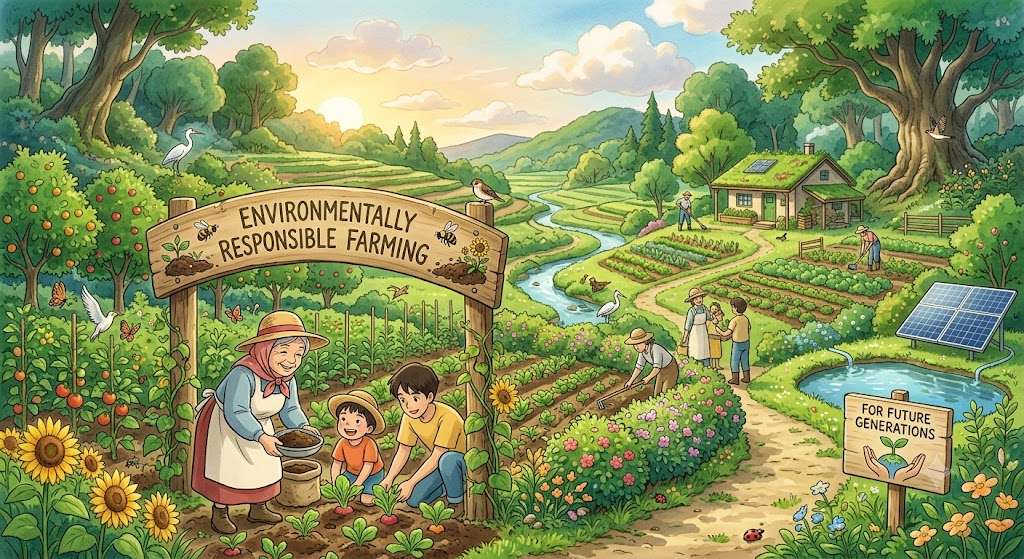
Agriculture has always played a vital role in supporting human civilization by providing food, fiber, and raw materials. However, modern farming faces growing challenges related to environmental sustainability. Issues such as soil degradation, water scarcity, biodiversity loss, climate change, and pollution have increased the need for agricultural systems that balance productivity with environmental responsibility.
Environmentally responsible farming focuses on producing food efficiently while protecting natural resources for future generations. Rather than emphasizing short-term production gains alone, this approach encourages long-term stewardship of land, water, air, and ecosystems. Farmers who adopt sustainable practices often benefit from healthier soils, improved resource efficiency, greater resilience, and stronger long-term profitability.
As global food demand continues to increase, environmentally responsible farming will become increasingly important in ensuring both agricultural productivity and environmental sustainability.
Understanding Environmentally Responsible Farming
Environmentally responsible farming involves agricultural practices that minimize negative environmental impacts while maintaining productive and profitable farming systems.
Its primary goals include:
- Protecting natural resources
- Conserving biodiversity
- Reducing pollution
- Improving soil health
- Conserving water
- Supporting long-term productivity
This approach recognizes that healthy ecosystems are essential for sustainable agricultural success.
By working with nature rather than against it, farmers can build resilient systems capable of supporting future food production.
Why Environmental Responsibility Matters
Agricultural activities influence many aspects of the environment.
Unsustainable farming practices can contribute to:
- Soil erosion
- Nutrient depletion
- Water contamination
- Habitat destruction
- Greenhouse gas emissions
- Declining biodiversity
These problems not only affect ecosystems but can also reduce farm productivity and profitability over time.
Environmentally responsible farming helps address these challenges while supporting long-term agricultural viability.
Protecting Soil Health
Healthy soil is one of agriculture’s most valuable resources.
Productive soil supports:
- Root development
- Nutrient availability
- Water retention
- Beneficial microorganisms
Farmers can improve soil health through:
- Compost application
- Crop rotation
- Cover cropping
- Organic matter incorporation
- Reduced tillage practices
Protecting soil quality helps maintain productive farmland for future generations.
Conserving Water Resources
Water is essential for crop and livestock production.
As water scarcity becomes a growing concern in many regions, efficient water management is increasingly important.
Sustainable water conservation practices include:
- Drip irrigation
- Rainwater harvesting
- Mulching
- Soil moisture monitoring
- Efficient irrigation scheduling
Reducing water waste improves farm efficiency while protecting local water supplies.
Responsible water management benefits both agriculture and surrounding communities.
Encouraging Biodiversity
Biodiversity strengthens agricultural ecosystems by supporting natural processes that contribute to productivity and resilience.
Benefits of biodiversity include:
- Pollination
- Natural pest control
- Improved soil health
- Greater ecosystem stability
Farmers can encourage biodiversity by:
- Maintaining hedgerows
- Planting flowering species
- Preserving natural habitats
- Diversifying crops
- Supporting pollinator populations
Healthy ecosystems often require fewer external inputs and are better able to adapt to environmental changes.
Practicing Crop Rotation
Growing the same crop repeatedly can deplete soil nutrients and increase pest problems.
Crop rotation helps:
- Improve soil fertility
- Break pest cycles
- Reduce disease pressure
- Enhance soil structure
Examples include:
- Rotating cereals with legumes
- Alternating root crops and leafy vegetables
- Incorporating cover crops into production schedules
Crop rotation is one of the most effective and environmentally responsible farming practices available.
Reducing Chemical Dependency
While fertilizers and pesticides can support agricultural productivity, excessive use may negatively affect the environment.
Potential impacts include:
- Water pollution
- Soil degradation
- Harm to beneficial organisms
- Pest resistance
Farmers can reduce chemical dependence through:
- Integrated Pest Management (IPM)
- Biological controls
- Precision agriculture
- Organic amendments
- Improved nutrient management
Targeted and responsible input use supports both productivity and environmental protection.
Supporting Pollinator Health
Pollinators play an essential role in agricultural production.
Many crops depend on:
- Bees
- Butterflies
- Birds
- Other beneficial insects
Farmers can support pollinator populations by:
- Planting pollinator-friendly vegetation
- Reducing harmful pesticide exposure
- Preserving nesting habitats
- Maintaining biodiversity
Healthy pollinator populations contribute directly to improved crop yields and food production.
Preventing Soil Erosion
Soil erosion removes valuable topsoil and reduces long-term productivity.
Effective erosion control methods include:
- Cover cropping
- Contour farming
- Terracing
- Windbreaks
- Conservation tillage
Protecting topsoil preserves fertility and supports sustainable land management.
Preventing erosion is often more effective than attempting to restore damaged soil later.
Integrating Livestock and Crops
Integrated farming systems improve resource efficiency and nutrient cycling.
Benefits include:
- Improved manure utilization
- Reduced fertilizer requirements
- Enhanced soil fertility
- Lower waste generation
Livestock and crop enterprises can complement one another when managed properly.
Integrated systems often contribute to both economic and environmental sustainability.
Adopting Renewable Energy Solutions
Renewable energy technologies are becoming increasingly important in agriculture.
Examples include:
- Solar-powered irrigation systems
- Wind energy installations
- Bioenergy production
- Energy-efficient farm equipment
Renewable energy reduces reliance on fossil fuels while lowering greenhouse gas emissions.
Many farms also benefit from reduced energy costs over time.
Utilizing Precision Agriculture
Modern technology allows farmers to use resources more efficiently.
Precision agriculture tools include:
- GPS-guided equipment
- Soil sensors
- Drones
- Satellite imagery
- Data analytics platforms
Benefits include:
- Reduced input waste
- Improved productivity
- Better environmental management
- Increased efficiency
Precision farming helps farmers make informed decisions that support sustainability goals.
Managing Agricultural Waste Responsibly
Waste management is an important component of environmentally responsible farming.
Farmers can reduce waste by:
- Composting organic materials
- Recycling crop residues
- Utilizing livestock manure
- Reducing post-harvest losses
Effective waste management improves resource efficiency while reducing environmental impacts.
Many agricultural by-products can become valuable resources when managed properly.
Building Climate Resilience
Climate change presents increasing challenges for agricultural production.
Environmentally responsible farms often focus on:
- Drought preparedness
- Water conservation
- Soil health improvement
- Crop diversification
- Agroforestry systems
These strategies help farms remain productive despite changing environmental conditions.
Climate resilience is becoming a key component of sustainable agriculture worldwide.
Educating Future Generations
Sustainable agriculture is not only about current production—it is also about preserving resources for future farmers.
Knowledge transfer is essential for:
- Maintaining best practices
- Encouraging innovation
- Supporting responsible land stewardship
Education helps ensure that future generations can continue producing food while protecting natural ecosystems.
Long-Term Benefits of Environmentally Responsible Farming
Farmers who adopt environmentally responsible practices often experience:
- Improved soil fertility
- Better water efficiency
- Reduced production costs
- Greater resilience
- Enhanced biodiversity
- Long-term profitability
These benefits contribute to stronger agricultural systems and healthier environments.
Creating a Sustainable Farming Strategy
An effective environmentally responsible farming plan may include:
- Soil conservation practices
- Water management improvements
- Crop diversification
- Biodiversity enhancement
- Renewable energy adoption
- Integrated pest management
- Responsible nutrient management
Combining multiple strategies creates a balanced and sustainable farming system.
Conclusion
Environmentally responsible farming represents a practical and necessary approach to modern agriculture. By protecting soil health, conserving water, encouraging biodiversity, reducing chemical dependency, and embracing sustainable technologies, farmers can produce food while preserving natural resources for future generations.
As environmental challenges continue to grow, responsible farming practices will play an increasingly important role in ensuring long-term agricultural productivity and global food security. Farmers who invest in sustainability today are helping create a healthier, more resilient, and more productive future for generations to come.