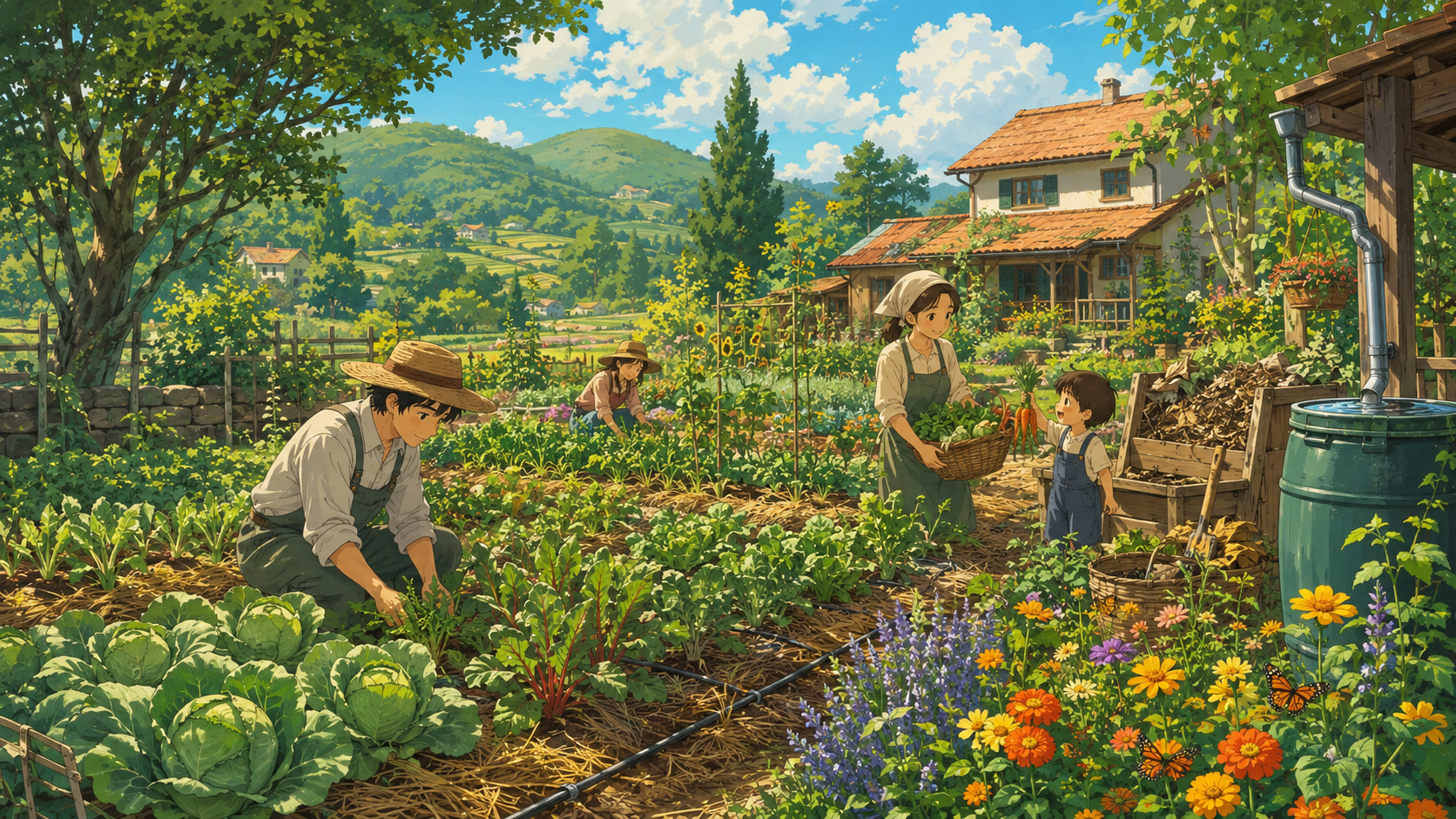
For generations, the primary goal of farming was simple: produce as much food as possible, as quickly as possible. We relied heavily on chemical fertilizers, deep plowing, and aggressive pest control to force the land to yield. While this approach worked for a while, we are now paying the price. Soils are becoming exhausted, water sources are running low, and the cost of farming inputs is cutting deeply into profits.
The reality is that farming against nature is an expensive and exhausting battle. Today, the most successful growers are changing their approach. They are adopting sustainable farming practices to build resilient, self-renewing systems. Sustainable agriculture is not about stepping backward in time; it is about combining biological wisdom with smart management to ensure your farm remains profitable and productive for decades to come.
If you want to reduce your reliance on expensive chemicals, improve your crop health, and secure your long-term growth, this guide will show you how to make the transition effectively.
Why Sustainable Farming is the Future
At its core, sustainable farming focuses on soil health. Traditional conventional farming treats soil like an empty sponge that must be filled with artificial nutrients every season. Sustainable farming, however, treats the soil as a living ecosystem.
When you foster a healthy underground network of earthworms, beneficial bacteria, and fungi, the soil naturally feeds and protects your crops. This biologically active soil holds more water during droughts and drains better during heavy rains. Ultimately, sustainable practices drastically reduce your need to buy external inputs, lowering your operating costs and increasing your overall profit margins.
Core Sustainable Practices for Healthy Crops
Building a resilient farm requires moving away from single-crop farming and embracing diversity. Here are the most effective practices you should integrate into your operation.
Strategic Crop Rotation
Planting the same crop in the exact same field year after year is a recipe for disaster. It drains specific nutrients and allows diseases and pests to establish permanent homes in the soil. By rotating crops—for example, planting a nitrogen-fixing legume like peas one year, followed by a heavy-feeding crop like corn the next—you naturally break pest life cycles and balance soil fertility.
Planting Cover Crops
Bare soil is dying soil. When fields are left empty after harvest, wind and rain wash away valuable topsoil. Planting cover crops like clover, winter rye, or radishes during the off-season protects the ground. These plants suppress aggressive weeds, prevent erosion, and are eventually broken down to add rich organic matter back into the earth.
Conservation Tillage
Deep plowing turns the soil completely over, which destroys the natural soil structure and kills beneficial earthworms. Conservation tillage, or “no-till” farming, involves planting seeds directly through the residue of the previous crop. This method leaves the soil structure intact, locks carbon in the ground, and drastically reduces the fuel costs associated with running heavy tractors.
Step-by-Step Guide: Transitioning to Sustainable Agriculture
Switching your farming methods takes careful planning. You cannot overhaul your entire operation overnight without risking your seasonal income. Follow these steps to make a safe and profitable transition.
Step 1: Start with a Comprehensive Soil Test Before making any changes, you must know what you are working with. Test your soil to understand its current organic matter levels, pH balance, and nutrient deficiencies. This baseline data will help you measure your progress over the coming years.
Step 2: Implement a Cover Crop on a Small Acreage Do not try to plant cover crops across your entire farm in the first year. Choose one highly visible, manageable field. Plant a reliable cover crop mix after your main harvest. Observe how it grows, how it protects the soil over the winter, and learn the best methods for terminating it before spring planting.
Step 3: Reduce Tillage Gradually If you are used to deep plowing, start by switching to shallow cultivation. Leave as much crop residue on the surface as possible. As your soil organic matter increases and the ground becomes softer and more porous, you can eventually transition to a strict no-till system.
Step 4: Diversify Your Income Streams Sustainable farming often involves adding new elements to the farm. Consider integrating livestock, such as allowing sheep to graze down your cover crops. Their manure will fertilize the field naturally, and the animals provide an entirely new source of income for the farm.
Practical Tips You Can Apply Right Now
- Protect your water sources: Plant thick buffer strips of native grasses and trees along the edges of any rivers or ponds on your property. These roots will filter out any nutrient runoff before it reaches the water.
- Encourage natural predators: Stop spraying broad-spectrum insecticides that kill everything. Build habitats for ladybugs, spiders, and insect-eating birds. They will manage your pest populations for free.
- Compost farm waste: Never burn your crop residue. Turn old stalks, leaves, and animal manure into high-quality compost. This is free fertilizer that dramatically improves soil structure.
- Monitor closely: Sustainable farming requires you to be in the fields constantly. Walk your rows regularly to spot early signs of disease or pest pressure so you can treat them immediately with targeted, natural methods.
Real-Life Example: The Living Soil Transformation
Consider a multi-generational family farm that had grown only continuous soybeans for fifteen years. The soil had turned into hard, lifeless dirt. Water pooled on the surface after every rain, and the farmer was spending a fortune on synthetic fertilizers just to maintain average yields.
Realizing this was financially unsustainable, the farmer decided to make a change. He started by dividing his farm into three zones. In one zone, he planted winter wheat followed by a multi-species cover crop of radishes and oats. The radishes grew deep, naturally breaking up the hard, compacted soil.
The next spring, instead of plowing, he planted his soybeans directly into the rolled-down cover crop. The thick mat of dead oats suppressed the early spring weeds, allowing him to skip an entire pass of chemical herbicide. Within three years, the soil structure had completely transformed. It was dark, crumbly, and full of earthworms. The farm’s fertilizer bills dropped by thirty percent, and the soybean yields stabilized, proving that working with nature pays off.
Common Mistakes to Avoid
As you adopt these practices, be careful not to fall into these frequent traps:
Expecting Immediate Miracles Chemical fertilizers give plants an instant, artificial boost. Sustainable methods focus on rebuilding the soil, which is a slow biological process. It may take two to three seasons of cover cropping and reduced tillage before you see a massive jump in crop yields. Patience is strictly required.
Replacing One Input for Another Sustainable farming is not just about swapping chemical sprays for expensive “organic” sprays. If your plants are constantly under attack by pests, your soil is likely out of balance. Focus on fixing the root cause—poor soil nutrition—rather than just spraying natural pesticides at the symptoms.
Planting the Wrong Cover Crop Not all cover crops are created equal. Planting a water-hungry cover crop in a region that suffers from severe spring droughts will steal moisture from your upcoming cash crop. Always consult with a local agronomist to select seed varieties that match your specific climate.
Conclusion
The shift toward sustainable farming practices is not a passing trend; it is an absolute necessity for the future of agriculture. By focusing on the long-term health of your soil, you are building a biological savings account.
Practices like crop rotation, cover cropping, and reduced tillage require a change in mindset, moving away from short-term extraction toward long-term management. While the transition requires learning new techniques and exercising patience, the ultimate reward is a farm that is more resilient to extreme weather, less dependent on expensive inputs, and highly profitable for generations to come.
Frequently Asked Questions (FAQ)
1. Does sustainable farming mean I have to become 100% certified organic? No. While organic farming is a type of sustainable agriculture, you do not need to be certified organic to be sustainable. Many conventional farmers successfully adopt sustainable practices, like no-till and cover cropping, while still occasionally using chemical fertilizers or targeted herbicides when absolutely necessary.
2. Will sustainable farming practices reduce my crop yield? During the initial transition period (years one to three), you might experience a slight dip or plateau in yields as the soil biology recovers from years of deep plowing and heavy chemical use. However, once the soil health is restored, yields typically stabilize and often exceed previous averages, with significantly lower input costs.
3. How do cover crops survive the winter? It depends on the variety. “Winter-killed” cover crops like oats will die after the first hard freeze, leaving a protective mat of dead residue on the soil. “Winter-hardy” crops like winter rye will go dormant in the cold and resume rapid growth as soon as the ground thaws in the early spring.
4. Can small farms benefit from sustainable agriculture? Absolutely. In fact, small farms are often better positioned to adapt quickly to sustainable methods. Small-scale growers can easily implement intensive crop rotations, detailed composting systems, and manual weed control methods that are harder to manage on a massive, 5,000-acre commercial operation.
5. How does sustainable farming help during a drought? Healthy, sustainable soil is rich in organic matter. Every 1% increase in soil organic matter allows an acre of land to hold approximately 20,000 extra gallons of water. When a drought hits, crops grown in highly organic, undisturbed soil have a deep reservoir of moisture to draw from, drastically increasing their survival rate.