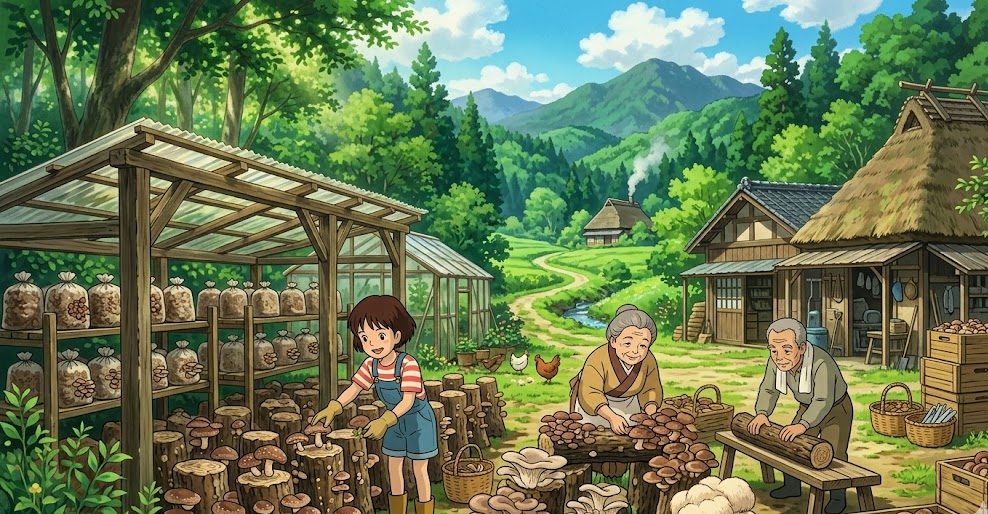
In the world of high-value agriculture, few crops offer the rapid turnover and space-efficiency of mushrooms. For anyone looking to start a profitable agricultural venture, mushroom farming is a standout option—especially if you have limited land or capital. Unlike traditional field crops that depend on expansive acreage and specific seasons, mushrooms can be grown year-round in controlled indoor environments, making them a perfect fit for both urban entrepreneurs and rural farmers. With the rising global demand for plant-based proteins and gourmet fungi, the market for oyster, button, and shiitake mushrooms is more robust than ever. If you are ready to turn a modest setup into a consistent, income-generating business, this step-by-step guide will walk you through the essential stages of building a successful, sustainable mushroom operation.
1. Choosing Your Variety: Understanding the Market
Before you invest in infrastructure, you must decide which mushroom variety suits your local market and your climate. Not all mushrooms are equally easy to grow, and market demand can vary significantly by region.
The Best Varieties for Beginners
- Oyster Mushrooms: These are the gold standard for beginners. They grow quickly, are highly resilient to contamination, and can be cultivated on a wide variety of agricultural waste, such as straw, sawdust, or even waste paper.
- Button Mushrooms: Highly popular in the Indian market, these require a bit more technical skill, specifically regarding the “casing” process and temperature control.
- Milky Mushrooms: Particularly well-suited for warmer climates, these are gaining massive popularity due to their long shelf life and meaty texture.
Conduct Market Research
Don’t guess what your customers want. Spend a week visiting local vegetable markets, grocery stores, and high-end restaurants. Are they struggling to find fresh, organic oysters? Is there an oversupply of button mushrooms? Tailor your choice to fill a specific gap in your local supply chain.
2. Setting Up Your Infrastructure
You don’t need a massive barn to start. You need a space that you can control. The environment is the “soil” of mushroom farming, and success depends on your ability to regulate it.
The Growing Room
Your growing room must be clean, insulated, and easy to sanitize. It needs to be kept dark or dimly lit, as mushrooms do not require photosynthesis.
- Insulation: Use thermal sheets or insulated panels to maintain a stable internal temperature.
- Humidity: Mushrooms thrive in high humidity (around 80–90%). A simple misting system or a portable humidifier is essential for keeping the air moist without making the surface of the mushrooms soggy.
- Ventilation: Mushrooms “breathe” oxygen and exhale carbon dioxide. Without proper airflow, your crops will grow stunted and deformed. Install a basic exhaust fan system to cycle the air several times a day.
Sterilization and Cleanliness
Contamination is the number one enemy of a mushroom farmer. Molds and bacteria love the same moist, warm conditions as your mushrooms. Before you introduce your spawn, ensure the room and your tools are thoroughly sanitized. Use a dedicated bleach solution for surfaces, and always work with clean hands and sanitized gear.
3. The Cultivation Process: Step-by-Step
While every variety has its nuances, the general workflow remains consistent across most mushroom types.
Preparing the Substrate
The substrate is the material your mushrooms feed on. If you are growing oyster mushrooms, this could be paddy straw.
- Pasteurization: Submerge the straw in hot water (around 70–80°C) for a few hours. This kills competing fungi and bacteria without destroying the nutrients the mushroom needs.
- Drying: Drain the straw until it is moist but not dripping. If you squeeze a handful, only a drop or two of water should come out.
Spawning
Once the substrate is ready, mix in your mushroom spawn (the “seeds”). The spawn is usually purchased from a reputable lab. Ensure the mixing process is done in a very clean area. Pack the mixture into perforated plastic bags, which will act as the containers for your growing mushrooms.
Incubation
Place the bags in a dark, warm, and humid incubation room. Over the next 15–20 days, the white thread-like mycelium will grow through the bag, turning it completely white. Once the bag is fully white, you are ready for the fruiting stage.
4. Fruiting and Harvesting
This is the most exciting phase. Move your fully colonized bags to the fruiting room, where you will introduce fresh air and light (very dim light).
- Inducing Fruiting: Cut small “X” slits in the plastic bags. Within days, tiny “pinheads” will emerge from these slits.
- The Harvest: Mushrooms grow incredibly fast during this stage. You will often go from pinhead to full harvest in just 5–7 days. Harvest them by twisting them off the base before the edges of the caps begin to curl upward.
5. Marketing and Profitability
Growing the mushrooms is only half the battle. To make your business profitable, you must treat the post-harvest phase with as much care as the growing phase.
Value Addition
Raw mushrooms have a short shelf life—often just 2–3 days. If you can’t sell them immediately, you lose profit. Consider these value-added strategies:
- Drying: Dehydrated mushrooms can be stored for months and sold as a premium pantry staple.
- Powder: Mushroom powder is a popular ingredient in health-conscious cooking.
- Direct-to-Consumer: Bypass the middleman. Create a brand, package your fresh mushrooms in eco-friendly containers, and sell directly to local homes, small grocers, or organic cafes.
Scaling Up
Start with 50–100 bags to learn the ropes. Once you have a consistent process and a loyal customer base, scale up by adding more shelves and optimizing your ventilation. Many successful mushroom farmers eventually dedicate entire rooms to different stages of growth, ensuring a continuous supply throughout the year.
Conclusion
Starting a mushroom farming business is an excellent way to enter the agricultural sector with minimal land and high efficiency. By focusing on cleanliness, controlling your environment, and choosing the right variety for your local market, you can turn a small investment into a sustainable income stream. Remember, farming is a business of observation; learn from every harvest, track your costs, and be ready to adapt your strategy as you learn what your customers value most. Mushrooms are a fast-growing, high-demand product that offers one of the best “return on effort” ratios in modern agriculture. With a little diligence and a commitment to quality, you can build a mushroom operation that feeds your community and boosts your bottom line.