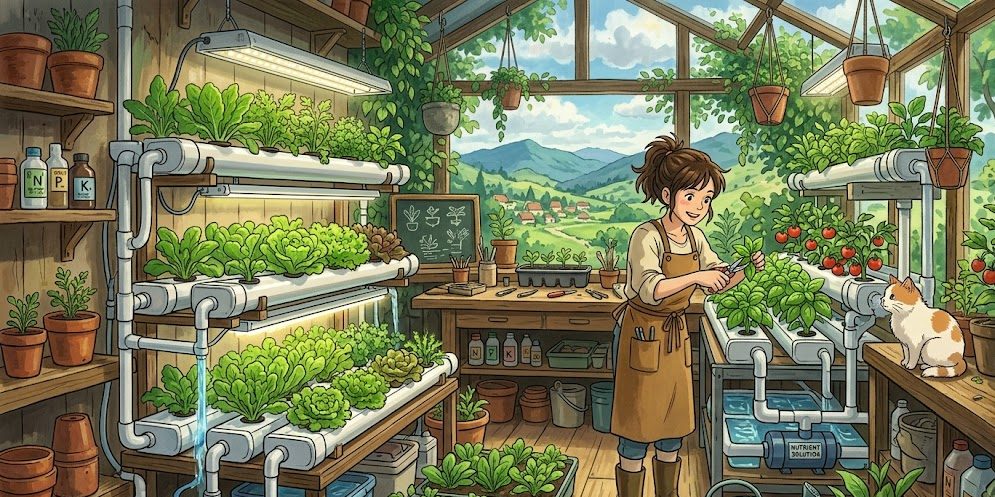
The traditional image of farming is changing rapidly. For centuries, growing crops meant relying entirely on large plots of fertile land, predictable seasonal weather, and hours of intensive soil labor. However, as urban spaces expand and climate patterns become increasingly unpredictable, modern growers are turning to more efficient methods. The most revolutionary among these is hydroponics—the science of growing plants entirely without soil.
By delivering nutrients directly to plant roots via a water-based solution, hydroponics allows crops to grow up to 30% faster while using nearly 90% less water than traditional soil farming. Whether you want to establish a commercial urban farm or build a highly productive backyard system, hydroponics offers unparalleled control over your harvest. This comprehensive guide breaks down the exact steps, system choices, and expert strategies required to build a high-yield hydroponic setup from the ground up.
The Science of Soilless Growth: Why It Yields More
To build a highly productive system, it helps to understand why hydroponics outperforms traditional soil methods. In a typical dirt field, a plant expands a massive amount of metabolic energy growing an extensive root system simply to search for scattered water and nutrients.
+-----------------------------------------------------------------+
|                    ENERGY ALLOCATION COMPARISON                 |
+-----------------------------------------------------------------+
|  [Soil Farming] --> Roots expand widely searching for nutrients |
|  [Hydroponics]  --> Roots stay compact; energy goes directly to |
|                     accelerated leaf, fruit, and flower growth  |
+-----------------------------------------------------------------+
In a hydroponic environment, that search is completely eliminated. The roots are bathed continuously or intermittently in a perfectly balanced, highly oxygenated liquid nutrient solution. Because the plant doesn’t need to fight for sustenance, it redirects its vital energy upward. The result is explosive leaf development, faster crop rotation cycles, and significantly higher fruit yields per square meter.
Choosing the Right Hydroponic System for High Yields
There is no one-size-fits-all hydroponic setup. The ideal system depends heavily on the specific crops you plan to grow, your budget, and your level of technical expertise.
1. Nutrient Film Technique (NFT)
NFT systems are a staple of commercial leafy green production worldwide. In this setup, plants are suspended in net cups along a series of slightly sloped channels. A continuous, thin stream (a “film”) of nutrient-dense water is pumped from a main reservoir down through these channels, washing directly over the bare root tips before draining back into the tank.
- Best Suited For: Lettuce, spinach, kale, strawberries, and culinary herbs.
- Pro Tip: Because the water layer is very thin, any pump failure or power outage can dry out and kill the roots within hours. Investing in a reliable backup power supply is critical for NFT systems.
2. Deep Water Culture (DWC)
DWC is arguably the simplest and most forgiving hydroponic system, making it an exceptional choice for beginners who want high returns. Plants are supported by a floating raft that sits directly on top of a deep reservoir of nutrient solution. The root systems remain completely submerged in the water 24/7.
- Best Suited For: Large, heavy-feeding crops like tomatoes, cucumbers, and bell peppers.
- The Crucial Element: Because the roots are constantly submerged, they will drown without artificial oxygen. You must place heavy-duty air stones connected to an external air pump at the bottom of the reservoir to keep the water bubbling aggressively.
3. Ebb and Flow (Flood and Drain)
This system operates on a timed cycle. Plants are placed in a growing tray filled with an inert medium like expanded clay pebbles. A submersible pump inside a lower reservoir periodically floods the upper tray with nutrient solution. Once the water reaches a specific overflow level, the pump shuts off, and the solution drains completely back down.
- Best Suited For: Root vegetables, larger bush crops, and managing diverse plant sizes simultaneously.
- Why It Works: The flooding action delivers fresh nutrients, while the draining action pulls vital oxygen deep down into the root zone, preventing root rot.
Step-by-Step Hardware and Setup Guide
Setting up a high-yield system requires careful calibration of your environment. Follow this structured sequence to assemble your first functional footprint.
1
Select and Sanitize Your Reservoir
Step 1
1.Select and Sanitize Your Reservoir:Step 1.
Choose a food-grade, opaque plastic container. It must be completely lightproof; any light entering the reservoir will trigger rapid algae blooms that steal nutrients and clog pumps. Sanitize the tank thoroughly before filling.
2
Install Oxygenation and Water Pumps
Step 2
2.Install Oxygenation and Water Pumps:Step 2.
Place your air stones at the bottom of the tank and connect them to an external air pump. If building an NFT or Ebb and Flow system, position your submersible water pump and connect the delivery tubing to your upper grow trays.
3
Choose Your Inert Growing Medium
Step 3
3.Choose Your Inert Growing Medium:Step 3.
Fill your net cups with an inert medium that provides structural support without altering water chemistry. Coco coir (shredded coconut husks) holds moisture beautifully, while expanded clay pebbles offer excellent drainage and aeration.
4
Mix and Calibrate the Nutrient Solution
Step 4
4.Mix and Calibrate the Nutrient Solution:Step 4.
Fill the reservoir with clean, filtered water. Add specialized, water-soluble hydroponic nutrients (never use standard dirt fertilizers). Mix thoroughly and use calibrated digital meters to check your chemical baselines before introducing plants.
Managing the Core Hydroponic Metrics
To maintain a high-yielding harvest, you must act as the ultimate climate controller. Hydroponic plants are entirely dependent on you to maintain their chemical environment. You must monitor three primary metrics regularly.
+------------------------+      +------------------------+      +------------------------+
|      pH Level          |      |       EC / PPM         |      |    Water Temperature   |
| Controls nutrient      |      | Measures concentration |      | Dictates oxygen        |
| availability to roots  |      | of dissolved salts     |      | absorption efficiency  |
+------------------------+      +------------------------+      +------------------------+
1. pH Level (The Gatekeeper of Nutrition)
The pH scale measures how acidic or alkaline your water is. If your pH drifts outside the optimal zone, the plant’s roots physically close up, preventing them from absorbing specific minerals even if the water is full of them—a crisis known as “nutrient lockout.”
- Optimal Range: 5.5 to 6.5 for almost all hydroponic varieties.
- Management: Use digital pH pens daily and adjust using liquid “pH Up” or “pH Down” solutions.
2. Electrical Conductivity (EC) and PPM
EC measures the concentration of dissolved nutrient salts in your water. If the EC is too low, your plants will starve and show pale, stunted growth. If it is too high, you will burn the roots and leaves, causing crisping and structural damage.
- Optimal Range: Young seedlings prefer a low EC (0.8 to 1.2), while fruiting tomatoes thrive at much higher concentrations (2.0 to 2.5).
3. Reservoir Water Temperature
Water temperature dictates how much dissolved oxygen the liquid can hold. If your reservoir water gets too warm, oxygen levels drop, inviting a highly destructive waterborne pathogen called Pythium (root rot).
- Optimal Range: 65°F to 70°F (18°C to 21°C). Use water chillers or reflective insulation blankets if your grow room runs warm.
Troubleshooting Common Hydroponic Pitfalls
| Problem | Likely Cause | Immediate Remedy |
|---|---|---|
| Yellowing Leaves (Old Growth) | Nitrogen Deficiency or pH Lockout. | Check and calibrate pH to 5.8; refresh the entire nutrient reservoir. |
| Slimy, Brown, Smelly Roots | Root Rot (Pythium) from low oxygen. | Add extra air stones; flush the system with diluted food-grade hydrogen peroxide. |
| White Powder on Leaves | Powdery Mildew due to stagnant air. | Increase grow room ventilation using oscillating fans; lower ambient humidity. |
Conclusion: The Ultimate Control Over Your Food
Building a high-yield hydroponics system shifts the agricultural paradigm from reacting to nature to actively managing an ecosystem. While the initial setup requires precision, the rewards are undeniable: flawless, nutrient-dense produce harvested in a fraction of the traditional timeline.
By selecting the correct system layout, keeping a strict eye on your daily pH and EC metrics, and maintaining high oxygenation levels, you can unlock the full genetic potential of your crops. Hydroponics is more than just a modern gardening trend—it is a sustainable, water-saving infrastructure that empowers anyone to become a high-output master grower, regardless of available land footprint.