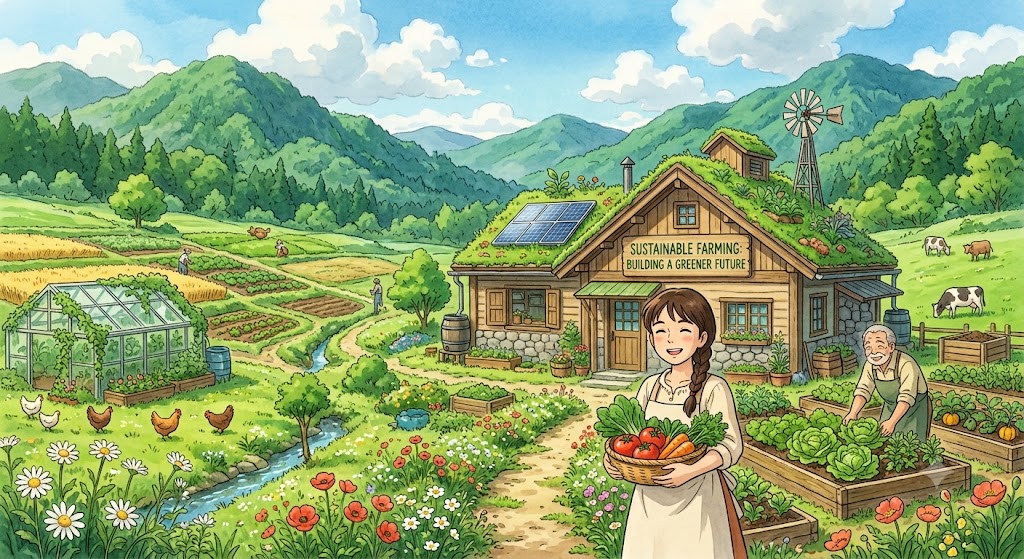
Introduction
Agriculture is the foundation of human civilization, providing food, fiber, and raw materials for billions of people around the world. However, modern farming faces serious challenges such as climate change, soil degradation, water scarcity, biodiversity loss, and rising production costs. To overcome these challenges while ensuring long-term food security, farmers are increasingly adopting Sustainable Farming practices.
Sustainable farming is an agricultural approach that focuses on producing healthy crops and livestock while protecting the environment, conserving natural resources, and supporting the economic well-being of farming communities. Rather than maximizing short-term production at the expense of nature, sustainable farming aims to balance productivity with environmental responsibility.
By using efficient water management, improving soil health, reducing chemical inputs, encouraging biodiversity, and adopting modern agricultural technologies, sustainable farming helps create resilient farming systems that can support both present and future generations.
What is Sustainable Farming?
Sustainable farming is a method of agriculture that meets today’s food needs without compromising the ability of future generations to produce food. It emphasizes responsible use of land, water, energy, and other natural resources while maintaining healthy ecosystems.
The primary goals of sustainable farming include:
- Protecting soil fertility
- Conserving water resources
- Reducing environmental pollution
- Supporting biodiversity
- Improving farm profitability
- Producing safe and nutritious food
- Reducing greenhouse gas emissions
This farming approach combines traditional agricultural knowledge with modern scientific innovations to create productive and environmentally friendly farming systems.
Why Sustainable Farming Matters
Global agriculture must feed a growing population while dealing with limited natural resources and changing climate conditions.
Sustainable farming addresses several critical challenges:
Climate Change
Extreme weather events, rising temperatures, and changing rainfall patterns affect crop production. Sustainable practices improve farm resilience.
Soil Degradation
Healthy soil is essential for food production. Sustainable farming protects soil through organic matter, crop rotation, and conservation techniques.
Water Conservation
Agriculture uses a significant portion of the world’s freshwater. Efficient irrigation methods help reduce water consumption.
Biodiversity Protection
Maintaining diverse plant and animal life creates healthier agricultural ecosystems and improves natural pest control.
Principles of Sustainable Farming
Successful sustainable agriculture is built on several key principles.
Soil Health Management
Healthy soil is the foundation of productive farming.
Farmers improve soil quality through:
- Compost application
- Organic manure
- Crop rotation
- Cover crops
- Reduced tillage
- Mulching
Healthy soil supports stronger plant growth and better water retention.
Efficient Water Management
Water conservation is one of the most important aspects of sustainable farming.
Effective techniques include:
- Drip irrigation
- Sprinkler irrigation
- Rainwater harvesting
- Moisture sensors
- Mulching
- Smart irrigation systems
These methods reduce water waste while maintaining healthy crop growth.
Crop Diversity
Growing multiple crops instead of relying on a single crop improves farm stability.
Crop diversity offers several benefits:
- Better soil fertility
- Reduced pest outbreaks
- Improved biodiversity
- Lower production risks
- Increased income opportunities
Natural Pest Management
Instead of depending entirely on chemical pesticides, sustainable farmers use environmentally friendly pest control methods.
Examples include:
- Beneficial insects
- Crop rotation
- Biological pest control
- Companion planting
- Integrated Pest Management (IPM)
These methods reduce environmental pollution while protecting crop health.
Modern Technologies Supporting Sustainable Farming
Technology has become an important partner in sustainable agriculture.
Artificial Intelligence (AI)
AI analyzes weather conditions, crop health, and soil data to improve farming decisions.
Applications include:
- Disease detection
- Yield prediction
- Irrigation planning
- Fertilizer recommendations
Internet of Things (IoT)
Smart sensors monitor:
- Soil moisture
- Temperature
- Humidity
- Nutrient levels
- Water availability
Real-time monitoring improves resource efficiency.
Agricultural Drones
Drones help farmers:
- Monitor crop health
- Detect pest infestations
- Survey farmland
- Assess irrigation systems
- Create digital field maps
Precision Agriculture
Precision farming allows farmers to apply fertilizers, water, and pesticides only where needed.
Benefits include:
- Lower costs
- Higher yields
- Reduced waste
- Better environmental protection
Benefits of Sustainable Farming
Environmental Protection
Sustainable farming reduces pollution, conserves biodiversity, and protects natural ecosystems.
Improved Soil Fertility
Organic farming practices increase soil organic matter and microbial activity.
Water Conservation
Efficient irrigation systems reduce unnecessary water use.
Better Crop Quality
Healthy soil and balanced nutrition produce nutritious, high-quality crops.
Economic Stability
Lower input costs and diversified farming improve long-term profitability.
Climate Resilience
Healthy farming systems are better prepared to withstand droughts, floods, and changing weather conditions.
Common Sustainable Farming Practices
Farmers around the world use many sustainable techniques.
Popular practices include:
- Organic farming
- Agroforestry
- Crop rotation
- Cover cropping
- Composting
- Integrated farming
- Precision agriculture
- Conservation tillage
- Green manure
- Livestock integration
Each practice contributes to healthier farms and improved resource management.
Challenges of Sustainable Farming
Despite its many advantages, sustainable farming also faces certain challenges.
Higher Initial Investment
Some sustainable technologies require financial investment.
Knowledge and Training
Farmers need education to adopt modern sustainable practices effectively.
Market Access
Premium markets for sustainably grown products may not always be available.
Transition Period
Converting from conventional to sustainable farming may temporarily reduce production while the farm adapts.
Practical Tips for Farmers
Farmers can begin their sustainability journey with these simple steps:
- Test soil regularly.
- Apply compost and organic manure.
- Rotate crops every season.
- Install drip irrigation.
- Reduce excessive fertilizer use.
- Encourage beneficial insects.
- Plant trees around farmland.
- Monitor crops regularly.
- Maintain detailed farm records.
- Continue learning about modern sustainable farming methods.
Small improvements made consistently can produce significant long-term benefits.
Future of Sustainable Farming
The future of agriculture depends on sustainability. Innovations such as Artificial Intelligence, climate-smart farming, renewable energy, vertical farming, hydroponics, precision agriculture, and automated irrigation systems will continue transforming the agricultural sector.
Governments, universities, agricultural organizations, and technology companies are investing heavily in research to develop farming methods that increase productivity while protecting natural resources.
Consumers are also becoming more interested in sustainably produced food, creating new market opportunities for farmers who adopt environmentally responsible practices.
Sustainable Farming and Global Food Security
Sustainable farming plays a vital role in ensuring that future generations have access to nutritious food. By protecting soil, conserving water, reducing pollution, and improving biodiversity, sustainable agriculture strengthens food production systems while reducing environmental risks.
It also helps rural communities improve their livelihoods by lowering production costs, increasing resilience, and creating opportunities for long-term economic growth. As the global population continues to rise, sustainable farming will become one of the most important strategies for maintaining food security and environmental balance.
Conclusion
Sustainable farming is more than an agricultural practice—it is a long-term commitment to protecting the environment while producing healthy food for a growing world. By combining traditional farming knowledge with modern technology, farmers can improve productivity, conserve natural resources, and create resilient farming systems that benefit both people and the planet.
Practices such as crop rotation, efficient irrigation, organic fertilization, precision agriculture, and natural pest management help ensure healthier soils, cleaner water, greater biodiversity, and stronger agricultural economies. Although adopting sustainable farming requires planning, education, and investment, the long-term rewards include higher farm resilience, improved profitability, and a healthier environment.
As agriculture continues to evolve, sustainable farming will remain one of the most effective approaches for achieving food security, environmental conservation, and a prosperous future for farming communities across the world.