Introduction
Agriculture is entering a new era where innovation and sustainability are becoming more important than ever. With increasing population, shrinking farmland, unpredictable weather, and limited water resources, farmers are searching for smarter ways to produce food. One of the most revolutionary farming methods developed in recent years is Hydroponics Farming.
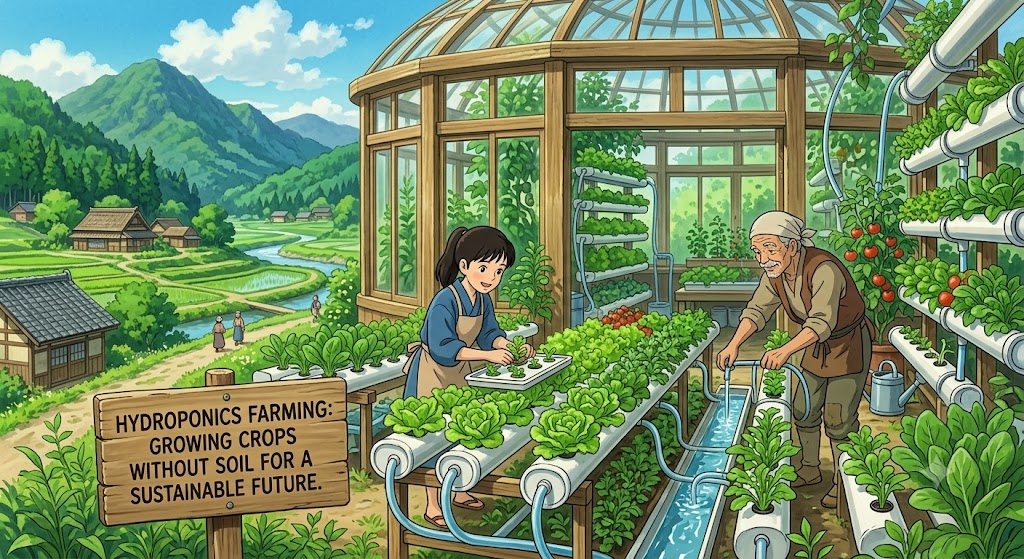
Hydroponics is a modern cultivation technique that allows plants to grow without soil. Instead of extracting nutrients from the ground, plants receive a carefully balanced nutrient solution through water. This method creates ideal growing conditions, allowing crops to mature faster while using fewer natural resources.
Today, hydroponic farms are found in cities, greenhouses, warehouses, rooftops, and even deserts. From leafy vegetables to herbs and fruits, hydroponics is changing the future of agriculture by making farming cleaner, more efficient, and highly productive.
Understanding Hydroponics Farming
Hydroponics is a soil-free cultivation system where plant roots absorb nutrients directly from water. Since plants no longer need to search for nutrients in the soil, they spend more energy on growing leaves, stems, flowers, and fruits.
The roots are supported by inert growing materials such as coconut coir, clay pebbles, rockwool, or perlite, while nutrient-rich water continuously supplies everything needed for healthy development.
This controlled environment helps farmers achieve consistent production throughout the year regardless of outdoor weather conditions.
Why Hydroponics Is Gaining Worldwide Attention
Hydroponics has become popular because it solves many problems faced by traditional agriculture.
Some major reasons include:
- Limited agricultural land
- Water shortages
- Urban population growth
- Climate change
- Demand for fresh vegetables
- Higher farming efficiency
- Sustainable food production
As cities expand and farmland becomes scarce, hydroponics provides an innovative solution that allows crops to be grown almost anywhere.
How a Hydroponic System Works
Although hydroponics may seem complex, its working principle is straightforward.
A hydroponic farm consists of several essential components:
- Water reservoir
- Nutrient solution
- Growing channels or containers
- Water pump
- Air pump
- Growing medium
- Lighting system (for indoor farms)
- Environmental monitoring equipment
The nutrient solution circulates continuously through the system, delivering oxygen, minerals, and water directly to plant roots. This efficient process supports rapid growth while minimizing waste.
Popular Hydroponic Growing Systems
Different crops require different hydroponic methods.
Nutrient Film Technique (NFT)
A thin layer of nutrient solution flows continuously beneath plant roots.
Best suited for:
- Lettuce
- Spinach
- Herbs
- Kale
Deep Water Culture (DWC)
Plant roots remain suspended in oxygen-rich nutrient water.
Advantages include:
- Fast growth
- Simple design
- Low maintenance
Drip Hydroponics
Nutrients are delivered through small drip lines directly to each plant.
Ideal for:
- Tomatoes
- Cucumbers
- Bell peppers
- Strawberries
Ebb and Flow System
Growing trays are periodically flooded with nutrient solution before draining back into the reservoir.
This method provides both moisture and oxygen to the root zone.
Vertical Hydroponics
Plants are arranged vertically instead of horizontally.
Benefits include:
- Space saving
- Higher production per square meter
- Ideal for urban farming
- Lower land requirements
Crops That Grow Well in Hydroponics
Hydroponic farming supports a wide variety of crops.
Popular choices include:
- Lettuce
- Basil
- Mint
- Coriander
- Spinach
- Kale
- Tomatoes
- Cucumbers
- Bell peppers
- Strawberries
- Celery
- Microgreens
These crops grow quickly and have excellent market demand.
Major Advantages of Hydroponics Farming
Faster Plant Growth
Since nutrients are delivered directly to plant roots, crops often mature much faster than those grown in soil.
Significant Water Savings
Hydroponic systems recycle water continuously, reducing water consumption by up to 90% compared to conventional farming.
Higher Productivity
Plants can be grown closer together because nutrients are carefully controlled.
This results in:
- Higher yield
- Better crop quality
- Increased farm income
Minimal Weed Problems
Without soil, weeds rarely become an issue, reducing maintenance and labor costs.
Reduced Pest and Disease Pressure
Many soil-borne diseases are eliminated because plants are not grown in natural soil.
This leads to healthier crops and lower pesticide usage.
Year-Round Production
Controlled environments allow continuous farming regardless of changing seasons.
Farmers can supply fresh produce throughout the year.
Smart Technology in Hydroponic Farming
Modern hydroponic farms rely heavily on digital technologies.
Artificial Intelligence
AI helps monitor plant growth, detect nutrient deficiencies, and recommend adjustments for maximum productivity.
IoT Sensors
Smart sensors continuously measure:
- Water temperature
- Nutrient concentration
- pH level
- Humidity
- Air temperature
- Light intensity
Real-time monitoring helps maintain ideal growing conditions.
Automated Irrigation
Computer-controlled pumps distribute nutrient solutions automatically according to plant requirements.
Automation improves efficiency while reducing labor.
LED Grow Lights
Indoor farms use energy-efficient LED lighting to provide the exact light spectrum needed for photosynthesis.
This supports healthy growth even without natural sunlight.
Challenges of Hydroponic Farming
Like every farming system, hydroponics also has certain limitations.
High Initial Investment
Building a hydroponic setup requires equipment such as pumps, reservoirs, sensors, pipes, and lighting systems.
Technical Knowledge
Farmers must understand:
- Nutrient management
- Water chemistry
- pH balance
- Plant nutrition
- Environmental control
Electricity Dependence
Most systems rely on electricity for water circulation and environmental management.
Power interruptions can affect plant health if backup systems are unavailable.
Regular Monitoring
Hydroponic farms require consistent observation to ensure nutrient levels and environmental conditions remain stable.
Hydroponics and Environmental Sustainability
One of the greatest strengths of hydroponics is its positive environmental impact.
This farming method contributes to sustainability by:
- Conserving water
- Reducing fertilizer waste
- Minimizing pesticide use
- Preventing soil erosion
- Lowering transportation emissions through urban farming
- Producing food with fewer natural resources
These benefits make hydroponics an environmentally responsible farming solution.
Tips for Successful Hydroponic Farming
Farmers can improve production by following these practical recommendations:
- Select crops suitable for hydroponic cultivation.
- Use clean, high-quality water.
- Monitor pH levels regularly.
- Maintain balanced nutrient concentrations.
- Clean reservoirs and pipes frequently.
- Ensure proper oxygen supply to plant roots.
- Maintain stable temperature and humidity.
- Inspect crops daily for nutrient deficiencies.
- Keep accurate production records.
- Continue learning about new hydroponic technologies.
Future of Hydroponics
Hydroponics is expected to play an increasingly important role in feeding the world’s growing population. Governments, research institutions, and private companies are investing heavily in controlled-environment agriculture, vertical farming, and smart greenhouse technologies.
Future innovations may include AI-powered nutrient management, robotic harvesting, renewable energy-powered hydroponic systems, automated climate control, and advanced monitoring through cloud-based platforms. These developments will make hydroponic farming more efficient, affordable, and accessible to farmers around the world.
As urbanization continues and climate challenges intensify, hydroponics will become an essential part of sustainable food production.
Conclusion
Hydroponics farming is transforming modern agriculture by proving that healthy crops can be grown successfully without soil. Through efficient water use, direct nutrient delivery, and advanced technology, this innovative farming method offers faster growth, higher productivity, and year-round production while conserving valuable natural resources.
Although hydroponic farming requires careful planning, investment, and technical knowledge, its long-term benefits make it one of the most promising agricultural systems of the future. As technology continues to improve and global demand for fresh, high-quality produce increases, hydroponics will remain a driving force in sustainable agriculture, helping farmers produce more food with fewer resources while supporting a healthier planet.