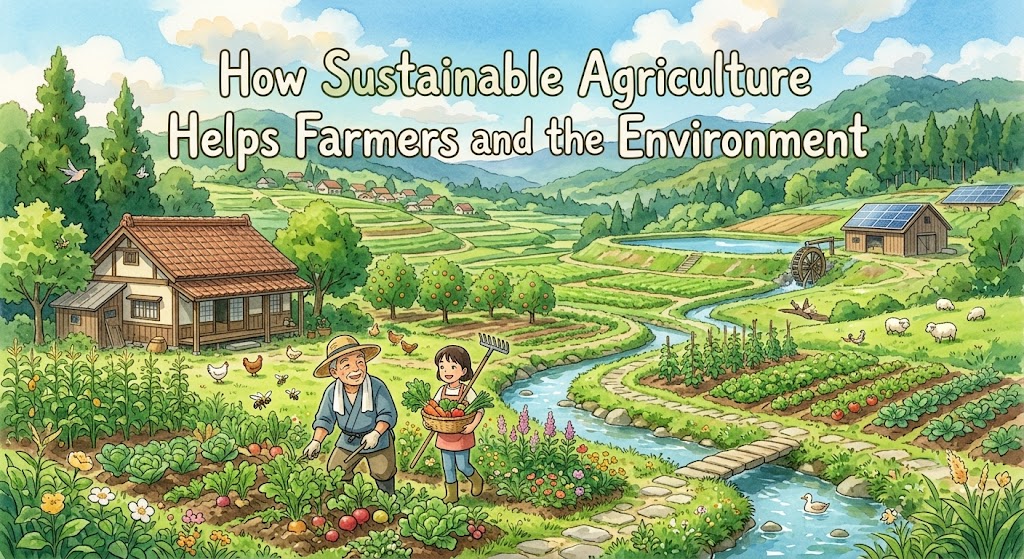
Sustainable agriculture is transforming the way food is produced around the world. As farmers face challenges such as climate change, declining soil fertility, water shortages, rising production costs, and increasing demand for food, adopting sustainable farming practices has become more important than ever. Rather than focusing only on maximizing short-term yields, sustainable agriculture aims to create farming systems that remain productive, profitable, and environmentally responsible for generations.
This approach balances agricultural production with the conservation of natural resources. It promotes healthy soils, efficient water use, biodiversity, and responsible nutrient management while helping farmers improve crop quality and reduce unnecessary expenses. Sustainable agriculture is not limited to organic farming; it includes a wide range of practices that increase productivity while minimizing environmental impact.
For both small family farms and large commercial operations, sustainable agriculture provides a practical path toward long-term success.
What Is Sustainable Agriculture?
Sustainable agriculture is a farming system designed to meet today’s food needs without compromising the ability of future generations to produce food. It combines environmental protection, economic profitability, and responsible resource management.
Instead of relying heavily on intensive chemical inputs and practices that degrade natural resources, sustainable farming focuses on improving the health of the entire agricultural ecosystem.
The main goals include:
- Protecting soil fertility
- Conserving water resources
- Maintaining biodiversity
- Reducing pollution
- Improving farm profitability
- Producing safe and high-quality food
- Increasing resilience to climate change
By working with nature rather than against it, sustainable agriculture creates healthier farms and stronger rural communities.
Protecting Soil Health
Healthy soil is one of the most valuable assets on any farm. It supplies nutrients, stores moisture, supports beneficial microorganisms, and provides the foundation for healthy crop growth.
Sustainable farming practices help improve soil health through methods such as:
- Crop rotation
- Cover cropping
- Compost application
- Reduced tillage
- Organic matter management
- Mulching
These practices increase soil organic matter, improve soil structure, reduce erosion, and encourage beneficial biological activity.
Healthier soils also become more productive over time, allowing crops to develop stronger root systems and access nutrients more efficiently.
Conserving Water Resources
Water scarcity is becoming an increasing concern for agriculture in many parts of the world.
Sustainable farming promotes efficient water management through techniques that reduce waste while maintaining crop productivity.
Common water-saving practices include:
- Drip irrigation
- Rainwater harvesting
- Soil moisture monitoring
- Mulching
- Proper irrigation scheduling
- Conservation tillage
Healthy soils rich in organic matter retain moisture longer, reducing irrigation needs during dry periods.
Efficient water use lowers production costs while helping preserve valuable freshwater resources.
Reducing Soil Erosion
Topsoil contains most of the nutrients and biological activity needed for healthy crop production.
Heavy rainfall, strong winds, and poor farming practices can remove this valuable layer through erosion.
Sustainable agriculture reduces erosion by:
- Planting cover crops
- Maintaining vegetation
- Practicing contour farming
- Using windbreaks
- Applying mulch
- Minimizing unnecessary tillage
Protecting topsoil ensures long-term productivity while reducing sediment pollution in rivers and lakes.
Improving Biodiversity
Healthy farms support many forms of life beyond crops.
Pollinators, beneficial insects, birds, earthworms, fungi, and soil microorganisms all contribute to productive farming systems.
Sustainable agriculture encourages biodiversity by:
- Growing multiple crops
- Maintaining natural habitats
- Planting flowering borders
- Protecting pollinator populations
- Reducing excessive pesticide use
Greater biodiversity improves ecological balance and naturally helps control many agricultural pests.
It also strengthens the resilience of farming systems during changing environmental conditions.
Reducing Chemical Dependency
While fertilizers and pesticides can support crop production, excessive or improper use may create environmental problems.
Sustainable agriculture encourages farmers to use these inputs responsibly and efficiently.
This may involve:
- Soil testing
- Integrated pest management
- Precision fertilizer application
- Biological pest control
- Crop rotation
- Resistant crop varieties
Reducing unnecessary chemical use protects soil organisms, water quality, beneficial insects, and nearby ecosystems.
Farmers also save money by applying only the inputs their crops actually require.
Increasing Farm Profitability
One of the biggest misconceptions is that sustainable farming reduces profits.
In reality, many sustainable practices improve financial performance over time.
Farmers may reduce expenses through:
- Lower fertilizer use
- Reduced pesticide costs
- Better water efficiency
- Improved soil fertility
- Reduced erosion
- Lower fuel consumption
- Increased nutrient efficiency
Healthy crops often produce higher-quality harvests that attract better market prices.
Long-term soil improvement also reduces the need for costly corrective measures.
Improving Crop Health
Healthy soils produce healthier plants.
Strong root systems allow crops to absorb nutrients and water more efficiently.
Balanced nutrition, improved soil biology, and proper moisture management strengthen plants against stress.
Healthier crops often show:
- Better growth
- Stronger stems
- Improved disease resistance
- Higher yields
- Better fruit quality
- Longer storage life
Reducing plant stress also helps maintain consistent production during changing weather conditions.
Supporting Climate Change Adaptation
Climate change has increased the frequency of droughts, floods, heat waves, and unpredictable weather.
Sustainable agriculture helps farms become more resilient.
Practices that improve resilience include:
- Increasing soil organic matter
- Conserving water
- Diversifying crops
- Agroforestry
- Improved drainage
- Efficient irrigation
- Cover cropping
Healthy soils absorb more rainfall while retaining moisture during dry periods.
This reduces both flooding and drought stress.
Lowering Greenhouse Gas Emissions
Agriculture contributes to greenhouse gas emissions through fertilizer use, fuel consumption, and land management.
Sustainable farming can reduce emissions by:
- Improving nutrient efficiency
- Reducing excessive tillage
- Increasing carbon storage in soil
- Planting trees
- Using renewable energy where practical
- Managing manure responsibly
Healthy soils rich in organic matter can store significant amounts of carbon, helping reduce atmospheric carbon dioxide.
Encouraging Natural Pest Control
Healthy ecosystems naturally support predators that feed on crop pests.
Examples include:
- Ladybirds
- Lacewings
- Predatory beetles
- Birds
- Parasitic wasps
- Spiders
Sustainable farms create habitats where these beneficial species thrive.
Natural pest control reduces dependence on chemical pesticides while supporting ecological balance.
Improving Food Quality
Consumers increasingly value food produced using environmentally responsible practices.
Sustainable farming often emphasizes:
- Balanced plant nutrition
- Healthy soils
- Responsible chemical use
- Fresh production
- Better traceability
High-quality produce can strengthen customer confidence and open access to premium markets.
Some buyers actively seek products produced using sustainable farming methods.
Supporting Rural Communities
Sustainable agriculture benefits more than individual farms.
Healthy agricultural systems contribute to:
- Stable employment
- Local food production
- Rural economic development
- Better resource management
- Long-term agricultural productivity
Protecting farmland today helps ensure future generations can continue farming successfully.
Practical Sustainable Farming Practices
Farmers can begin improving sustainability through simple, practical steps.
Examples include:
- Rotate crops annually.
- Add compost to improve organic matter.
- Plant cover crops between growing seasons.
- Reduce unnecessary tillage.
- Install efficient irrigation systems.
- Test soil regularly.
- Use mulch to conserve moisture.
- Encourage beneficial insects.
- Maintain clean drainage systems.
- Record fertilizer and pesticide applications.
Even small improvements made consistently can produce significant long-term benefits.
Challenges of Sustainable Agriculture
Although sustainable farming offers many advantages, implementation may require planning and patience.
Some challenges include:
- Initial investment in equipment
- Learning new techniques
- Transition period before full benefits appear
- Access to technical knowledge
- Market development for sustainable products
However, many farmers find that the long-term benefits outweigh these early challenges.
Government support programs, agricultural extension services, and farmer training initiatives can also help ease the transition.
Future of Sustainable Agriculture
Modern technologies continue to improve sustainable farming.
Innovations include:
- GPS-guided machinery
- Precision agriculture
- Drone monitoring
- Smart irrigation systems
- Artificial intelligence
- Remote sensing
- Climate forecasting
- Soil health monitoring
These technologies allow farmers to make more informed decisions while using fewer resources.
Combining traditional farming knowledge with modern technology creates more productive and environmentally responsible agricultural systems.
Frequently Asked Questions
What is the main goal of sustainable agriculture?
The main goal is to produce food while protecting natural resources such as soil, water, biodiversity, and ecosystems for future generations.
Does sustainable farming reduce crop yields?
Not necessarily. Well-managed sustainable systems often maintain or improve productivity over time by improving soil health and resource efficiency.
How does sustainable agriculture benefit farmers financially?
It helps reduce production costs, improve soil fertility, conserve water, lower chemical expenses, and produce healthier crops with better market value.
Can small farms adopt sustainable agriculture?
Yes. Many sustainable practices, including composting, crop rotation, mulching, and efficient irrigation, are suitable for farms of all sizes.
Why is soil health important in sustainable farming?
Healthy soil stores nutrients and water, supports beneficial organisms, improves root growth, and provides the foundation for long-term agricultural productivity.
Conclusion
Sustainable agriculture provides a practical solution to many of the challenges facing modern farming. By protecting soil health, conserving water, reducing erosion, encouraging biodiversity, and using natural resources responsibly, farmers can build more productive and resilient farming systems. These practices not only improve crop quality and reduce long-term production costs but also protect the environment by reducing pollution, conserving ecosystems, and supporting climate resilience.
As global food demand continues to grow, sustainable agriculture will play an increasingly important role in ensuring food security while preserving the natural resources that future generations depend on. Farmers who adopt sustainable practices today are investing in healthier soils, stronger harvests, and a more sustainable future for agriculture and the environment.