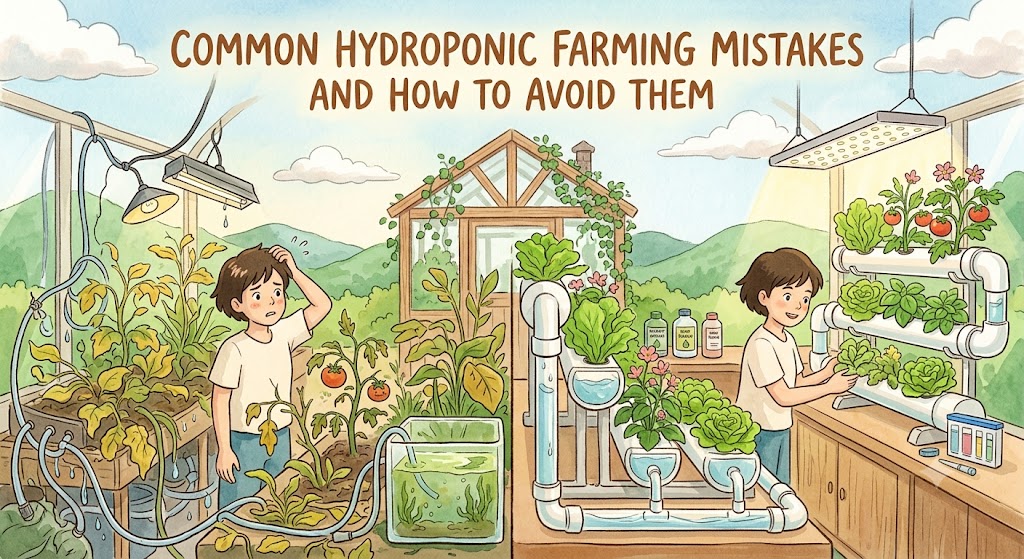
Hydroponic farming is a modern method of growing plants without soil. Instead of taking nutrients from the ground, plants receive a carefully balanced nutrient solution through water. This system can produce faster growth, higher yields, and better control over plant health. It is also useful in areas where fertile land or water is limited.
However, hydroponic farming is not completely automatic. Small mistakes in water quality, nutrient balance, lighting, temperature, or system maintenance can quickly affect the entire crop. Unlike traditional farming, problems in a hydroponic system may spread rapidly because multiple plants often share the same water and nutrient reservoir.
Understanding common mistakes before starting can help growers avoid crop loss, reduce expenses, and maintain a more productive system.
1. Starting With a Complicated System
One of the biggest mistakes beginners make is choosing an advanced hydroponic system without understanding the basics. Large nutrient film technique systems, aeroponics, or automated commercial setups may look impressive, but they require careful monitoring and technical knowledge.
Beginners may struggle with pumps, timers, nutrient dosing, water flow, and system cleaning. When several components fail at the same time, identifying the cause becomes difficult.
A better approach is to start with a simple system such as deep water culture, wick farming, or a small drip system. Learn how plants respond to nutrients, light, temperature, and water before expanding.
Start with a few plants rather than a large crop. This reduces financial risk and gives you time to develop practical skills.
2. Ignoring Water Quality
Water is the foundation of every hydroponic system. Poor-quality water can contain excessive salts, chlorine, minerals, or contaminants that affect nutrient absorption.
Some growers use tap water without checking its quality. Hard water may already contain high levels of calcium, magnesium, or dissolved salts. When concentrated nutrients are added, the solution may become unbalanced.
Before using water, test its pH, electrical conductivity, and total dissolved solids. In areas with very hard or contaminated water, filtered or reverse-osmosis water may be more suitable.
Allowing heavily chlorinated water to sit for a period before use may reduce chlorine, although the correct treatment depends on the local water supply.
3. Failing to Monitor pH Regularly
The pH level determines how effectively plants can absorb nutrients. Even if the nutrient solution contains everything a plant needs, an unsuitable pH can prevent proper absorption.
This problem is often called nutrient lockout. Plants may show yellow leaves, weak growth, or nutrient deficiency symptoms even though nutrients are present in the reservoir.
For many hydroponic crops, a slightly acidic pH range is preferred. However, the ideal range depends on the plant variety and growing system.
Check the pH regularly using a reliable digital meter or testing kit. Calibrate digital meters according to the manufacturer’s instructions. Make small adjustments instead of adding large amounts of pH-increasing or pH-reducing solution.
Sudden changes can stress roots and make nutrient problems worse.
4. Using Too Much Nutrient Solution
Many beginners believe that more fertilizer will produce faster growth. In reality, excessive nutrients can burn roots, damage leaves, increase salt buildup, and reduce water absorption.
Common warning signs include brown leaf tips, curled leaves, slow growth, and damaged roots.
Always follow nutrient instructions carefully, but remember that young seedlings usually need weaker solutions than mature plants. Start with a lower concentration and gradually increase it as plants grow.
An electrical conductivity meter can help measure nutrient strength. Record readings regularly so you can understand how plants are using water and minerals.
When water levels fall, do not automatically add more nutrients. Plants may have consumed more water than minerals, which can make the remaining solution too concentrated.
5. Using Too Little Nutrient Solution
Underfeeding can also limit growth. Plants require nitrogen, phosphorus, potassium, calcium, magnesium, sulfur, and several micronutrients.
A nutrient solution that is too weak may produce pale leaves, thin stems, small fruits, and slow development.
Use nutrients specially formulated for hydroponics. Ordinary soil fertilizers may not dissolve properly or provide minerals in forms that hydroponic roots can easily absorb.
Follow a feeding schedule based on the crop and growth stage. Leafy vegetables, fruiting crops, seedlings, and flowering plants do not always require the same nutrient balance.
6. Allowing Light Into the Reservoir
Light entering the nutrient reservoir encourages algae growth. Algae consume oxygen and nutrients, create unpleasant odors, block pipes, and provide an environment where harmful microorganisms can multiply.
Transparent containers and open water channels are common causes of this problem.
Use opaque reservoirs, dark-colored pipes, and secure covers. Check that no light enters through holes around plant baskets, tubing, or access points.
If algae appears, clean the system carefully and identify where light is entering. Simply removing visible algae without correcting the cause will not solve the problem.
7. Poor Oxygen Supply to the Roots
Plant roots require oxygen to remain healthy. When water is stagnant or poorly aerated, roots may become weak and vulnerable to disease.
Deep water culture systems are especially dependent on air pumps and air stones. If the pump stops, oxygen levels may fall quickly, particularly in warm water.
Choose an air pump suitable for the reservoir size. Clean air stones regularly because mineral deposits can reduce their performance. Keep backup equipment available if the crop depends entirely on powered aeration.
Healthy roots are often light-colored and firm. Brown, slimy, or unpleasant-smelling roots may indicate oxygen problems or root disease.
8. Incorrect Water Temperature
Water that is too warm contains less dissolved oxygen and encourages harmful microorganisms. Extremely cold water may slow root activity and nutrient absorption.
Reservoirs placed in direct sunlight can heat rapidly. Pumps and indoor lights may also increase water temperature.
Place the reservoir in a shaded or insulated location. Monitor the temperature using a simple water thermometer. In hot climates, growers may need ventilation, insulation, frozen water bottles, or a water chiller.
Avoid making sudden temperature changes because plant roots respond better to stable conditions.
9. Providing Inadequate Lighting
Plants need the correct intensity and duration of light for photosynthesis. Weak lighting produces stretched stems, pale leaves, and poor yields. Excessive lighting can cause leaf burn, heat stress, and unnecessary electricity costs.
Indoor growers sometimes use household bulbs that do not provide enough useful light. Others place powerful grow lights too close to the plant canopy.
Select lights based on the crop and growing area. Leafy greens generally require different lighting conditions than tomatoes, peppers, or cucumbers.
Follow the recommended hanging height and adjust it as plants grow. Using a timer helps provide a consistent daily light schedule.
Also give plants a dark period. Continuous light is not suitable for every crop and may cause stress.
10. Overcrowding the Plants
Hydroponic plants may grow quickly, encouraging growers to place too many plants in a limited area. Overcrowding reduces airflow, blocks light, increases humidity, and creates competition for nutrients.
Dense growth can also make pest and disease inspection difficult.
Plan spacing according to the mature size of each crop, not the size of young seedlings. Prune suitable crops, remove damaged leaves, and use supports or trellises for climbing plants.
Good spacing improves light penetration and makes harvesting and maintenance easier.
11. Ignoring Air Circulation and Humidity
Indoor hydroponic systems need proper airflow. Stagnant air can increase the risk of fungal disease, weak stems, and uneven temperature.
Very high humidity may encourage mold and reduce plant transpiration. Very low humidity can cause excessive water loss and leaf stress.
Use circulation fans to move air gently around the growing area. Do not direct strong airflow continuously at young plants. Exhaust fans or ventilation systems may be needed in enclosed rooms.
Monitor humidity and adjust ventilation according to crop requirements and growth stage.
12. Poor System Cleaning
Hydroponic systems require regular cleaning because nutrients, roots, algae, and organic material can accumulate in pipes, pumps, trays, and reservoirs.
Skipping cleaning may lead to blocked water flow, harmful bacteria, unpleasant odors, and disease outbreaks.
Remove dead roots and fallen leaves immediately. Clean filters, pumps, air stones, and irrigation lines regularly. Between crop cycles, empty and disinfect the system properly.
Use cleaning products that are suitable for hydroponic equipment and rinse all components before adding plants again.
Clean tools before moving between growing areas to reduce the spread of disease.
13. Mixing Nutrients Incorrectly
Concentrated nutrients should not always be mixed directly together. Certain minerals can react and form solid deposits, making them unavailable to plants.
Many hydroponic fertilizers are supplied as separate Part A and Part B solutions for this reason.
Add each nutrient component to the water separately and mix thoroughly before adding the next one. Follow the recommended order and dosage.
Never pour concentrated nutrients directly onto plant roots. Always dilute them in the reservoir water.
14. Ignoring Early Signs of Pests and Disease
Hydroponic farming reduces some soil-related problems, but it does not eliminate pests and diseases. Aphids, whiteflies, spider mites, thrips, fungus gnats, and fungal infections can still damage crops.
Inspect the upper and lower surfaces of leaves regularly. Look for spots, webbing, insects, curling leaves, and unusual discoloration.
Isolate infected plants where possible. Remove heavily damaged leaves and keep the growing area clean. Use appropriate biological or low-risk pest-control methods before the infestation becomes severe.
Avoid introducing new plants directly into the main growing area without inspection.
15. Growing the Wrong Crops
Not every crop is equally suitable for a beginner hydroponic system. Large root vegetables, long-duration crops, and heavy fruiting plants may require more space, support, light, and nutrients.
Beginners often achieve better results with lettuce, spinach, basil, mint, kale, and other leafy vegetables.
After gaining experience, growers can move to tomatoes, peppers, cucumbers, strawberries, and more demanding crops.
Choose varieties that match the available space, system design, climate, and market demand.
16. Keeping No Records
Without records, it becomes difficult to identify why one crop performed better than another.
Maintain a simple log of pH, nutrient strength, water temperature, reservoir changes, planting dates, light schedules, pest problems, and harvest results.
These records help detect patterns and improve future decisions. Commercial growers can also use them to calculate production costs and crop profitability.
Frequently Asked Questions
How often should a hydroponic reservoir be changed?
The schedule depends on the system size, crop type, and water quality. Many growers partially top up the reservoir regularly and completely replace the solution at planned intervals to prevent nutrient imbalance.
Why are my hydroponic leaves turning yellow?
Yellow leaves may result from incorrect pH, nutrient deficiency, overfeeding, poor oxygen supply, disease, or unsuitable lighting. Check the entire system before adding extra nutrients.
Can normal fertilizer be used in hydroponics?
Hydroponic nutrients are generally safer because they are formulated to dissolve in water and provide minerals in forms plants can absorb. Ordinary soil fertilizers may create imbalance or residue.
Why do hydroponic roots turn brown?
Brown roots may be caused by root rot, low oxygen, warm water, staining from certain nutrients, or poor sanitation. Healthy roots should normally feel firm and should not have a foul smell.
Is hydroponic farming difficult for beginners?
Hydroponics becomes manageable when beginners start small, monitor the system regularly, and avoid overly complicated equipment. Consistency is more important than expensive technology.
Conclusion
Successful hydroponic farming depends on careful observation and regular management. Most failures are not caused by one major problem but by several small mistakes, such as ignoring pH, using excessive nutrients, allowing the reservoir to overheat, or delaying system cleaning.
Start with a simple setup, choose easy crops, maintain clean water, monitor important readings, and keep detailed records. As experience increases, the system can gradually be expanded.
By preventing common mistakes and responding quickly to early warning signs, growers can produce healthier plants, reduce crop losses, and build a reliable hydroponic farming operation.