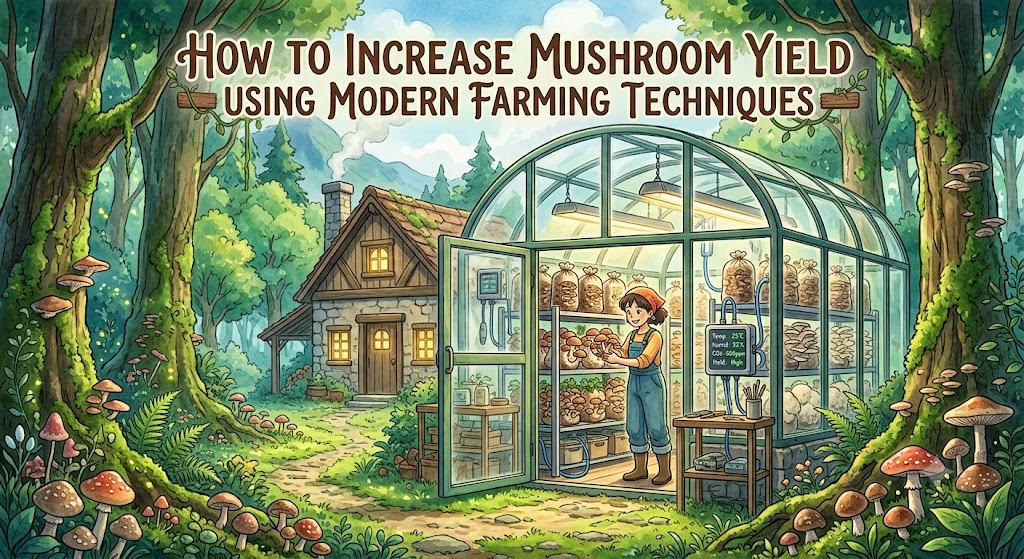
Producing mushrooms is only one part of a successful mushroom farming business. The real challenge is producing more mushrooms of better quality from the same growing space. This is where modern farming techniques make a significant difference. Experienced growers understand that increasing yield is not about adding more spawn or watering more frequently—it is about creating the ideal environment where mushrooms can grow efficiently from start to finish.
Today’s mushroom industry combines traditional cultivation knowledge with modern technology, environmental control, scientific monitoring, and improved production methods. These advancements help farmers reduce crop losses, shorten production cycles, and harvest larger quantities of high-quality mushrooms.
Whether you’re growing mushrooms on a small indoor farm or managing a commercial production unit, applying modern techniques can improve both productivity and profitability.
Understand What Determines Mushroom Yield
Before trying to increase production, it is important to understand the factors that influence mushroom growth.
High yields depend on:
- Healthy spawn
- Quality substrate
- Proper moisture
- Stable temperature
- Adequate humidity
- Fresh air circulation
- Good hygiene
- Correct harvesting time
Improving these areas together produces better results than focusing on only one factor.
Begin With High-Quality Spawn
Healthy spawn is the foundation of every successful mushroom crop.
Poor-quality spawn often leads to:
- Slow colonization
- Uneven growth
- Lower production
- Increased contamination
Choose spawn that is:
✔ Fresh
✔ Vigorous
✔ Free from contamination
✔ Produced by trusted suppliers
Investing in quality spawn is one of the simplest ways to improve yields.
Prepare a Nutrient-Rich Substrate
The substrate acts as the food source for mushrooms.
Modern growers prepare substrates carefully to ensure they contain sufficient nutrients while remaining free from harmful organisms.
Common substrate materials include:
- Wheat straw
- Rice straw
- Sawdust
- Cotton waste
- Corn cobs
- Sugarcane bagasse
Proper chopping, moisture adjustment, and sterilization or pasteurization improve growing conditions.
Maintain the Ideal Temperature
Temperature has a direct impact on mushroom development.
Each variety has its own preferred temperature range, but maintaining stable conditions is generally more important than frequent fluctuations.
Modern growing rooms often use:
- Ventilation systems
- Cooling units
- Insulation
- Digital temperature controllers
Stable temperatures encourage consistent growth throughout the cultivation cycle.
Control Humidity Carefully
Humidity influences mushroom size, appearance, and overall yield.
Low humidity may cause mushrooms to dry out, while excessive moisture can encourage contamination.
Growers maintain suitable humidity by using:
- Fine misting systems
- Humidifiers
- Hygrometers
- Proper ventilation
Balanced humidity supports healthy fruit body development.
Improve Air Exchange
Growing mushrooms require fresh air throughout different stages of development.
Poor ventilation can result in:
- Long stems
- Small caps
- Slow growth
- Reduced quality
Modern farms improve airflow using:
- Exhaust fans
- Air inlets
- Controlled ventilation systems
- Automated environmental controls
Fresh air encourages stronger and more uniform mushrooms.
Monitor Environmental Conditions Digitally
Many commercial farms now use digital monitoring equipment.
Useful devices include:
- Temperature sensors
- Humidity meters
- Carbon dioxide monitors
- Automated climate controllers
Real-time monitoring allows growers to correct environmental changes before production declines.
Keep the Growing Area Exceptionally Clean
Contamination is one of the biggest causes of reduced mushroom yields.
Modern hygiene practices include:
- Sanitizing equipment
- Cleaning growing rooms
- Wearing clean clothing
- Disinfecting tools
- Removing contaminated bags immediately
A clean environment protects healthy mushroom development.
Manage Water Efficiently
Water should support growth without creating excess moisture.
Good watering practices include:
- Light misting when needed
- Avoiding water accumulation
- Maintaining consistent moisture
- Preventing direct water damage to developing mushrooms
Balanced watering improves quality while reducing disease risks.
Harvest at Peak Quality
Waiting too long to harvest reduces product quality and limits future flushes.
Commercial growers usually harvest mushrooms when:
- Caps are properly developed
- Color is attractive
- Texture remains firm
- Market standards are met
Timely harvesting also improves shelf life.
Record Every Production Cycle
Successful farms continuously analyze their results.
Production records should include:
| Information | Purpose |
|---|---|
| Spawn batch | Quality tracking |
| Temperature records | Environmental management |
| Humidity levels | Yield improvement |
| Harvest weight | Productivity analysis |
| Contamination incidents | Problem identification |
| Production costs | Profit evaluation |
Good records help identify opportunities for continuous improvement.
Introduce Automation Gradually
Automation is becoming increasingly affordable for mushroom growers.
Helpful technologies include:
- Automatic humidifiers
- Climate control systems
- Timer-controlled ventilation
- Digital monitoring apps
- Smart irrigation systems
Even small improvements can increase production efficiency.
Avoid Common Yield-Reducing Mistakes
Many farms lose production because of avoidable errors.
Common mistakes include:
- Using poor-quality spawn
- Incorrect substrate moisture
- Inconsistent temperature
- Poor ventilation
- Delayed harvesting
- Weak sanitation practices
Correcting these issues often leads to immediate improvements.
Think Beyond Quantity
Higher yields are valuable, but consistent quality creates stronger businesses.
Commercial buyers look for mushrooms that are:
- Uniform in size
- Clean
- Fresh
- Firm
- Attractive in appearance
Producing premium-quality mushrooms often generates higher profits than simply producing larger quantities.
Future Innovations in Mushroom Farming
Modern mushroom cultivation continues advancing through technology.
Emerging innovations include:
- AI-based climate management
- Automated environmental monitoring
- Vertical mushroom farms
- Smart humidity control
- Data-driven production planning
- Energy-efficient growing rooms
These technologies will help farmers improve efficiency while reducing production costs.
Final Thoughts
Increasing mushroom yield requires a combination of quality spawn, nutritious substrate, stable environmental conditions, proper hygiene, and modern management techniques. Rather than relying on a single improvement, successful growers optimize every stage of the production cycle to create ideal growing conditions.
By combining traditional cultivation knowledge with digital monitoring, environmental control, careful record keeping, and timely harvesting, mushroom farmers can consistently produce larger harvests, better-quality mushrooms, and higher profits. As modern cultivation technologies continue to evolve, growers who embrace continuous improvement will remain competitive in the expanding mushroom industry.
Frequently Asked Questions
1. What is the most important factor for increasing mushroom yield?
Using healthy spawn and maintaining the correct growing environment are the most important factors affecting mushroom production.
2. Does temperature affect mushroom growth?
Yes. Stable temperatures within the recommended range for each mushroom variety are essential for healthy growth and high yields.
3. Why is hygiene important in mushroom farming?
Clean growing conditions reduce contamination from molds and harmful microorganisms that can lower production.
4. Can technology improve mushroom farming?
Yes. Digital sensors, automated climate control, smart humidifiers, and environmental monitoring systems help maintain ideal growing conditions and improve productivity.
5. How can beginners increase mushroom production naturally?
By using quality spawn, preparing nutrient-rich substrates, maintaining proper humidity and ventilation, harvesting on time, and keeping the growing area clean, beginners can improve both yield and mushroom quality.