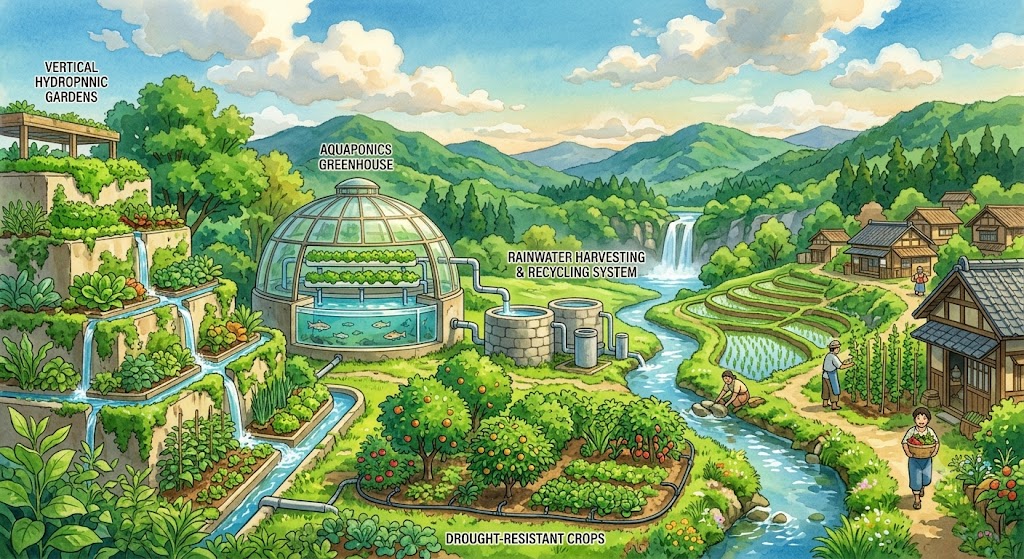
As agricultural land becomes more expensive and water resources grow increasingly scarce, farmers around the world are exploring innovative production methods that maximize efficiency while minimizing resource consumption. Traditional farming systems often require large areas of land and substantial amounts of water, making them challenging in regions facing urbanization, drought, or limited natural resources.
Fortunately, advances in agricultural technology and management practices have created alternative farming systems capable of producing significant amounts of food using far less land and water than conventional methods. These systems are helping farmers improve productivity, increase sustainability, and meet growing food demand while conserving valuable resources.
This guide explores some of the most effective alternative farming systems that require less land and water while offering strong commercial potential.
Why Resource-Efficient Farming Matters
Agriculture depends heavily on natural resources.
However, modern farmers increasingly face challenges such as:
- Water shortages
- Rising land prices
- Climate variability
- Population growth
- Environmental concerns
Resource-efficient farming systems help address these challenges by:
- Conserving water
- Maximizing production space
- Reducing waste
- Improving sustainability
Efficient resource management is becoming a critical factor in future agricultural success.
Understanding Alternative Farming Systems
Alternative farming systems differ from conventional field agriculture by focusing on efficiency, innovation, and controlled production methods.
Many of these systems aim to:
- Increase productivity per square meter
- Reduce water consumption
- Improve crop quality
- Support year-round production
They are particularly valuable in urban areas, arid regions, and locations with limited agricultural land.
Hydroponic Farming
Hydroponics is one of the most widely used alternative farming systems.
Plants are grown without soil using nutrient-rich water solutions.
Benefits include:
- Significant water savings
- Faster plant growth
- Higher yields
- Reduced land requirements
Common hydroponic crops include:
- Lettuce
- Spinach
- Herbs
- Tomatoes
- Strawberries
Hydroponics can often use substantially less water than traditional soil-based agriculture.
Vertical Farming
Vertical farming maximizes production by growing crops in stacked layers.
These systems are commonly used in:
- Greenhouses
- Indoor facilities
- Urban agriculture projects
Advantages include:
- Efficient land use
- Controlled growing conditions
- Year-round production
- Reduced transportation needs
Vertical farming allows substantial production within relatively small physical spaces.
It is becoming increasingly important in densely populated regions.
Aquaponics Systems
Aquaponics combines fish farming with hydroponic crop production.
Fish waste provides nutrients for plants, while plants help filter and clean the water.
Benefits include:
- Water recycling
- Dual production systems
- Reduced resource waste
- Sustainable nutrient management
Aquaponics produces both fish and crops from the same integrated system.
This approach improves overall resource efficiency.
Greenhouse Farming
Greenhouses provide controlled environments that improve production efficiency.
Benefits include:
- Reduced water loss
- Weather protection
- Extended growing seasons
- Higher crop quality
Modern greenhouse systems often incorporate:
- Drip irrigation
- Climate controls
- Automated monitoring
Protected cultivation supports efficient use of both land and water resources.
Container Farming
Container farming uses portable growing units equipped with environmental controls.
Advantages include:
- Small space requirements
- Controlled production environments
- Flexible installation locations
- Efficient resource use
Containers can support production in urban areas, parking lots, rooftops, and other nontraditional locations.
They provide opportunities for localized food production.
Microgreens Production
Microgreens are harvested shortly after germination and require very little growing space.
Popular varieties include:
- Radish
- Sunflower
- Pea shoots
- Mustard greens
- Broccoli
Benefits include:
- Extremely short production cycles
- Minimal water requirements
- High market value
- Indoor production capability
Microgreens offer excellent opportunities for small-scale commercial farming.
Mushroom Cultivation
Mushroom farming is highly efficient in terms of both land and water use.
Mushrooms can be grown indoors using:
- Agricultural byproducts
- Controlled environments
- Vertical shelving systems
Popular varieties include:
- Oyster mushrooms
- Shiitake mushrooms
- Lion’s Mane mushrooms
Mushroom production requires relatively little space while generating high-value products.
Rooftop Farming
Rooftop agriculture transforms unused urban spaces into productive growing areas.
Suitable crops include:
- Vegetables
- Herbs
- Leafy greens
- Small fruits
Benefits include:
- Local food production
- Efficient land utilization
- Reduced transportation distances
Rooftop farming is becoming increasingly popular in cities with limited available farmland.
Soilless Growing Systems
Soilless agriculture encompasses various production methods that eliminate traditional field soils.
Examples include:
- Hydroponics
- Aeroponics
- Aquaponics
Benefits include:
- Improved water efficiency
- Better nutrient control
- Reduced soil-related diseases
These systems provide flexibility and support intensive production.
Aeroponic Farming
Aeroponics grows plants with roots suspended in air while receiving nutrient mist.
Advantages include:
- Extremely efficient water use
- Rapid growth rates
- Reduced disease risks
- Minimal growing media requirements
Aeroponic systems often use even less water than hydroponic systems.
They represent one of the most advanced forms of controlled-environment agriculture.
Shade House Production
Shade structures provide partial environmental control while reducing water demand.
Benefits include:
- Lower heat stress
- Reduced evaporation
- Improved crop quality
Shade houses are particularly useful in hot climates where excessive sunlight can affect crop performance.
They offer a cost-effective alternative to fully enclosed greenhouses.
Integrated Farming Systems
Integrated systems combine multiple agricultural enterprises to improve efficiency.
Examples include:
- Fish and vegetable production
- Livestock and crop systems
- Agroforestry integration
Benefits include:
- Resource recycling
- Diversified income streams
- Improved sustainability
Integrated approaches maximize productivity while reducing waste.
Water-Saving Irrigation Technologies
Efficient irrigation is essential for alternative farming systems.
Technologies include:
Drip Irrigation
Delivers water directly to plant roots.
Automated Irrigation
Provides precise water management.
Moisture Monitoring Systems
Help avoid overwatering.
Efficient irrigation significantly improves water-use efficiency.
Benefits of Alternative Farming Systems
These systems offer numerous advantages.
Key benefits include:
- Reduced land requirements
- Lower water consumption
- Improved resource efficiency
- Year-round production potential
- Enhanced crop quality
- Greater sustainability
Many systems also support production in areas unsuitable for conventional farming.
Economic Opportunities
Alternative farming can create profitable business opportunities.
Potential markets include:
- Fresh produce
- Specialty vegetables
- Herbs
- Mushrooms
- Fish products
- Local food systems
High-value crops often generate strong returns despite limited production space.
Direct marketing opportunities further improve profitability.
Challenges to Consider
Alternative farming systems also present challenges.
Potential obstacles include:
- Initial investment costs
- Technical knowledge requirements
- Energy needs
- Equipment maintenance
Proper planning and education help farmers overcome these challenges successfully.
Long-term benefits often outweigh startup difficulties.
Building a Resource-Efficient Farming Operation
Successful operations typically focus on:
- Efficient water management
- Space optimization
- High-value crop selection
- Technology integration
- Sustainable production practices
- Market-oriented planning
Combining these elements supports profitable and environmentally responsible farming.
Conclusion
Alternative farming systems are transforming modern agriculture by demonstrating that productive food production does not always require vast amounts of land and water. Technologies such as hydroponics, aquaponics, vertical farming, aeroponics, greenhouse production, and integrated farming systems offer practical solutions for farmers seeking greater efficiency and sustainability.
As resource pressures continue to increase, these innovative approaches will play an increasingly important role in global food production. Farmers who adopt resource-efficient systems can improve productivity, reduce environmental impacts, and create profitable agricultural businesses capable of thriving in a changing world.