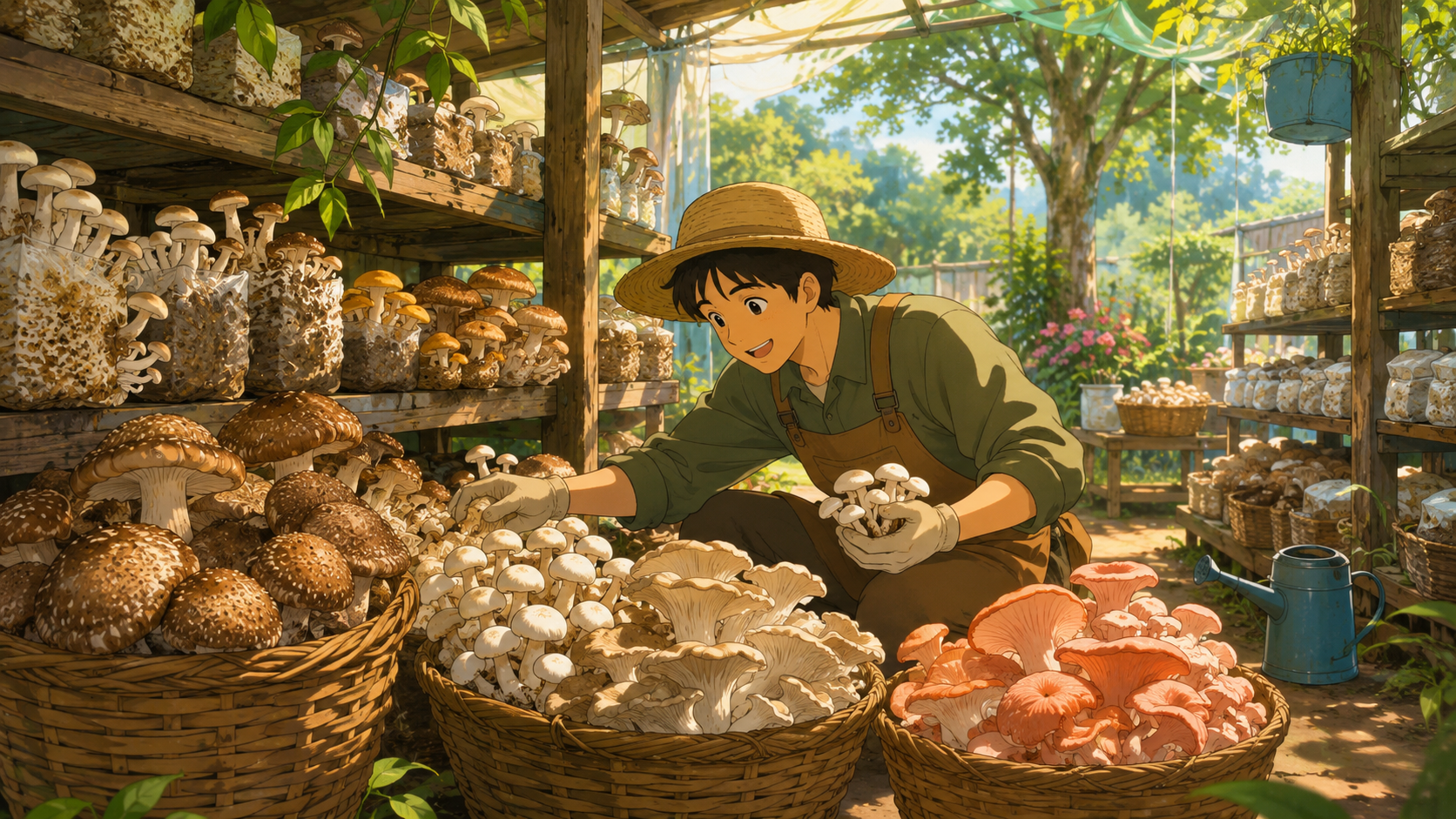
Imagine starting a highly profitable farm without buying a single acre of land, worrying about sudden droughts, or investing in heavy tractors. For many modern growers, this is not just a dream; it is the daily reality of mushroom farming. Unlike traditional crops that require vast open fields and months of waiting, mushrooms grow indoors, vertically, and incredibly fast.
However, growing fungi is very different from growing vegetables. You are not dealing with seeds, soil, and sunlight. Instead, you are managing spores, substrates, and strict climate conditions. Because the process is so unique, beginners often face a steep learning curve. But once you understand the basic biology of fungi and how to control their environment, mushroom farming becomes one of the most reliable and high-yielding agricultural businesses you can start. Here is a practical guide to mastering the craft, increasing your yields, and turning a solid profit.
The Unique Appeal of Mushroom Cultivation
To succeed in this niche, you must first understand what makes mushrooms different. Mushrooms are the “fruiting bodies” of a much larger, hidden network called mycelium. Think of mycelium as the root system of an apple tree, and the mushroom as the apple itself. Your main job as a farmer is to create the perfect conditions for the mycelium to spread rapidly and then trigger it to produce those highly valuable “apples.”
Because this process happens entirely indoors in controlled environments, you can harvest fresh crops every single week of the year. This consistency is a massive advantage when selling to local restaurants, farmers’ markets, or grocery stores that demand a steady supply.
Practical Tips for Better Production
Maximizing your harvest requires strict attention to detail. Mushrooms are highly sensitive to their surroundings. Here are proven strategies to boost your production quality and volume.
Master Your Hygiene
In mushroom farming, contamination is your biggest enemy. You are creating the perfect warm, humid environment for fungi to grow. Unfortunately, green mold and airborne bacteria also love those exact conditions. If a competing mold gets into your growing bags before your mushroom mycelium takes hold, you will lose the entire batch. Wash your hands thoroughly, use 70% isopropyl alcohol to wipe down your tools, and always wear a clean mask and gloves when inoculating your bags. Cleanliness directly equals profit.
Optimize Fresh Air Exchange (FAE)
Mushrooms breathe oxygen and exhale carbon dioxide (CO2), exactly like humans do. In a sealed growing room, CO2 levels will build up very quickly. If mushrooms do not get enough fresh air, they will grow long, stringy stems and tiny, unappealing caps as they try to “reach” for oxygen. Install an exhaust fan to pull heavy, stale CO2 out of the room, and an intake fan to pull fresh air in. Finding the right balance of fresh air while maintaining high humidity is the secret to growing beautiful, market-ready mushrooms.
Choose the Right Substrate
Substrate is the material your mushrooms eat. Different mushrooms prefer different foods. Oyster mushrooms aggressively digest almost anything, from straw to coffee grounds. However, premium varieties like Shiitake or Lion’s Mane prefer hardwood sawdust mixed with a nitrogen-rich supplement like wheat bran. Providing the correct, high-quality food source gives the mycelium the energy it needs to produce multiple, heavy harvests from a single bag.
A Real-Life Example: The Basement Bounty
Consider the story of a young couple who wanted to start a farming business but only had a 150-square-foot unfinished basement. They could not afford to buy farmland, so they turned to indoor agriculture.
They decided to focus entirely on blue oyster mushrooms, known for their fast growth and striking appearance. They built simple wooden shelving units and wrapped the area in plastic sheeting to create a humidity tent. In the beginning, they lost several bags to green mold because they were mixing their substrate in the open air. Instead of giving up, they built a simple “still air box”—a large plastic tote with armholes—to keep airborne spores away during the critical inoculation phase. Within six months, that small, damp basement was producing over 50 pounds of premium oyster mushrooms a week, generating a full-time income by selling directly to three local farm-to-table restaurants.
Step-by-Step Guide: Setting Up a Small-Scale Grow Room
If you are ready to start growing, you need a dedicated space. You do not need a commercial warehouse; a spare room, a clean garage, or a basement works perfectly.
Step 1: Clean and Seal the Room. Empty the space completely. Wash the floors and walls with a light bleach solution. Seal any drafty windows or air leaks to give you full control over the environment. Step 2: Install Shelving. Set up wire or plastic shelving racks. Metal wire is best because it allows air to circulate freely around the growing bags and is easy to wipe down. Step 3: Set Up the Climate Control. Bring in a humidifier to keep the moisture levels high (usually around 85% to 90%). Connect an exhaust fan to a window to pull out excess CO2. Put both the humidifier and the fan on automated sensors or timers. Step 4: Prepare the Substrate. Hydrate your chosen substrate (like hardwood sawdust pellets) until it holds moisture like a wrung-out sponge. Sterilize or pasteurize the substrate using heat to kill off competing molds. Step 5: Inoculate and Incubate. In a completely clean environment, mix your mushroom spawn (the “seeds”) into the cooled substrate. Seal the bags and place them in a dark, warm space for two to three weeks until the white mycelium fully covers the block. Step 6: Move to the Fruiting Room. Once fully colonized, move the blocks to your humid, well-ventilated grow room. Cut small slits in the bags. Within days, you will see tiny “pins” forming, which will rapidly grow into full-sized mushrooms.
Common Mistakes to Avoid
Even careful beginners can stumble. Watch out for these frequent errors that can ruin a perfectly good crop.
- Over-Hydrating the Substrate: If your substrate is dripping wet, the mycelium will drown and rot. It should be moist, never muddy. When you squeeze a handful of substrate, only one or two drops of water should come out.
- Ignoring the Temperature Limits: Every mushroom strain has a specific temperature range for fruiting. If you try to fruit a cold-weather strain like the King Oyster in the middle of a hot summer without air conditioning, the mushrooms simply will not grow.
- Harvesting Too Late: The best time to harvest most mushrooms is just before the cap fully uncurls and flattens out. If you wait too long, they will drop millions of spores everywhere, making a massive mess and significantly reducing their shelf life.
Wrapping Up the Harvest
Mushroom farming is a unique blend of agriculture and basic laboratory science. It forces you to pay close attention to hygiene, humidity, and airflow. While the initial learning phase requires patience and a bit of trial and error, the rewards are exceptional. By starting small, keeping your environment spotless, and learning to read the physical signs your mushrooms give you, you can build a highly efficient, sustainable, and profitable farming operation right inside your own home.
Frequently Asked Questions (FAQs)
1. Which mushroom variety is the best for absolute beginners? Oyster mushrooms are universally recommended for beginners. They grow incredibly fast, can thrive on a wide variety of cheap substrates like straw or cardboard, and are highly resistant to competing molds compared to other delicate strains.
2. How much space do I actually need to start making a profit? You can start generating a modest side income from a space as small as 10×10 feet (100 square feet). Because you grow vertically on shelves, a small room can hold dozens of fruiting blocks at once, producing pounds of fresh mushrooms every week.
3. Is mushroom farming a full-time job? It depends on your scale. A small basement operation might only require 10 to 15 hours of active labor per week, mostly spent mixing substrate, inoculating bags, and delivering the harvest. The mushrooms do most of the work themselves while they incubate.
4. What is the biggest ongoing expense in this business? Once your room is set up, the main recurring costs are the grain spawn (the mushroom “seeds”), the raw substrate materials, and the electricity to run your fans and humidifiers. Fortunately, these materials are generally quite cheap to buy in bulk.
5. Can I grow commercial mushrooms outside in my garden? While you can grow mushrooms outdoors on large hardwood logs, it is much harder to run a predictable, profitable business this way. Outdoor growing leaves you at the mercy of the weather and wild insects, making it difficult to guarantee a consistent weekly harvest for your buyers.