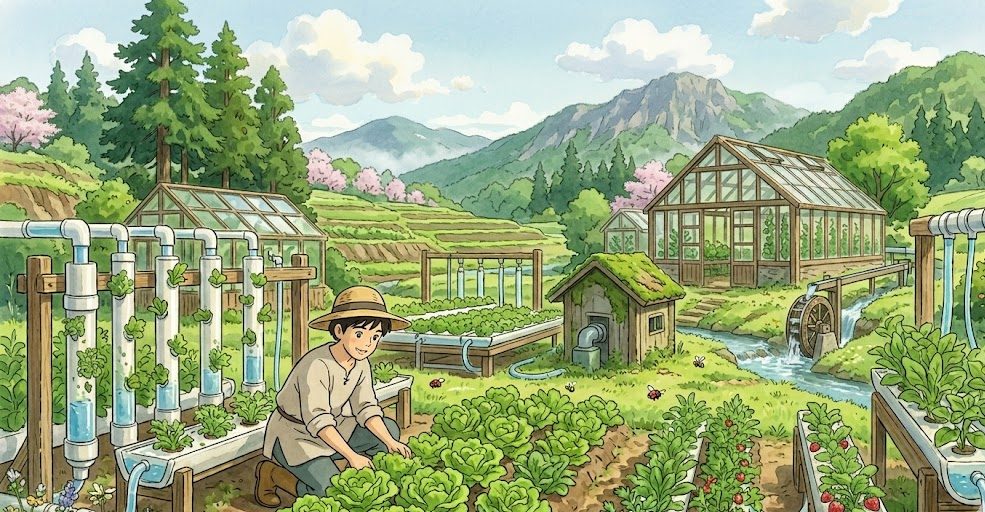
The global food production system is facing unprecedented structural pressures. Traditional soil-based agriculture is increasingly vulnerable to extreme weather events, declining topsoil fertility, and intense competition for arable land. At the same time, consumers are demanding fresher, pesticide-free produce grown closer to urban centers.
To bridge this widening gap, forward-thinking agricultural entrepreneurs are leaving the soil behind and stepping into the world of controlled-environment agriculture.
Among these innovative methods, hydroponics—the science of cultivating plants in a nutrient-rich, water-based solution without soil—stands out as a highly viable path to profitability.
While early setups were often viewed as complex hobbies, modern advancements in automation, water-delivery systems, and lighting have transformed hydroponics into a highly reliable commercial farming method. By optimizing resources and maximizing growing space, a well-managed hydroponic farm can deliver predictable, high-quality yields year-round, turning water efficiency into consistent business profits.
The Economics of Hydroponics: Why It Can Be Highly Profitable
Switching from traditional fields to a soil-free system requires a shift from managing land to managing an efficient production environment. While the initial setup costs for a greenhouse or indoor hydroponic facility are higher than buying open land, the operational advantages directly boost your long-term profit margins.
Conventional Field Agriculture:
[Large Land Footprint] ──> [Weather/Pest Disruptions] ──> [High Water/Fertilizer Waste] ──> [Seasonal, Variable Income]

Commercial Hydroponic Farming:
[Vertical/Compact Space] ──> [Climate-Controlled Protection] ──> [90% Water Recirculation] ──> [Continuous, Premium Harvests]
Hydroponic setups eliminate many of the variables that can hurt a traditional farmer’s bottom line. By controlling light, temperature, and nutrition, you can accelerate plant growth cycles by up to 25% while using a fraction of the space. This high efficiency lets you secure steady, year-round market contracts and claim a premium price for your produce.
Choosing the Right Commercial Hydroponic System
Selecting the proper system design is your most critical infrastructure decision. The right choice depends on your budget, available labor, and the specific crops you plan to grow for your target market.
1. Nutrient Film Technique (NFT)
NFT systems are a top choice for commercial leaf-green production. In this setup, crops are placed in long, gently sloping channels. A continuous, thin film of nutrient-rich water pumps across the bare root tips from a central reservoir, while keeping the upper root zone exposed to fresh air.
- Best Suited For: Loose-leaf lettuce, spinach, kale, basil, and delicate culinary herbs.
- The Profit Advantage: NFT systems use very little water and nutrient solution, lock in excellent oxygen levels for fast growth, and are highly modular, making them easy to clean and harvest.
- The Technical Risk: Because the channels hold very little standing water, any prolonged power outage or pump failure can cause the roots to dry out and damage the crop within hours.
2. Deep Water Culture (DWC)
DWC systems, also known as raft setups, utilize large, shallow rectangular basins filled entirely with nutrient-oxygenated water. Crops sit in net pots nestled within food-grade floating rafts, allowing their root systems to remain completely submerged at all times.
- Best Suited For: Head lettuce, bok choy, large brassica greens, and heavy-feeding leafy varieties.
- The Profit Advantage: The large volume of water in DWC basins buffers the system against sudden shifts in temperature or nutrient levels. If a pump loses power, your crops can easily survive for days on the stored water.
- The Technical Risk: Stagnant water can quickly spread root diseases. To prevent this, you must run high-throughput aeration lines continuously to maintain optimal dissolved oxygen levels.
3. Media-Based Drip and Bato Bucket Systems
For heavy, long-term fruiting crops, plants require a sturdy physical medium to anchor their expansive root networks. Bato (or Dutch) buckets feature individual containers filled with an inert substrate like perlite, clay pebbles, or coco coir, fed by automated drip lines.
- Best Suited For: Vine tomatoes, bell peppers, cucumbers, and strawberries.
- The Profit Advantage: These systems easily support massive, heavy-fruiting vine networks and allow you to tailor the nutrient delivery to individual rows of crops.
Balancing System Strengths to Maximize ROI
To build a profitable hydroponic business, you must match your chosen system architecture with the unique operational realities of your market.
| Hydroponic System | Initial Upfront Cost | Labor Demand | Market Turnaround Time | Primary Operational Challenge |
| Nutrient Film Technique (NFT) | Moderate to High | Low (Highly automated harvesting) | 21 to 28 days from transplant | Requires reliable backup power systems for the pumps. |
| Deep Water Culture (DWC) | Low to Moderate | Moderate (Cleaning large water basins) | 24 to 30 days from transplant | Requires strict monitoring to prevent root rot pathogens. |
| Bato Bucket Drip Systems | Moderate | High (Pruning and trellising vines) | 60 to 90 days (Long-term continuous picking) | Demands precise, automated emitter maintenance. |
Core Operational Management: The Science Behind High Yields
To maintain top market value, your system must deliver perfect conditions day in and day out. Managing a commercial hydroponic farm requires balancing three core biological variables.
1. Precise Electrical Conductivity (EC) and pH Tracking
Since your plants have no soil to act as a buffer, you must manage their liquid environment with absolute precision.
- Electrical Conductivity (EC): An EC meter measures the concentration of dissolved mineral salts within your reservoir water. If your EC levels drop too low, your crops will suffer from nutrient deficiencies; if they climb too high, the intense salt concentration can scorch the roots and block water uptake.
- Managing pH Levels: Most hydroponic crops thrive within a narrow pH window of 5.5 to 6.5. If your reservoir drifts outside this range, vital minerals like iron and phosphorus lock up chemically, making it impossible for the roots to absorb them.
2. Dissolved Oxygen (DO) Optimization
Roots require oxygen to breathe and power active nutrient transport. If your water gets warm or stagnant, oxygen levels drop, which can suffocate your plants and invite aggressive root diseases like Pythium. Commercial growers use heavy-duty air pumps or venturi injectors to keep dissolved oxygen levels at a healthy 8 to 10 parts per million (ppm).
A Practical Roadmap to Launching a Hydroponic Business
Starting a profitable commercial hydroponic venture requires balancing early system assembly with a clear, reliable sales strategy.
1.Step 1: Identifying Market Gaps and High-Value Crops:Focus: Business Alignment.
Before purchasing any equipment, survey local restaurants, grocery stores, and wholesale markets. Identify specific, high-margin crops—such as premium culinary herbs, specialty greens, or vine-ripened tomatoes—that face frequent supply gaps or high shipping costs in your regional area.
2.Step 2: Constructing the Facility and Assembling Systems:Focus: Infrastructure Build.
Build a well-insulated greenhouse or indoor facility equipped with stable backup power. Assemble your selected hydroponic systems (such as NFT channels or DWC basins), verify that all plumbing joints are watertight, and install high-efficiency water pumps and aeration lines.
3.Step 3: Calibrating Nutrient and Climate Automation:Focus: Environmental Control.
Fill your reservoirs with clean water and mix in your crop-specific nutrient solutions. Calibrate automated dosing pumps to monitor and adjust your EC and pH levels continuously, and set up your climate systems to maintain optimal air temperatures and humidity.
4.Step 4: Staggering Plantings and Securing Sales Contracts:Focus: Commercial Scale.
Begin a regular, staggered seed-starting schedule every week to guarantee an uninterrupted, year-round harvest stream. Use this predictable supply to secure formal wholesale contracts with local buyers, locking in premium prices for your fresh produce.
The Power of Automation: Integrating automated dosing computers removes human error from your daily routine. These smart systems monitor your reservoirs around the clock, injecting small amounts of concentrated nutrients or pH-adjusting solutions the moment your water drifts from its target settings. This keeps your crops growing at peak performance while freeing you up to focus on sales and marketing.
Frequently Asked Questions (FAQs)
What are the most profitable crops to grow in a commercial hydroponic system?
The most consistently profitable crops are those with fast growth cycles and high local market value. Loose leafy greens, gourmet basil, mint, microgreens, and vine-ripened specialty tomatoes are excellent choices. These varieties allow for frequent harvests throughout the year and command premium prices from local restaurants and grocery stores.
How often should I completely change the water in my hydroponic reservoir?
In a well-managed commercial system, a full water change is typically done every 2 to 3 weeks. Over time, plants absorb specific nutrients faster than others, creating an imbalance in your water. Flushing the reservoir and filling it with a fresh, balanced batch of nutrients prevents toxic salt build-ups and keeps your crops growing at full speed.
Can I run a profitable commercial hydroponic farm completely indoors using artificial lighting?
Yes. Indoor vertical farming is highly profitable in urban centers or cold climates where land is limited and winters are harsh. Utilizing energy-efficient LED grow lights allows you to stack growing layers vertically, maximizing your production per square foot and placing your farm right next to your primary city buyers.
What is the ideal water temperature for a hydroponic system?
The ideal water temperature for most hydroponic systems sits between 65°F and 70°F (18°C to 21°C). If your water climbs above 75°F, its ability to hold vital dissolved oxygen drops rapidly, leaving your root systems vulnerable to heat stress and harmful fungal diseases.
Conclusion
Building a profitable hydroponic farming business is an excellent way to secure high, predictable yields in an era of changing climates and limited land. Leaving traditional soil methods behind allows you to minimize resource waste, cut water consumption by up to 90%, and accelerate your crop growth cycles.
Success in this field relies on matching your system design to your local market needs and maintaining precise control over your water chemistry. By combining smart automated tools, a reliable crop schedule, and direct relationships with local buyers, you can turn a high-tech growing facility into a resilient, highly profitable agricultural business.