➡️ INTRODUCTION
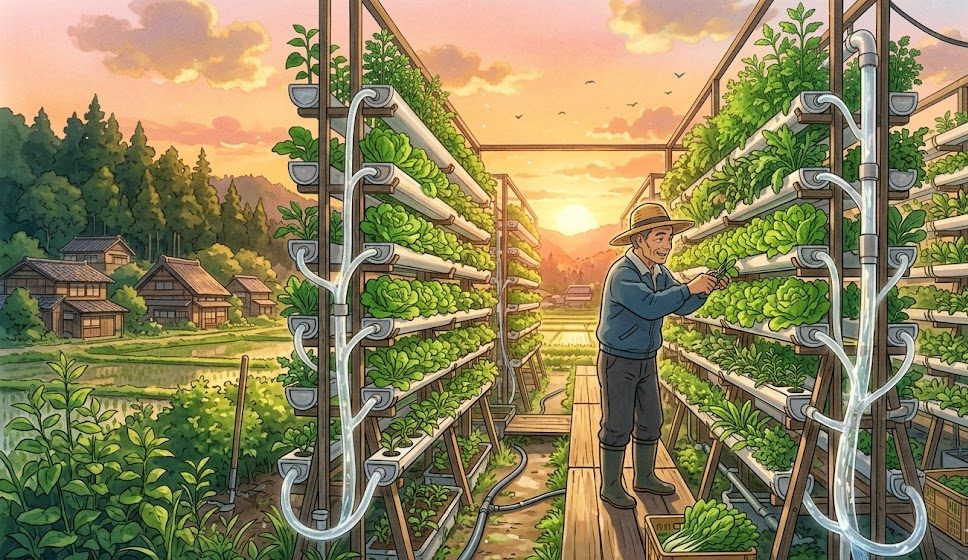
→ With increasing population and limited land availability, farmers and urban growers are looking for innovative ways to produce more food in less space. Vertical hydroponics is one such advanced farming method that allows crops to grow in stacked layers using nutrient-rich water instead of soil. This system is ideal for cities, small farms, and indoor agriculture. By growing plants vertically, farmers can maximize space, reduce water usage, and increase productivity. Vertical hydroponics is becoming a popular solution for sustainable farming and future food security.
➡️ Key Points / Benefits
→ Maximizes production in limited space
→ Uses significantly less water
→ Ideal for urban and indoor farming
→ Faster growth and higher yield
→ Reduces dependency on soil
→ Supports sustainable agriculture
🔵 1️⃣ → What is Vertical Hydroponics?
Vertical hydroponics is a method where plants are grown in vertical layers using hydroponic systems.
Main features:
- Stacked growing structures
- Nutrient-rich water flow
- Space-efficient design
Benefits:
- More crops in less area
- Better resource utilization
- Modern farming approach
This system is perfect for areas with limited land.
🔵 2️⃣ → Types of Vertical Systems
There are different types of vertical hydroponic setups.
Common systems:
- Tower systems
- Wall-mounted systems
- Rack-based systems
Advantages:
- Flexible design
- Easy expansion
- Efficient space usage
Farmers can choose systems based on their needs and budget.
🔵 3️⃣ → Suitable Crops for Vertical Hydroponics
Not all crops are suitable, but many grow very well in vertical systems.
Best crops:
- Lettuce
- Spinach
- Herbs (mint, basil)
- Strawberries
Why these crops:
- Lightweight
- Fast growing
- High demand
Selecting the right crops ensures better productivity.
🔵 4️⃣ → Water and Nutrient Efficiency
Vertical hydroponics uses water very efficiently.
Key practices:
- Recirculating water systems
- Regular nutrient monitoring
- Maintaining proper pH levels
Benefits:
- Minimal water wastage
- Balanced plant nutrition
- Healthy crop growth
Efficient water use makes this system eco-friendly.
🔵 5️⃣ → Challenges and Maintenance
Although beneficial, vertical hydroponics requires proper management.
Common challenges:
- Initial setup cost
- Technical knowledge
- Regular monitoring
Solutions:
- Proper training
- Using automated systems
- Regular maintenance
With proper care, these challenges can be easily managed.
🔵 6️⃣ → Future Scope of Vertical Farming
Vertical hydroponics is becoming a key part of future agriculture.
Future trends:
- Smart indoor farms
- AI-based monitoring
- Urban farming expansion
Opportunities:
- High profitability
- Sustainable food production
- Year-round farming
This method will play a major role in feeding growing populations.
➡️ CONCLUSION
→ Vertical hydroponics is a powerful innovation that is transforming modern agriculture. By using vertical space and water-based systems, farmers can produce more crops in smaller areas with higher efficiency. This method not only supports urban farming but also promotes sustainability and resource conservation. As technology continues to advance, vertical hydroponics will become more accessible and profitable for farmers around the world. It is a smart solution for the future of farming.