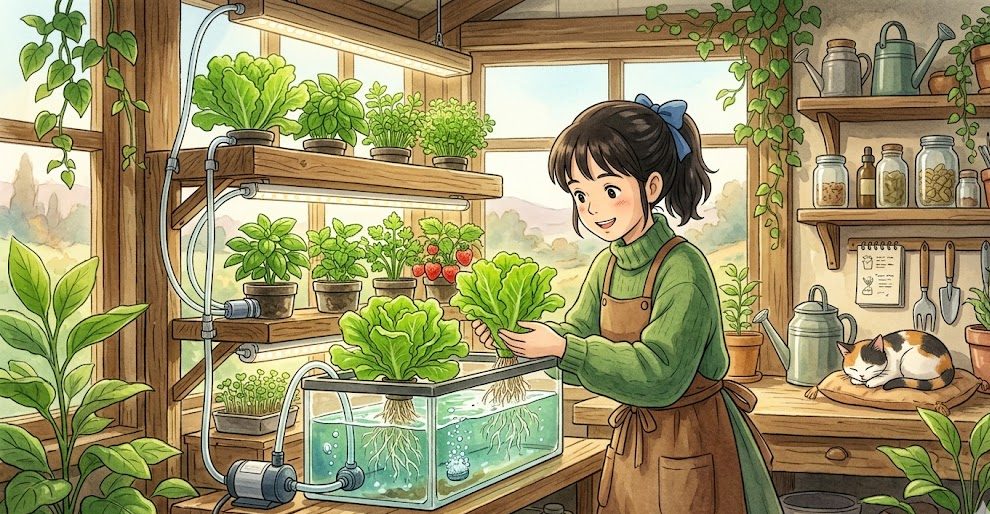
Have you ever wondered if you could grow a thriving garden without the mess of dirt, the back-breaking labor of tilling, or the constant battle against soil-borne weeds? Welcome to the world of hydroponics—the revolutionary method of growing plants in nutrient-rich water.
Hydroponics isn’t science fiction; it is a proven agricultural technique that is becoming a favorite for home gardeners, urban dwellers, and commercial farmers alike. By eliminating soil and providing nutrients directly to the plant’s root system, you can grow crops up to 50% faster and with significantly higher yields compared to traditional farming. If you are a beginner looking to get your hands (and your water) dirty, this guide will walk you through everything you need to start your first soil-free garden.
What Exactly Is Hydroponics?
At its simplest, hydroponics is the art of growing plants using mineral nutrient solutions in an aqueous solvent. In a traditional garden, soil acts as a reservoir for nutrients. However, plants do not actually need soil; they need the nutrients that soil provides, along with water, oxygen, and sunlight.
In a hydroponic setup, you provide these essentials directly. You create a controlled environment where the plant doesn’t have to waste energy searching for food—it is delivered directly to the roots. Because the plant is “fed” efficiently, it can dedicate almost all its energy to vegetative growth, resulting in faster maturation and more robust yields.
The Benefits of Going Soil-Free
Why make the switch to hydroponics? The advantages go beyond just speed.
1. Water Efficiency
Hydroponics is a closed-loop system. Because the water is recirculated, you use up to 90% less water than you would in a traditional garden. This is a game-changer for those living in drought-prone areas or with limited water access.
2. No Weeds, No Pests
Many garden pests live and breed in soil. By removing the soil, you eliminate 90% of the common garden pests that plague traditional crops. Plus, the absence of soil means no weed seeds, saving you hours of tedious weeding.
3. Maximum Space Utilization
Because hydroponic plants do not need massive root systems to spread out in search of nutrients, you can grow them closer together. Whether you are using vertical towers or simple trays, you can produce a significant amount of food in a very small footprint, making it perfect for apartments or balconies.
Choosing Your First Hydroponic System
There are several ways to build a hydroponic setup. For beginners, we recommend starting with one of these three simple, effective designs.
A. The Deep Water Culture (DWC) System
The DWC is the most popular choice for beginners. You simply place your plants in net pots suspended above a reservoir of nutrient-rich water. An air stone and air pump are placed at the bottom to provide the oxygen that roots need to prevent drowning.
- Best for: Lettuce, herbs, and spinach.
- Why it’s great: Extremely simple, very low maintenance, and cheap to build.
B. The Nutrient Film Technique (NFT)
In an NFT system, a thin, constant stream of nutrient-rich water flows over the tips of the roots, which are held in a sloped channel. The roots hang down into the channel, getting both the nutrients and the oxygen they need from the circulating “film” of water.
- Best for: Quick-growing leafy greens.
- Why it’s great: Highly efficient and ensures consistent nutrient delivery.
C. The Wick System
This is the simplest form of hydroponics. A wick (usually cotton or nylon) draws the nutrient solution up from a reservoir into the growing medium where the plant roots reside.
- Best for: Smaller plants, herbs, and beginners who want zero electrical requirements.
- Why it’s great: No pumps, no noise, and very inexpensive.
The Essential Components You Need
To get your hydroponic garden running, you will need a few basic supplies:
- Reservoir: A light-proof container to hold the water and nutrients (opaque containers prevent algae growth).
- Nutrient Solution: Unlike soil, which has natural minerals, you must provide a balanced mix of nitrogen, phosphorus, potassium, and essential micronutrients. Always use high-quality hydroponic-specific fertilizers.
- Growing Medium: Since there is no soil, you need something to support the plant. Popular choices include clay pebbles (LECA), coco coir, or rockwool.
- Lighting: If you are growing indoors, your plants will need a good LED grow light to replace natural sunlight.
- pH Meter: Plants can only absorb nutrients if the water is at the right pH (ideally between 5.5 and 6.5). An inexpensive digital pH meter is a non-negotiable tool.
Step-by-Step: Setting Up Your First DWC Garden
If you are ready to start, follow these simple steps to build your first Deep Water Culture system:
- Prepare the Reservoir: Take a clean, opaque bucket or tote bin. Fill it with water and mix in your hydroponic nutrients according to the manufacturer’s instructions.
- Add the Air System: Place your air stone at the bottom of the bucket and connect it to your external air pump. Plug it in to ensure bubbles are circulating oxygen throughout the water.
- Prepare the Net Pots: Place your young seedlings (or cuttings) into net pots. Fill the space around the roots with clay pebbles to hold the plant upright.
- Assemble: Cut holes in the lid of your reservoir so that the bottom of the net pots sits just touching the surface of the water.
- Monitor: Check your pH levels once a week. If the leaves look pale, add more nutrients. If they look burnt, you may have used too much.
Best Plants for Beginner Hydroponics
Don’t try to grow a giant pumpkin on your first try! Start with plants that are hardy and fast-growing:
- Lettuce: The “gold standard” for beginners. It grows incredibly fast and is very forgiving.
- Basil: Extremely high-yielding and perfect for small hydroponic systems.
- Spinach: Grows quickly and does well in cooler indoor environments.
- Mint: Warning—it grows fast! Ensure you have enough space for it.
- Strawberries: A slightly more advanced step, but very rewarding once you master the basics.
Common Mistakes to Avoid
Even in a controlled environment, things can go wrong. Watch out for these pitfalls:
- Ignoring pH Levels: If the pH is wrong, your plants will starve even if the water is full of nutrients. Check it weekly!
- Light Contamination: If sunlight hits your water reservoir, you will get algae. Keep your reservoir dark.
- Lack of Oxygen: If your air pump breaks or is too small, your roots will suffocate. Ensure your water is constantly bubbling.
- Overcrowding: It’s tempting to pack more plants in, but they need airflow to prevent mold and disease. Give them room to breathe.
Frequently Asked Questions (FAQs)
Q: Is hydroponic produce healthier than soil-grown produce? A: Studies have shown that hydroponically grown vegetables can be just as nutritious as soil-grown ones, provided the nutrient solution is well-balanced. In some cases, because the plant is less stressed, it can be even healthier.
Q: Do I need to be a chemist to manage the nutrients? A: Absolutely not. Modern nutrient solutions come with simple “A+B” mix instructions. You just measure the recommended amounts, pour them in, and you’re good to go.
Q: Can I use tap water? A: Yes, but let it sit out for 24 hours before using it to allow the chlorine to evaporate, as chlorine can sometimes harm sensitive seedlings.
Q: Is it expensive to get started? A: You can set up a basic DWC system for less than $50. Once you have the reservoir and lights, the ongoing cost for nutrients is quite low.
Conclusion
Hydroponics is more than just a hobby; it is a sustainable, efficient, and deeply satisfying way to connect with the food you eat. By moving away from soil, you open up a world of possibilities for year-round growing, regardless of the weather outside your window.
Start small, stay consistent with your pH checks, and don’t be afraid to experiment. You’ll be surprised at just how quickly those seeds turn into a lush, vibrant harvest. Happy growing!