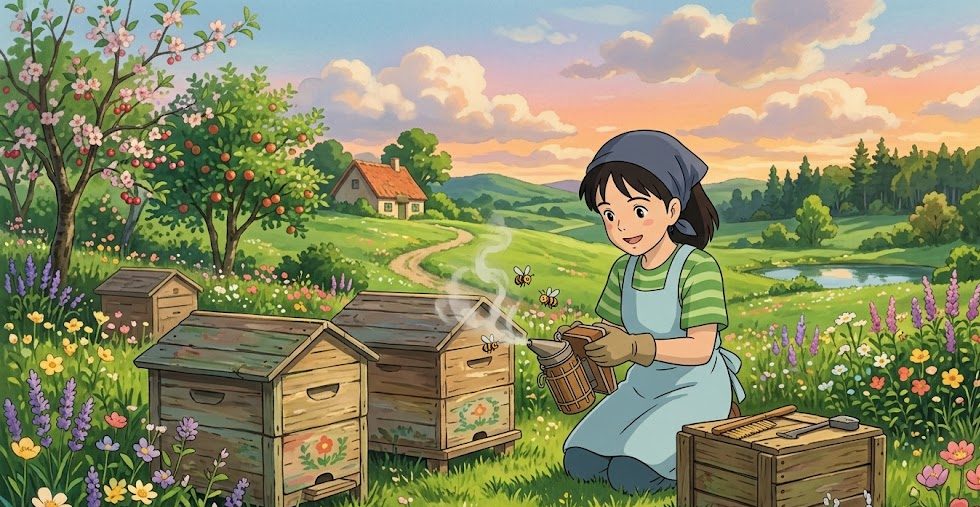
There is something deeply magical about the steady, gentle hum of a healthy honey bee hive. For centuries, beekeeping—or apiculture—was a specialized craft passed down through generations of rural farmers. Today, it has evolved into a global movement. From spacious countryside farms to quiet suburban backyards and urban rooftops, everyday people are stepping up to become backyard beekeepers.
Some jump into beekeeping because they want a steady supply of sweet, raw, golden honey harvested right from their land. Others do it to maximize the yield of their vegetable gardens and fruit orchards through natural pollination. Many simply want to do their part in protecting a vital creature that keeps our global ecosystem running.
If you have ever thought about managing your own hive but felt overwhelmed by the technical terms, complex gear, or fear of getting stung, you are in the right place. Beekeeping has a learning curve, but it is entirely achievable when you break it down step-by-step. Let’s dive into the ultimate beginner’s guide to starting your very first honey bee colony safely and successfully.
Is Beekeeping Right for You? The Pre-Flight Checklist
Before you order a single wooden box or buy a protective mesh veil, you need to answer a few practical questions. Managing a honey bee colony is a rewarding hobby, but it is closer to keeping a pet than growing a tomato plant. It requires time, observation, and responsibility.
Time Commitment
Beekeeping isn’t a daily chore. You don’t need to walk your bees or feed them every morning; they are highly independent creatures. However, during the warm spring and summer months, you will need to spend roughly 30 to 60 minutes per hive every 7 to 14 days checking on the health of the colony.
Legal and Neighborly Considerations
Always check your local zoning laws, municipal codes, and homeowner association (HOA) rules. Many cities fully welcome urban beekeeping but may have rules regarding how close a hive can be to a property line or sidewalk. It is also a wonderful idea to have a friendly chat with your immediate neighbors. Assuring them that honey bees are docile when left alone—and perhaps promising them a free jar of homegrown honey in the fall—can prevent a lot of friction.
Cost of Entry
Starting your first hive requires an upfront investment. You will need to purchase the physical wooden hive components, protective clothing, specialized tools, and the bees themselves. It is highly recommended for absolute beginners to start with two hives rather than one. Having two colonies allows you to compare them against each other; if one hive is struggling or loses its queen, you can easily use resources from the stronger hive to save the weaker one.
1. Understanding the Anatomy of a Beehive
To run a successful apiary, you need to know what a standard modern beehive looks like. The most popular choice for beginners worldwide is the Langstroth Hive. This iconic, modular system looks like a stack of wooden boxes and is designed around the concept of “bee space”—the exact structural gap that bees naturally leave open to move through without sealing it shut with wax or propolis.
       [ Outer Cover ]      <- Protects from rain and sun
       [ Inner Cover ]      <- Prevents lid from being glued shut
     =====================
     |   Shallow/Medium  |  <- "Honey Super" (Where honey is stored)
     |    Honey Super    |
     =====================
     |                   |
     |     Deep Box      |  <- "Brood Chamber" (Where the queen lays eggs)
     |                   |
     =====================
       [ Bottom Board ]     <- Hive entrance and floor
The Brood Chamber (Deep Boxes)
The larger, bottom boxes are where the magic happens. This is the colony’s living room. The queen bee lives here, laying thousands of eggs a day. The worker bees build wax comb in this section to raise young larvae (brood) and store the pollen and honey they need to feed themselves through the winter.
The Honey Supers (Medium or Shallow Boxes)
These are shorter boxes stacked on top of the brood chamber. Beginners place a metal or plastic grid called a queen excluder between the brood chamber and the honey super. This grid has gaps wide enough for worker bees to pass through but too narrow for the larger queen. This ensures that the queen stays downstairs laying eggs, leaving the top boxes purely for clean, pristine honey storage.
2. Essential Gear for the Beginner Beekeeper
You don’t need a massive shed full of high-tech tools to manage bees, but you do need a few high-quality pieces of safety and operational equipment.
Protective Clothing
Safety should always be your number one priority. As a beginner, look for a full canvas or ventilated beekeeping suit paired with a protective mesh veil. Thick leather or heavy-duty goat-skin gloves that extend up your forearms will keep your hands safe and give you peace of mind while handling frames.
The Smoker
The smoker is a beekeeper’s best friend. It is a simple metal canister with an attached bellows. By burning natural fuels like dried pine needles, burlap, or wood shavings, you create cool, thick smoke. Puffed gently into the hive entrance before opening it, the smoke does two things:
- It masks the alarm pheromones (scents) that guard bees release when they feel threatened.
- It tricks the bees into thinking there is a forest fire, causing them to gorge themselves on honey to prepare to leave. With full bellies, the bees become incredibly calm, slow, and easy to work with.
The Hive Tool
Bees naturally produce an incredibly sticky, resin-like glue called propolis from tree sap. They use it to seal up cracks, reinforce drafty spots, and weld the wooden frames inside the hive together. A hive tool—a flat, sturdy metal pry bar—is absolutely essential for separating boxes and lifting frames out for inspection without jarring the hive.
3. The Three Citizens of the Colony
When you lift a frame out of a healthy hive, you will see thousands of bees moving in unison. However, they are not all identical. Every colony is made up of three distinct types of bees, each fulfilling a specific job.
- The Queen (One per hive): The undisputed heart of the colony. She is noticeably longer and sleeker than the other bees. Her sole purpose is to lay up to 2,000 eggs a day to maintain the hive’s population. Without a healthy queen, a colony will quickly perish.
- The Workers (Thousands per hive): These are all female bees, and they do 99% of the manual labor. They clean the hive, nurse the young larvae, guard the entrance from intruders, build the beautiful wax combs, and fly miles every day to forage for nectar and pollen.
- The Drones (A few hundred per hive): These are the male bees. They are larger, stockier, and have massive eyes. Drones do not have stingers, they do not gather food, and they do not work inside the hive. Their single job in life is to fly out and mate with a virgin queen from another yard to ensure genetic diversity.
4. How to Buy and Introduce Your First Bees
You have set up your wooden boxes in a sunny, quiet spot in your yard, and your safety suit is hanging in the closet. Now, how do you actually get the bees? There are two primary ways a beginner can buy a starter colony.
Option A: The Package of Bees
A bee package is essentially a screened mesh box containing roughly three pounds of loose bees (around 10,000 workers) and a separate, tiny cage housing a newly mated queen. To install them, you gently shake the mass of workers directly into your open hive box, hang the queen cage between two frames, and close the lid. Over a few days, the workers will chew through a sugar candy plug on her cage, releasing and accepting her as their leader.
Option B: The Nucleus Colony (A “Nuc”)
A nucleus colony is highly recommended for absolute beginners. A Nuc is essentially a mini, pre-established hive consisting of 4 to 5 deep wooden frames. It comes with built-out wax comb, active honey and pollen stores, developing baby bees (brood), and a queen that is already actively laying eggs and accepted by her workers. Installing a Nuc is incredibly simple: you just lift the five frames out of their temporary shipping container and slide them directly into your permanent hive body. Because the colony is already functioning as a family, a Nuc grows much faster than a loose package of bees.
5. Conducting a Standard Hive Inspection
Opening your hive for the first time can be intimidating, but following a calm, methodical checklist will make the process smooth for both you and your bees.
- Step 1: Smoke the Hive: Approach the hive calmly from the side or back (never block their front flight path). Blow two soft puffs of smoke into the front entrance, lift the outer cover slightly, blow a puff inside, and wait two minutes for the bees to calm down.
- Step 2: Check for the Queen or Eggs: You don’t necessarily need to see the queen bee on every single visit, as she is excellent at hiding. Instead, look closely at the bottom of the open wax cells. If you see tiny, white specks that look like microscopic grains of rice, those are freshly laid eggs. Finding eggs means your queen was alive and working within the last three days.
- Step 3: Monitor Hive Space and Health: Ensure the workers have plenty of empty frames to build new wax comb. If the box is 70% to 80% full of bees and honey, it is time to stack a new box on top to give them room to expand, preventing them from swarming away.
Frequently Asked Questions (FAQs)
1. How many times will I get stung as a beekeeper?
Getting stung occasionally is an inevitable part of keeping bees, but wearing a high-quality protective suit minimizes this risk drastically. Honey bees are naturally gentle and vegetarian; they only sting as a absolute last resort to defend their home. If you move slowly, avoid wearing strong perfumes, and use your smoker correctly, stings will be incredibly rare.
2. Can I harvest honey in my very first year?
If you start your hive in the spring using a nucleus colony, and your region experiences a strong summer wildflower bloom, you might be able to harvest a few frames of surplus honey in late autumn. However, many beginners choose to leave all the honey inside the hive during the first year to ensure the young colony has enough food reserves to survive the cold winter months.
3. Where is the best place to set up my beehive?
Place your hive in a dry, safe location that receives early morning sunlight—this warms up the hive and gets the bees flying early. The entrance should ideally face away from high-traffic walkways, children’s play areas, or strong wind currents. A nearby source of clean water, like a birdbath filled with pebbles for the bees to land on, is also essential.
4. What do bees do during the winter?
Honey bees do not hibernate. Instead, when temperatures drop below 50°F (10°C), they form a tight, spherical cluster inside the brood chamber, surrounding the queen. By rapidly vibrating their flight muscles, they generate an incredible amount of friction heat, keeping the center of the cluster a cozy 93°F (34°C) all winter long, feeding on the honey they stored during summer.
5. What is the difference between honey bees and wasps?
Honey bees are fuzzy, rounder, and focused entirely on collecting pollen and nectar from flowers. They can only sting once, as their stinger is barbed and detaches. Wasps and yellowjackets are shiny, smooth, carnivorous predators that chase human food and insects. They can sting multiple times without dying.
Conclusion
Beekeeping is far more than a simple outdoor hobby; it is a profound window into how perfectly balanced nature can be. By stepping up to manage your very first hive, you transition from a passive observer of the natural world to an active steward of the environment.
While the initial setup requires careful planning, basic investment, and a willingness to learn from your mistakes, the reward is unmatched. Nothing quite compares to the pride of sharing a jar of pure, unpasteurized honey with family and friends, knowing that your garden, your neighborhood, and the local ecosystem are all thriving because of the tiny, buzzing metropolis in your backyard. Grab your veil, take it slow, and welcome to the wonderful world of beekeeping