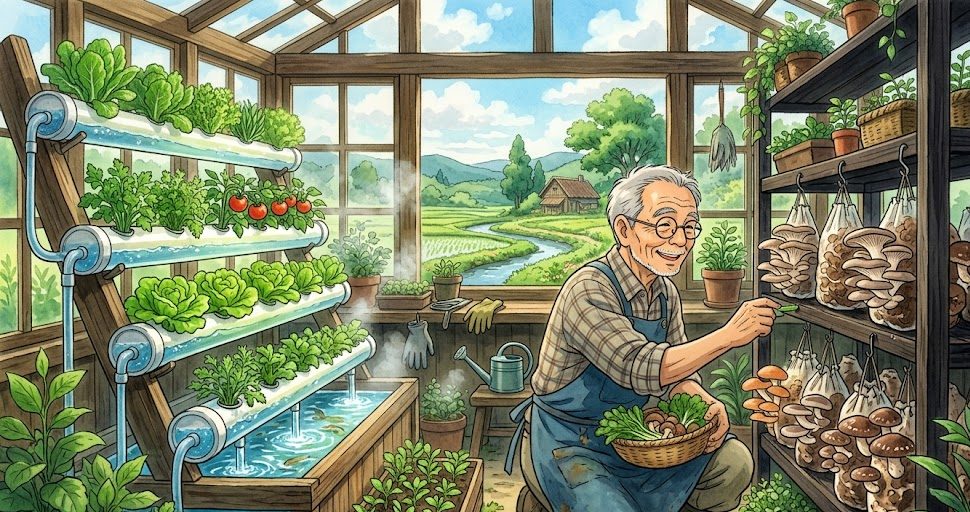
In the rapidly evolving world of modern agriculture, space efficiency and resource optimization have become the ultimate keys to profitability. For urban entrepreneurs and small-scale farmers, the traditional reliance on vast tracts of fertile land is no longer a prerequisite for success. Enter Hydroponics and Mushroom Farming—two highly lucrative, sustainable, and climate-controlled methods that are redefining what it means to be a modern farmer.
This guide dives into the synergy of these two systems, offering a roadmap for creating a high-yield, sustainable agricultural enterprise.
1. The Hydroponic Revolution: Precision Soil-Less Farming
Hydroponics is the practice of growing plants without soil, using mineral-rich nutrient solutions delivered directly to the root zone. By removing the soil, you eliminate soil-borne diseases, reduce water consumption by up to 90%, and significantly accelerate growth rates.
Why Hydroponics Wins:
- Vertical Space Utilization: Hydroponic systems can be stacked vertically, allowing you to grow significantly more produce in a smaller footprint compared to traditional farming.
- Rapid Harvest Cycles: Because the plants do not need to expend energy searching for nutrients in the soil, they channel all their resources into growth. This results in faster maturity and more frequent harvests.
- Climate Resilience: By operating in a controlled environment (greenhouse or indoor room), you are protected from erratic weather patterns, pests, and drought.
Key Crops for Maximum Profit:
To maximize your ROI, focus on high-demand, quick-turnover crops:
- Leafy Greens: Lettuce, arugula, and kale.
- Culinary Herbs: Basil, cilantro, mint, and dill.
- Specialty Produce: Cherry tomatoes and strawberries.
2. Mushroom Farming: The Ultimate Waste-to-Wealth System
Mushroom cultivation is perhaps the most efficient form of farming in existence. Unlike green plants that require sunlight, mushrooms are fungi that thrive in dark, humid environments. They transform agricultural waste—such as straw, sawdust, or coffee grounds—into high-protein, gourmet food.
The Profit Potential:
- Low Entry Cost: You don’t need expensive land or heavy machinery. A simple, climate-controlled shed or room is sufficient to begin.
- Quick Turnover: Varieties like Oyster mushrooms can be harvested in as little as 3–4 weeks from the time of inoculation.
- High Market Value: Gourmet varieties like Oyster, Shiitake, and Lion’s Mane fetch premium prices in high-end markets and specialty restaurants.
Best Practices for Success:
- Hygiene is Non-Negotiable: Mushrooms are highly susceptible to competing molds. Sterilizing your substrate (the growing medium) is the single most important step in the process.
- Climate Control: Mushrooms require precise humidity and airflow. Invest in basic automated humidifiers and fans to maintain consistent conditions.
- Substrate Quality: Always use high-quality spawn and fresh, clean substrate to ensure high biological efficiency (the ratio of mushroom weight to substrate weight).
3. The Power of Synergy: Why Combine Both?
While hydroponics and mushroom farming are distinct, they form an incredibly powerful business model when operated together.
- Shared Infrastructure: Both systems thrive in controlled-environment agriculture (CEA). You can utilize the same space, climate control systems, and cooling technology for both your hydroponic vertical racks and your mushroom grow-tents.
- Diversified Income: Hydroponics provides frequent, steady income from greens and herbs, while mushroom farming offers high-margin, consistent production. This diversification protects your business from market volatility.
- Waste Circularity: Some advanced growers use the nutrient-rich spent substrate from mushroom farming as an organic amendment for other horticultural projects, creating a closed-loop, zero-waste farm.
4. Operational Excellence: A Strategic Roadmap
To ensure your farm is not just a hobby but a sustainable business, follow these steps:
Phase 1: Planning and Market Analysis
Don’t start by building; start by selling. Identify local restaurants, boutique grocers, or organic markets that are willing to buy your produce before you plant. Understanding the demand ensures you don’t waste resources on crops that don’t move.
Phase 2: System Calibration
Technology is your ally. Invest in:
- Monitoring Sensors: Track pH, EC (Electrical Conductivity), and humidity in real-time.
- Automation: Automated pumps and lighting timers reduce labor costs and ensure your plants receive a consistent environment 24/7.
Phase 3: Scaling for Profit
Scale your operation incrementally. Start with a small pilot unit to master the biological balance of your hydroponic solution and the humidity requirements of your mushrooms. Once you hit your target yield consistently, scale your infrastructure.
5. Marketing Your Sustainable Farm
In today’s market, your “Sustainable” branding is as valuable as your produce.
- Traceability: Modern consumers want to know where their food comes from. Share your “Farm Story” on social media—show the process, the cleanliness of your facility, and the passion behind your work.
- Quality First: Because your crops are grown in a controlled environment, they are naturally cleaner and often have a longer shelf life. Use this “clean” factor to justify a premium price.
Conclusion: A Future-Proof Business
Hydroponics and mushroom farming represent the future of sustainable, high-intensity agriculture. By removing the risks associated with traditional farming and focusing on efficiency, data, and biology, you can build a resilient business that thrives in any climate.
The barrier to entry is low, but the potential for growth is massive. Whether you are in an urban apartment or a small rural plot, these methods provide the tools to build a productive, profitable, and environmentally conscious agricultural enterprise.