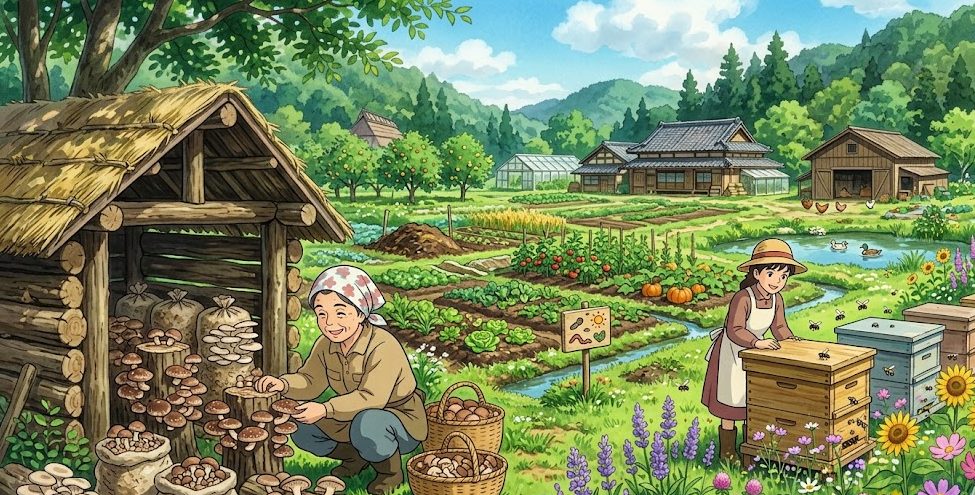
In the evolving landscape of 2026, the definition of agricultural success has shifted. It is no longer just about maximizing output at any cost; it is about cultivating a resilient, self-sustaining ecosystem that yields high-value produce while regenerating the land. Eco-friendly farming mastery is the art of balancing profit with planet-friendly practices.
For the modern farmer and agricultural entrepreneur, integrating specialized niches like mushroom cultivation and apiculture (bee care) into a standard farming model is a brilliant strategy for diversification, soil health, and increased profitability.
1. The Foundation: Sustainable Farming Methods
Sustainable farming isn’t a single practice; it is a philosophy that views the farm as a biological engine. To master this, one must move away from “extraction” and toward “regeneration.”
- Regenerative Soil Management: The goal is to build Soil Organic Matter (SOM). Techniques like no-till farming and cover cropping ensure that the earth remains a vibrant home for microbes. Healthy soil requires less synthetic input, reducing your overhead costs significantly.
- Closed-Loop Nutrient Cycles: Sustainable mastery involves turning waste into wealth. Whether it is transforming crop residues into high-grade compost or using bio-digesters to create liquid fertilizer, a closed-loop system minimizes reliance on expensive, store-bought chemical fertilizers.
- Precision Ecology: Utilizing low-cost sensors to monitor soil moisture and temperature allows for precise interventions. This ensures that you provide exactly what the plant needs—nothing more, nothing less.
2. Mushroom Cultivation: The High-Value Niche
Mushroom farming is perhaps the most efficient way to achieve high returns on a small footprint. It is the ultimate “upcycling” business, making it a perfect partner for traditional farming.
Why Mushrooms Fit the Eco-Friendly Model:
- Substrate Utilization: Mushrooms thrive on agricultural waste. You can use straw, sawdust, corn cobs, or coffee grounds to grow gourmet varieties like Oyster, Shiitake, or Lion’s Mane.
- Space-Efficiency: Unlike row crops that require acres of land, mushroom production happens in controlled, vertical environments. This allows you to generate significant revenue in a repurposed shed or cellar.
- The Soil Connection: Once the mushrooms are harvested, the “spent mushroom substrate” (SMS) is an incredibly rich, partially decomposed organic matter. This is “black gold” for your vegetable gardens and orchards, improving soil structure and fertility instantly.
3. The Power of Pollinators: Bee Care
If mushrooms are the high-value niche, bees are the silent partners of the farm. Apiculture is the backbone of ecological stability and a fantastic secondary income stream.
Essential Practices for Bee-Friendly Farming:
- Creating Pollinator Corridors: Dedicate sections of your farm to native wildflowers. This provides a year-round food source for bees and serves as a natural habitat for beneficial insects that eat crop-destroying pests.
- Chemical-Free Zones: Mastery in eco-friendly farming requires a “No-Spray” policy. Bees are incredibly sensitive to systemic insecticides. By choosing biological pest control (like companion planting), you protect your hives and produce higher-quality, market-premium honey.
- The Yield Multiplier: The presence of healthy honeybee colonies can increase the yield of many fruit and vegetable crops by 20% to 50%. You aren’t just selling honey; you are essentially hiring the world’s most efficient pollination workers for free.
4. Building the Synergy: An Integrated Ecosystem
The true power of this model lies in the synergy between these elements. Consider this workflow:
- Crop residues (from your main farm) are used to grow mushrooms.
- Spent mushroom substrate is composted and returned to the soil, boosting crop yields.
- Pollinator corridors planted throughout the farm boost the reproduction of both your garden vegetables and your bee colonies.
- Bees pollinate your orchard, ensuring a bumper crop of fruit.
This creates a “wealth multiplier” where every unit of resource produces multiple streams of income and ecological value.
The Economic Advantages
Many believe that eco-friendly farming is less profitable. The data from 2026 suggests otherwise:
- Market Premium: Products labeled “Pollinator-Friendly,” “Sustainably Grown,” or “Regeneratively Farmed” command higher prices in both local farmer’s markets and high-end retail chains.
- Lower Risk: A diversified farm (crops + mushrooms + honey) is far more resilient to market fluctuations. If the market for one product dips, the others remain stable.
- Lower Input Costs: By leveraging nature (bees for pollination, compost for fertility), you spend less on the “industrial” chemicals that eat away at your profit margins.
Frequently Asked Questions (FAQs)
Q: Is mushroom cultivation difficult for a beginner? A: Starting with Oyster mushrooms is very beginner-friendly. They are aggressive growers and are quite forgiving of environmental variations. Start small, master the sterilization process, and scale up as you gain confidence.
Q: Do I need a lot of land to keep bees? A: Not at all. You can keep a few hives on the corner of almost any property. The key is ensuring there is a diverse mix of flora within a 2-3 kilometer radius.
Q: How do I market these sustainable products? A: Focus on storytelling. Your customers want to know the “why.” Use your blog or social media to show your mushroom growing process and your bee-protection efforts. Consumers pay more when they understand the ethics behind the product.
Conclusion
Eco-friendly farming mastery is about shifting your perspective from being a “tamer” of the land to being a “steward” of an ecosystem. By incorporating niche high-value crops like mushrooms and essential ecological partners like bees, you build a farm that is not only environmentally sustainable but also financially robust.
This approach requires knowledge, patience, and a bit of innovation. However, the result is a farming operation that thrives regardless of market volatility—a truly future-proof business.
Disclaimer: Beekeeping and mushroom cultivation require specific regional knowledge. Always research local regulations and climate-specific growing guidelines before starting. Start with small-scale pilot projects to test your local market demand.