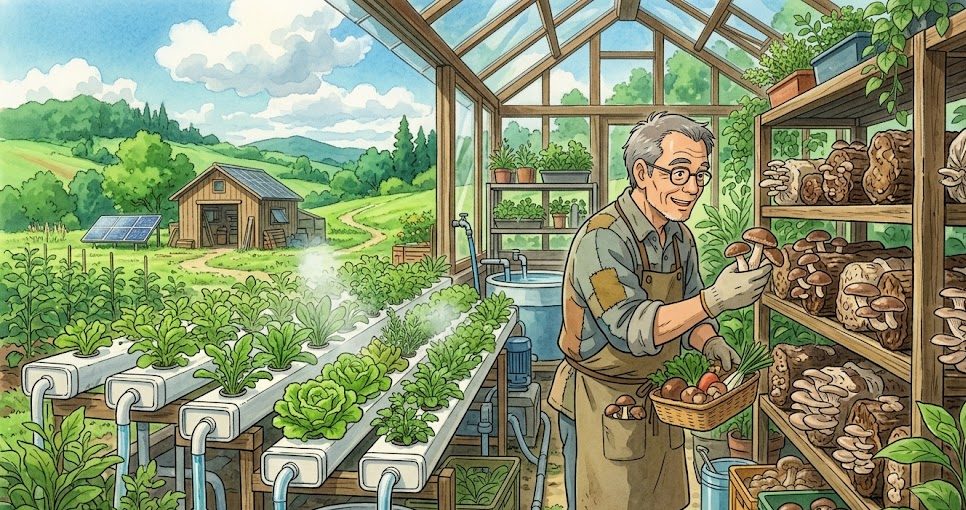
The face of agriculture is changing rapidly. As land becomes scarcer and the demand for fresh, organic produce rises, innovative farmers are looking toward “controlled-environment agriculture.” Two of the most profitable and space-efficient methods leading this revolution are hydroponics and mushroom cultivation.
Whether you are an urban entrepreneur or a small-scale farmer looking to diversify, these two systems offer a path to high-value yields with minimal land requirements.
1. Hydroponics: Growing Without Soil
Hydroponics is the science of growing plants using mineral-rich nutrient solutions in an aqueous solvent, effectively bypassing the need for soil.
Why Hydroponics is a Game Changer:
- Water Efficiency: Hydroponic systems recirculate water, using up to 90% less than traditional soil-based farming. In drought-prone regions, this is a massive operational advantage.
- Faster Growth Cycles: Because plants do not have to “hunt” for nutrients through complex root systems in soil, they can dedicate more energy to growth. This often results in crops maturing 25–50% faster.
- Year-Round Production: By controlling light, temperature, and nutrients, you can grow high-value crops like lettuce, kale, basil, and strawberries regardless of the external season.
Essential Components to Master:
- Nutrient Solution: The “food” for your plants. It must be precisely balanced with Nitrogen, Phosphorus, Potassium (NPK), and micronutrients.
- pH Management: Maintain a pH between 5.5 and 6.5. If the pH fluctuates, plants will struggle to absorb nutrients, regardless of how much you feed them.
- Oxygenation: Roots need oxygen to breathe. Using air stones or a “nutrient film technique” (NFT) ensures your roots stay healthy and rot-free.
2. Mushroom Cultivation: The Hidden Goldmine
Mushroom farming is unique because it is an “indoor” crop that thrives in conditions where other plants fail. It is a masterclass in recycling waste into wealth.
The Profitability of Fungi:
- Low Space Requirement: You can grow mushrooms in vertical stacks, allowing you to produce hundreds of kilograms of product in a small, climate-controlled shed or basement.
- Waste-to-Resource: Mushrooms thrive on agricultural byproducts like wheat straw, sawdust, and rice hulls. You are essentially turning low-cost farm waste into a premium food product.
- High Turnaround: Certain varieties, like Oyster mushrooms, can go from inoculation to harvest in as little as 3–4 weeks.
Keys to Successful Cultivation:
- Sterilization: The biggest enemy of a mushroom farmer is contamination (mold or bacteria). Ensuring your substrate (growing medium) is properly pasteurized or sterilized is the secret to a successful harvest.
- Humidity and Ventilation: Mushrooms need high humidity (above 80%) but also require fresh air exchange to manage CO2 levels. Precision in these two factors determines the size and quality of your mushroom caps.
3. Creating a Synergistic Farm
The most successful modern farmers don’t choose between hydroponics and mushrooms—they combine them.
- The Climate Link: Both systems require controlled, shaded environments. You can often utilize the same climate-control infrastructure (fans, dehumidifiers, and monitoring sensors) for both operations.
- Cross-Utilization: Many farmers use the spent “mushroom substrate” (the organic material left over after harvesting mushrooms) as an excellent, nutrient-dense compost for organic vegetable patches, closing the loop on farm waste.
4. Maximizing Profits: Market Strategy
To make these systems truly “AdSense-friendly” and commercially viable, you must target the right markets:
- Restaurant Partnerships: Chefs crave fresh, exotic mushrooms and hydroponic microgreens. These buyers are often willing to pay a premium for local, high-quality products.
- Farmers’ Markets: Because these products are grown in controlled, clean environments, they are often marketed as “pesticide-free,” allowing you to charge higher prices than field-grown alternatives.
- Subscription Models: Create “Harvest Boxes” that combine your hydroponic greens and fresh mushrooms, providing your customers with a unique, high-value culinary experience.
Conclusion: The Future of Farming
Hydroponics and mushroom cultivation represent the intersection of nature and technology. They allow you to produce more, use less, and earn higher profits while maintaining a small ecological footprint.
As you start your journey into these methods, remember that success lies in observation. Monitor your nutrient levels, track your humidity, and listen to what your crops are telling you. Whether you are growing vertically in a hydroponic rack or stacking bags of mushrooms in a dark corner, you are building the foundation of the farm of the future.