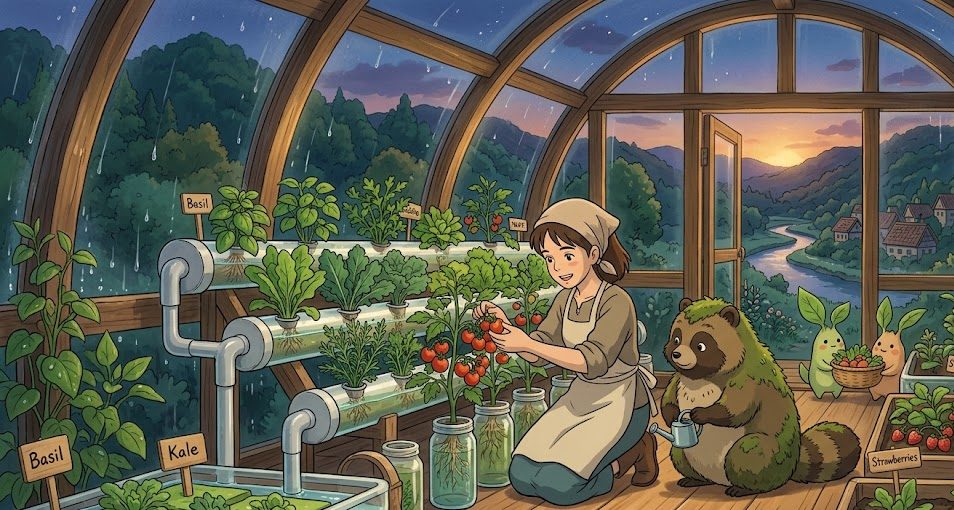
In the agricultural landscape of 2026, the traditional methods of growing food are being challenged by more efficient, tech-driven solutions. As urbanization increases and climate patterns become more unpredictable, “The Soilless Revolution” has emerged as a vital strategy for achieving Financial Freedom and food security. Hydroponics—growing plants in a nutrient-rich water solution instead of soil—is no longer just for hobbyists; it is a high-yield, high-profit blueprint for the modern grower.
This guide serves as your comprehensive “Practical Farming” resource for building and managing a successful hydroponic system that maximizes yield with zero chemical costs and minimal effort.
1. Why Hydroponics is a “Digital Goldmine”
Hydroponics allows you to grow “High-Value Cash Crops” in environments where traditional farming is impossible. By removing the soil, you remove many of the variables and risks associated with standard agriculture.
- Faster Growth Rates: Plants in hydroponic systems often grow up to 50% faster because they don’t have to “search” for nutrients; they are delivered directly to the roots.
- Space Optimization: You can stack your crops vertically, making this the ultimate “Micro Farming” solution for urban areas.
- Higher Yields: Precision management of nutrients and environment leads to a much higher yield per square foot compared to soil-based farming.
2. The Mechanics of a High-Yield Hydroponic System
To achieve “Precision Yields,” you must understand the “biological engine” of your soilless setup.
- Nutrient Delivery: Instead of chemical NPK, successful hydroponic practitioners are turning to “Natural Farming” bio-inputs. Fermented organic matter can be filtered and used as a potent, zero-cost nutrient solution.
- Aeration: Roots need oxygen. Whether you use a Deep Water Culture (DWC) or a Nutrient Film Technique (NFT), ensuring high oxygen levels in the water is a secret to healthy, rapid growth.
- pH and EC Monitoring: Using Smart Farming sensors to track the pH (acidity) and EC (nutrient concentration) of your water ensures your plants stay in the optimal “growth zone”.
3. Smart Technology for Low-Maintenance Success
Hydroponics is a tech-forward endeavor. By integrating “Smart Technology,” you can turn your farm into a “low-maintenance” passive income stream.
- Automated Dosing: Smart controllers can automatically adjust nutrient levels and pH, reducing the manual labor required to manage the system.
- Climate Control: In an indoor or greenhouse “Farming Innovation Hub,” AI-driven systems manage lighting, humidity, and temperature to simulate the perfect spring day, every day.
- Water-Saving Techniques: Hydroponics uses up to 90% less water than traditional farming because the water is recycled and reused within the “Closed-Loop” system.
4. Selecting Your “High-Value Cash Crops”
To maximize profit, you must grow what the market demands. Hydroponics is perfect for “Exotic Vegetables” and niche markets.
- Leafy Greens and Herbs: Lettuce, kale, and basil are the staples of hydroponics due to their fast turnover and high demand.
- Gourmet Vegetables: Cherry tomatoes, cucumbers, and peppers thrive in soilless systems and command premium prices in urban organic markets.
- Medicinal Crops: The precision of hydroponics makes it ideal for growing medicinal herbs that require strict environmental controls to maintain high quality.
5. Transitioning to a “Zero Chemical” Model
The most profitable hydroponic systems in 2026 are those that have eliminated the cost of expensive synthetic salts.
- Organic Hydroponics (Bioponics): By using “Natural Farming” principles, you can create a “Closed-Loop” system where organic waste is broken down into water-soluble nutrients.
- Livestock Integration: In an aquaponic setup, fish provide the natural fertilizer for your plants, while the plants clean the water for the fish—the ultimate sustainable blueprint.
Conclusion: Your Path to Financial Freedom
The Soilless Revolution is more than a trend; it is a strategic path to Financial Freedom. By combining the precision of Smart Technology with the wisdom of Natural Farming, you can create a resilient, high-yield environment that requires less effort and zero chemical costs.
Whether you are focusing on “Survival Farming” for self-reliance or scaling a commercial innovation hub, hydroponics is a vital pillar of the 2026 agricultural economy.