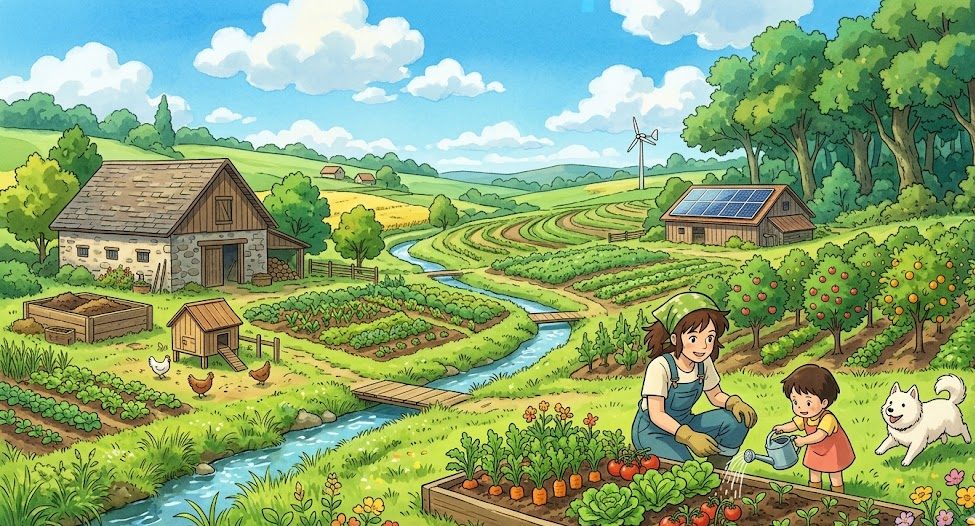
In the rapidly changing agricultural landscape of 2026, the concept of a “successful farm” has evolved. It is no longer just about the volume of the harvest; it is about resilience, efficiency, and the ability to withstand economic and climatic shifts. To “Future-Proof” your farm means building a system that is self-sustaining, high-yielding, and profitable over the long term.
This guide serves as a comprehensive blueprint for achieving Financial Freedom through “Smart Farming” and “Natural Farming” principles, ensuring your land remains a productive asset for generations.
1. Healing the Soil: The Biological Engine
The foundation of a future-proof farm is the soil. Traditional chemical-heavy methods often deplete the soil’s natural vitality, but sustainable practices focus on “healing the soil naturally” to restore its “biological engine”.
- The No-Till Strategy: Frequent plowing destroys the delicate fungal networks (mycorrhizae) that help plants absorb nutrients. By adopting no-till practices, you preserve these networks and keep carbon locked in the ground, improving soil structure.
- Cover Cropping: Never leave your soil bare. Use “green manure” crops, such as legumes, between seasons to naturally fix nitrogen and prevent erosion.
- Zero Chemical Costs: By using fermented organic matter and bio-inputs, you “recharge” the soil without the heavy financial burden of synthetic fertilizers.
2. Water-Saving Innovations: Precision and Conservation
In 2026, water is a precious digital asset. Future-proofing requires “water-saving techniques” that maximize every drop.
- Smart Irrigation: Integrate IoT soil sensors with automated drip systems to deliver hydration directly to the root zone only when the data indicates a need.
- Mulching as a Shield: Use organic residues as a protective blanket to suppress weeds and drastically reduce evaporation, keeping the root zone moist and cool.
- Rainwater Harvesting: Creating small on-farm reservoirs or swales allows you to capture runoff during heavy rains, storing it within the soil ecosystem for drier periods.
3. Smart Technology for Precision Yields
Technology is the bridge to high-efficiency agriculture. “Smart Farming” innovations allow for “low-maintenance” operations with high-output results.
- AI and Predictive Analytics: Artificial Intelligence acts as the brain of the farm, analyzing weather patterns and real-time sensor feeds to provide an accurate blueprint for every planting season.
- Drones and Aerial Imaging: Drones provide a level of oversight that was previously impossible, identifying “stress” in plants—such as nutrient deficiencies or pest threats—before they are visible to the human eye.
- Data-Driven Harvests: AI models can predict the exact window of peak ripeness, ensuring you harvest at the perfect moment for market premium and shelf life.
4. Diversity and Integrated Systems
A monoculture is a risk; biodiversity is a survival strategy. Future-proofing involves creating a “Closed-Loop” system where different life forms support one another.
- High-Value Cash Crops: Focus on “Exotic Vegetables” and niche markets, such as broccoli, zucchini, or cherry tomatoes, which offer a higher return on investment per square foot.
- Livestock Integration: Combining dairy, poultry, or goat farming with crop production creates a cycle where animals provide manure for bio-inputs and crop residues serve as feed.
- Natural Pest Management (NPM): By fostering biodiversity and inviting natural predators like birds and frogs, you can manage pests without toxic chemicals.
5. Financial Freedom through Practical Farming
Ultimately, sustainability is about the economic health of the farmer. “Practical Farming” focuses on systems that require less manual effort and zero chemical costs.
- Micro Farming Success: Even small plots can become a “digital goldmine” through vertical gardening and space optimization.
- Direct-to-Market Access: Use digital platforms to bypass middlemen and sell directly to health-conscious consumers and high-end restaurants.
- Survival Farming Skills: Developing self-sufficient systems for energy and food security ensures your farm can survive market volatility and supply chain disruptions.
Conclusion: Your Path to a Digital Goldmine
Future-proofing your farm is a strategic move toward Financial Freedom in 2026. By combining the precision of Smart Technology with the sustainable wisdom of Natural Farming, you transform your land into a resilient, high-yield environment that requires less effort and zero chemical costs.
Whether you are scaling a commercial “Farming Innovation Hub” or practicing intensive “Micro Farming,” the goal remains the same: grow more, waste less, and restore the earth for a lucrative and lasting agricultural future.