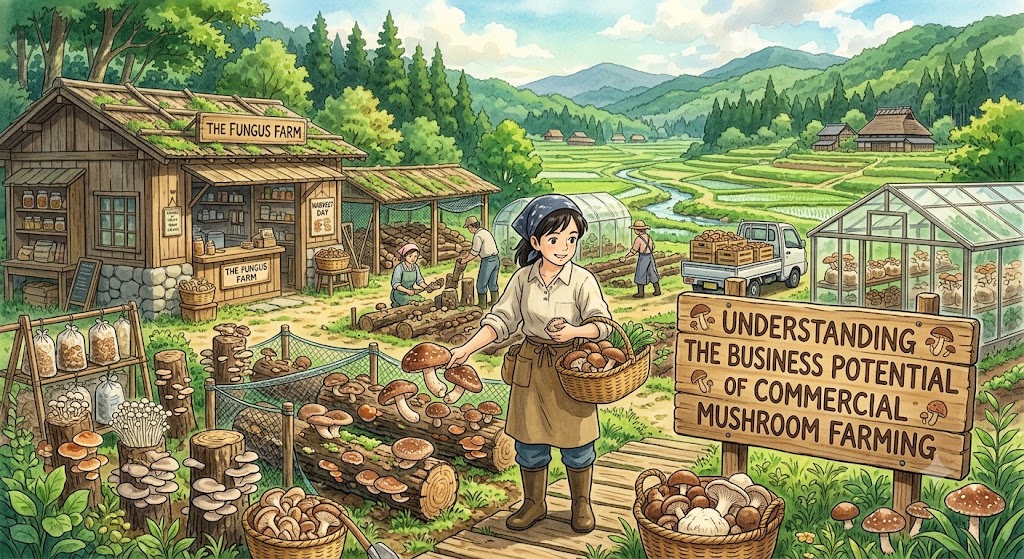
Commercial mushroom farming has emerged as one of the most attractive agricultural enterprises for entrepreneurs, small-scale farmers, and agribusiness investors. Unlike many traditional crops that require large areas of farmland and seasonal growing conditions, mushrooms can be cultivated in relatively small spaces throughout the year. Their growing popularity among consumers, restaurants, health-conscious buyers, and food processors has created strong market demand across many regions of the world.
With proper planning and management, mushroom farming can provide a profitable and sustainable source of income. The industry offers opportunities for both small-scale operations and large commercial enterprises, making it accessible to a wide range of producers. As demand for nutritious, specialty, and gourmet foods continues to rise, commercial mushroom production is becoming an increasingly important segment of modern agriculture.
This guide explores the business potential of mushroom farming and the factors that contribute to long-term success in this growing industry.
Why Mushroom Farming Is Gaining Popularity
Several factors have contributed to the rapid growth of the mushroom industry.
These include:
- Rising consumer demand
- Increasing interest in healthy foods
- Expansion of specialty food markets
- Growth of plant-based diets
- Efficient production systems
Mushrooms are valued for their nutritional benefits, culinary versatility, and unique flavors.
As awareness of these benefits increases, market opportunities continue to expand.
Understanding Commercial Mushroom Production
Mushroom farming involves cultivating edible fungi under controlled environmental conditions.
Unlike traditional crops, mushrooms do not require sunlight for growth.
Instead, they are grown on specially prepared substrates such as:
- Straw
- Sawdust
- Agricultural residues
- Compost-based materials
Production systems can range from simple indoor setups to advanced climate-controlled facilities.
The flexibility of mushroom cultivation makes it suitable for various scales of operation.
Advantages of Mushroom Farming
Commercial mushroom farming offers several unique advantages compared to many agricultural enterprises.
Benefits include:
- Minimal land requirements
- Year-round production
- Efficient space utilization
- Quick production cycles
- High-value products
- Growing consumer demand
These characteristics make mushrooms particularly attractive for farmers with limited land resources.
The ability to produce crops indoors also reduces dependence on weather conditions.
Strong Market Demand
Consumer demand is one of the most important drivers of profitability.
Mushrooms are widely used in:
- Restaurants
- Hotels
- Retail stores
- Food processing industries
- Health food markets
Popular uses include:
- Fresh consumption
- Dried products
- Processed foods
- Nutritional supplements
Growing demand provides opportunities for both local and regional market expansion.
Popular Commercial Mushroom Varieties
Different mushroom species serve different market segments.
Oyster Mushrooms
Known for rapid growth and relatively simple cultivation.
Advantages include:
- Strong market demand
- Beginner-friendly production
- Fast harvest cycles
Shiitake Mushrooms
Popular for their rich flavor and nutritional value.
Benefits include:
- Premium pricing
- Growing consumer interest
Lion’s Mane Mushrooms
Increasingly popular in specialty and wellness markets.
Button Mushrooms
Among the most widely consumed mushrooms globally.
Selecting the right species depends on market opportunities and production capabilities.
Low Land Requirements
One of the most attractive features of mushroom farming is efficient land use.
Mushrooms can be cultivated in:
- Small buildings
- Warehouses
- Greenhouses
- Shipping containers
- Dedicated growing rooms
Vertical shelving systems allow producers to maximize output within limited spaces.
This makes mushroom farming particularly suitable for urban and peri-urban agriculture.
Year-Round Production Opportunities
Unlike many field crops, mushrooms can be produced continuously throughout the year.
Controlled growing environments allow farmers to manage:
- Temperature
- Humidity
- Ventilation
- Light conditions
Benefits include:
- Continuous cash flow
- Consistent market supply
- Improved business stability
Year-round production reduces seasonal income fluctuations.
Fast Production Cycles
Many mushroom species have relatively short production periods.
Depending on the variety, harvests may occur within weeks of establishing production substrates.
Short cycles provide:
- Faster returns on investment
- Multiple annual harvests
- Greater production flexibility
Rapid turnover helps improve cash flow and operational efficiency.
Utilizing Agricultural Waste Products
Mushroom cultivation often uses materials that might otherwise be discarded.
Examples include:
- Straw
- Sawdust
- Corn stalks
- Agricultural residues
Benefits include:
- Reduced waste
- Lower substrate costs
- Improved sustainability
This resource-efficient approach contributes to environmentally responsible farming.
Nutritional and Health Market Growth
Consumers increasingly seek foods associated with health and wellness.
Mushrooms provide:
- Dietary fiber
- Vitamins
- Minerals
- Antioxidants
Some specialty mushrooms are also marketed for their potential wellness benefits.
Growing health awareness continues to strengthen consumer demand.
Opportunities for Value-Added Products
Beyond fresh mushrooms, producers can create additional revenue streams through processing.
Examples include:
- Dried mushrooms
- Mushroom powders
- Packaged products
- Specialty food ingredients
Value-added products often command higher prices and improve profit margins.
Processing can also extend product shelf life.
Direct Marketing Advantages
Mushroom growers often benefit from direct sales opportunities.
Potential channels include:
- Farmers markets
- Local restaurants
- Grocery stores
- Community-supported agriculture programs
- Online sales
Direct marketing allows producers to build customer relationships and retain a larger share of product value.
Strong local markets can significantly improve profitability.
Investment Considerations
Startup requirements vary depending on production scale.
Potential investments include:
- Growing facilities
- Shelving systems
- Environmental controls
- Substrate preparation equipment
- Packaging materials
Small-scale operations can often begin with relatively modest investments.
Expansion can occur gradually as markets develop.
Managing Production Successfully
Successful mushroom farming requires attention to:
- Hygiene
- Environmental control
- Quality spawn
- Substrate preparation
- Harvest timing
Consistent management is essential for maintaining product quality and minimizing production losses.
Attention to detail often distinguishes successful producers from less profitable operations.
Challenges in Mushroom Farming
Although promising, mushroom farming presents certain challenges.
These may include:
- Disease contamination
- Environmental management
- Market competition
- Technical knowledge requirements
Proper training and careful management help reduce these risks.
Continuous learning supports long-term business success.
Sustainability Benefits
Mushroom farming contributes to sustainable agriculture through:
- Efficient land use
- Resource recycling
- Reduced waste
- Lower water requirements compared to many crops
These characteristics align well with growing consumer interest in environmentally responsible food production.
Sustainability can also provide valuable marketing advantages.
Building a Successful Mushroom Business
A successful operation typically focuses on:
- Market research
- Suitable mushroom selection
- Efficient production systems
- Quality control
- Strong marketing strategies
- Continuous improvement
- Customer relationship development
Combining these factors helps maximize profitability and long-term growth.
Future Opportunities in the Mushroom Industry
The global mushroom market continues to expand.
Emerging opportunities include:
- Functional food products
- Organic mushrooms
- Specialty varieties
- Wellness-focused markets
- Export opportunities
Industry growth is expected to create additional opportunities for innovative producers.
Conclusion
Commercial mushroom farming offers significant business potential for farmers and entrepreneurs seeking profitable agricultural opportunities. With relatively low land requirements, year-round production capability, strong market demand, and growing consumer interest in healthy foods, mushrooms represent one of the most promising sectors in modern agriculture.
Success depends on careful planning, effective environmental management, quality production practices, and strong marketing efforts. Producers who focus on consistency, innovation, and customer satisfaction are well-positioned to build profitable mushroom enterprises capable of generating sustainable income for years to come.