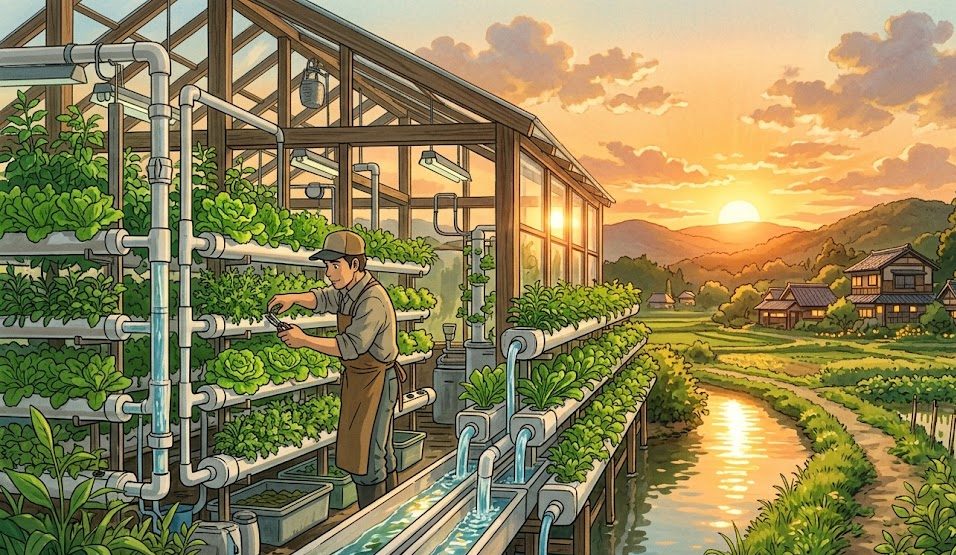
➡️ INTRODUCTION
→ Hydroponics is a modern farming method where crops are grown without soil, using nutrient-rich water solutions. This innovative technique is gaining popularity among farmers and urban growers because it allows faster growth, higher yield, and better resource efficiency. In traditional farming, soil quality plays a major role, but hydroponics removes this limitation completely. Crops receive direct nutrients through water, which leads to healthier plants and quicker production cycles. With increasing land scarcity and water challenges, hydroponics is becoming a smart solution for sustainable agriculture and future food production.
➡️ Key Points / Benefits
→ No need for soil in farming
→ Faster plant growth and higher yield
→ Uses less water compared to traditional farming
→ Suitable for urban and small spaces
→ Reduces pest and disease risks
→ Supports year-round cultivation
🔵 1️⃣ → What is Hydroponics Farming?
Hydroponics is a technique where plants grow in water enriched with nutrients instead of soil.
Main components:
- Nutrient solution
- Water system
- Growing medium (like coco peat)
Benefits:
- Controlled environment
- Faster growth
- Better quality crops
This method allows farmers to grow crops anywhere, even in limited space.
🔵 2️⃣ → Types of Hydroponic Systems
There are different types of hydroponic systems used in farming.
Common systems:
- Nutrient Film Technique (NFT)
- Deep Water Culture (DWC)
- Drip system
Advantages:
- Efficient nutrient delivery
- Easy management
- High productivity
Choosing the right system depends on crop type and budget.
🔵 3️⃣ → Suitable Crops for Hydroponics
Hydroponics works best for certain crops.
Best crops:
- Lettuce
- Spinach
- Herbs (mint, basil)
- Cherry tomatoes
Why these crops:
- Fast growth cycle
- High demand
- Easy to manage
Farmers can earn more by selecting the right crops.
🔵 4️⃣ → Water and Nutrient Management
Proper nutrient balance is very important in hydroponics.
Key practices:
- Maintain correct pH level
- Monitor nutrient concentration
- Change water regularly
Benefits:
- Healthy plant growth
- Higher yield
- Better quality produce
Balanced nutrients ensure strong and productive plants.
🔵 5️⃣ → Advantages Over Traditional Farming
Hydroponics offers many benefits compared to soil-based farming.
Major advantages:
- Uses up to 90% less water
- No soil-related diseases
- Faster production
Result:
- Higher efficiency
- Better profitability
This method is ideal for modern agriculture.
🔵 6️⃣ → Investment and Future Potential
Hydroponics requires initial setup but offers long-term benefits.
Investment areas:
- Setup system
- Nutrients and equipment
- Maintenance
Future scope:
- Urban farming
- Export markets
- Sustainable agriculture
Hydroponics is the future of farming in limited space and resources.
➡️ CONCLUSION
→ Hydroponics farming is a revolutionary method that is transforming agriculture. By eliminating soil and using nutrient-rich water, farmers can achieve faster growth, higher yield, and better efficiency. This technique is especially useful in areas with limited land and water resources. Although it requires initial investment and knowledge, the long-term benefits are significant. As agriculture moves towards innovation and sustainability, hydroponics will play a major role in shaping the future of farming.