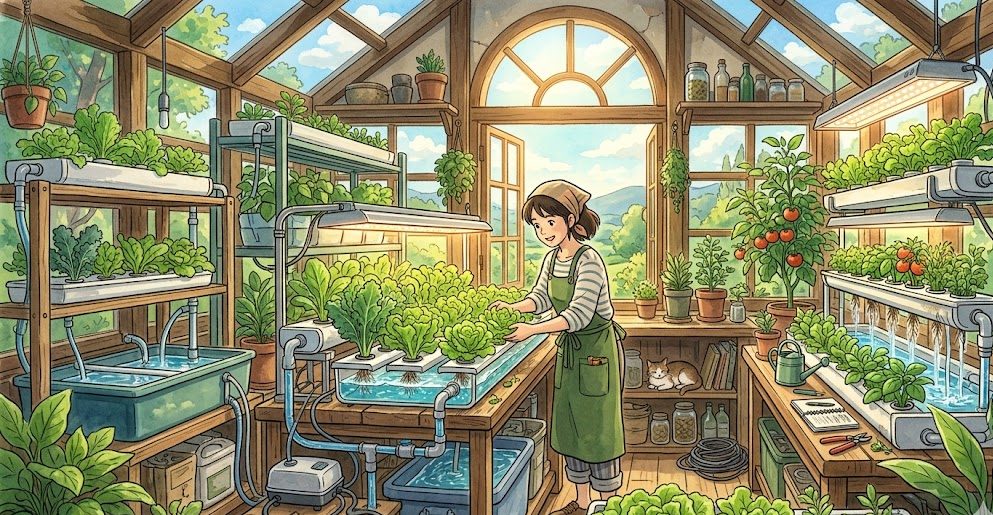
Think about everything you need to grow a healthy plant. Most people immediately picture a sunny backyard, a shovel, and bags of rich, black dirt. But what if you could take soil completely out of the equation? What if you could grow crisp lettuce, juicy tomatoes, and fragrant herbs in your basement, garage, or a small corner of your living room—all year round?
Welcome to the world of hydroponics systems.
Hydroponics is simply the method of growing plants in water instead of soil. Instead of forcing plant roots to stretch and search through dense dirt for food, hydroponic systems deliver a perfectly balanced nutrient solution directly to the roots.
The results? Plants grow up to 40% faster, use roughly 90% less water than traditional gardening, and are completely safe from soil-borne pests and weeds. If you are looking to take control of your food supply or build a modern indoor cultivation setup, here is your practical, beginner-friendly guide to going dirt-free.
1. How Does Soilless Cultivation Work?
In a traditional garden, soil acts as a anchor for the plant and a storage tank for nutrients and water. In an indoor soilless setup, we split these jobs up using simple technology.
The Role of Growing Mediums
Because there is no dirt, you need something inert to hold the plant upright so it doesn’t fall over. Common growing mediums include:
- Coco Coir: Made from shredded coconut husks, it holds water beautifully while letting roots breathe.
- Clay Pebbles (Hydroton): Small, porous clay balls that provide excellent drainage and support.
- Rockwool: A fibrous material made from spun rock that is fantastic for starting seeds.
Delivering the Food
Hydroponic plants “eat” by drinking a water-soluble solution packed with essential minerals like nitrogen, potassium, and calcium. Because the roots don’t have to fight through dirt to find these minerals, the plant can spend all its energy growing massive leaves and rich fruits above the surface.
2. Choosing Your First Hydroponic System
There are several ways to design a hydroponic setup. For beginners, three systems stand out as the easiest and most effective to build at home.
[ Active System ] ---> Uses Pumps (NFT, Ebb & Flow, DWC)
[ Passive System ] --> No Moving Parts (Kratky, Wick)
Deep Water Culture (DWC)
In a DWC system, your plants sit in net pots suspended above a reservoir filled with nutrient water. The roots hang down directly into the liquid. An affordable aquarium air pump bubbles oxygen into the water so the roots don’t drown. DWC is incredibly simple and is perfect for growing large, thirsty plants like tomatoes or zucchini.
The Kratky Method (The Easiest No-Pump Setup)
If you want the absolute simplest entry point, the Kratky method requires zero electricity, pumps, or moving parts. You fill a bucket with nutrient water, place your plant on top, and walk away. As the plant drinks the water, the water level drops, creating an “air zone” where the top half of the roots can breathe oxygen while the bottom half stays wet. It is the perfect setup for indoor lettuce and herbs.
Nutrient Film Technique (NFT)
Often seen in commercial indoor vertical farms, NFT systems place plants in long, slightly tilted channels. A water pump continuously runs a very thin “film” of nutrient water down the channel, washing over the tips of the roots before draining back into a main reservoir. It is highly efficient for fast-growing leafy greens.
3. Setting Up Your Indoor Cultivation Environment
To grow crops successfully indoors, you have to play the role of Mother Nature. You need to provide the right balance of light, air, and temperature.
Choosing the Right Grow Lights
Unless you have a massive greenhouse, window sunlight will not be enough to support heavy crop production.
- LED Grow Lights: These are the gold standard for indoor farming. They use very little electricity, don’t emit excessive heat that could burn your crops, and can be adjusted to provide the exact blue and red light spectrums your plants need to thrive.
Monitoring Water Quality: pH and EC
Because water is the lifeblood of your hydroponic system, you need to monitor it using two inexpensive handheld meters:
- pH Meter: Plants can only absorb nutrients if the water is slightly acidic. Aim for a pH range of 5.5 to 6.5. If the water is too alkaline or too acidic, your plants will starve.
- EC Meter (Electrical Conductivity): This measures how strong your nutrient solution is. Young seedlings need a weak mix, while fruiting tomatoes require a much stronger concentration.
4. Practical Tips for Hydroponic Success
- Keep It Clean: Because hydroponic systems are warm and wet, they can attract algae if light hits the water reservoir. Use dark, opaque containers to block out light completely.
- Maintain Air Circulation: Stagnant indoor air leads to mold and weak plant stems. Place a small, oscillating desk fan near your setup to simulate a gentle outdoor breeze.
- Change the Water Bi-Weekly: Every two weeks, empty your reservoir completely, rinse it out, and refill it with fresh water and clean nutrients to prevent salt buildup.
Conclusion
Setting up a hydroponic system is a deeply rewarding way to bring the joy of farming indoors. By taking soil out of the equation and using smart, space-saving technology, you can grow clean, pesticide-free food right on your kitchen counter or in an indoor grow room. Start small with a simple Kratky jar or a single Deep Water Culture bucket, master your water chemistry, and watch your indoor oasis thrive.
Frequently Asked Questions (FAQs)
1. Is hydroponic food as healthy as food grown in organic soil?
Yes, and in some cases, it can be healthier! Because you have total control over the exact minerals the plant absorbs, hydroponic vegetables are often packed with identical or higher nutritional values compared to field-grown crops. Plus, there is zero risk of contamination from polluted dirt.
2. Do I need expensive liquid nutrients to get started?
Not at all. You can purchase affordable, pre-mixed hydroponic powder or liquid concentrates at any local garden center. Just make sure the label explicitly says “for hydroponic use,” as standard outdoor dirt fertilizers will not dissolve completely in water and will clog your system.
3. What crops are best for an absolute beginner?
Leafy greens like lettuce, spinach, kale, and arugula, along with herbs like basil, mint, and cilantro, are incredibly forgiving. They grow rapidly, don’t require heavy lighting systems, and will give you a successful harvest within 4 to 5 weeks.
4. How often should I run my aquarium air pump in a DWC system?
Your air pump should run 24 hours a day, 7 days a week. Plant roots need a constant supply of oxygen to survive in water. If you turn the pump off for extended periods, the water will lose its oxygen, and the roots will quickly develop root rot.
5. Does an indoor hydroponic setup use a lot of electricity?
Modern LED grow lights and small water pumps are highly energy-efficient. Running a small, multi-shelf indoor herb garden typically adds only a few dollars a month to your household electric bill, which is easily offset by the money you save on fresh grocery store produce.