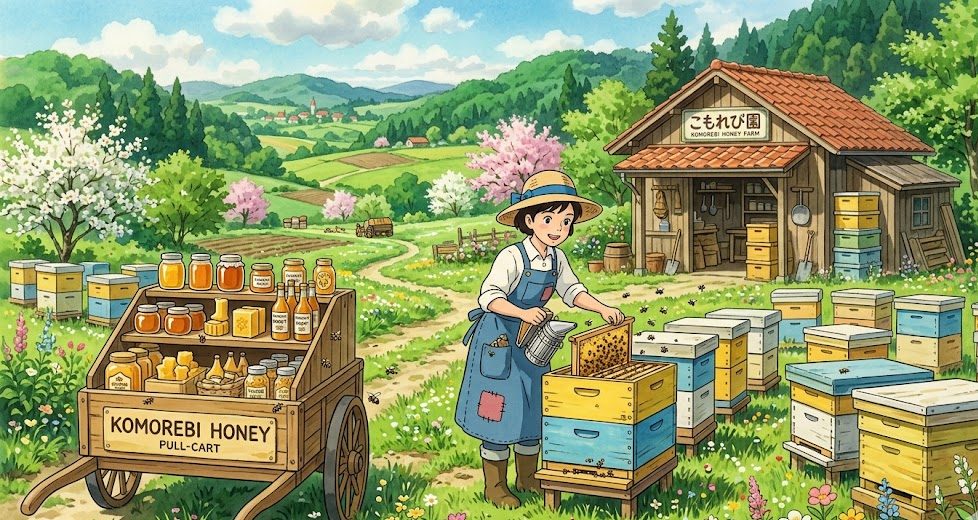
When most people think of honeybees, they picture a relaxing backyard hobby or a vital contributor to our global ecosystem. While both are true, apiculture—the practice of commercial beekeeping—is also one of the most lucrative and resilient agribusinesses in the modern market.
Global demand for pure, raw honey is at an all-time high as health-conscious consumers actively replace refined sugars with natural sweeteners. But the financial potential of a commercial beekeeping business goes far beyond a single jar of honey. From renting hives to commercial orchards for crop pollination to harvesting high-value byproducts like beeswax, royal jelly, and propolis, bees are incredibly efficient revenue-generating livestock.
If you are looking for a unique, highly profitable agricultural venture that requires minimal land compared to traditional livestock, this ultimate guide will show you how to build a commercial beekeeping business from scratch.
The Economics of Commercial Beekeeping: Multi-Stream Revenue
Before setting up your first hive, it is vital to understand why commercial beekeeping offers such a high return on investment. Unlike traditional farming where you rely on a single harvest, a single bee colony can generate revenue from four distinct streams:
- Raw Honey Production: High-quality, single-origin, or organic honey commands a premium price in local and international markets.
- Commercial Pollination Services: Large-scale fruit, nut, and vegetable growers pay commercial beekeepers handsome fees to place hives in their orchards for a few weeks during blooming season to ensure crop pollination.
- Beeswax and Industrial Byproducts: The cosmetics, candle-making, and eco-friendly packaging industries buy pure beeswax, propolis, and royal jelly at top dollar.
- Nucleus (Nuc) Colony Sales: As the beekeeping trend grows, you can split your healthy hives and sell starter colonies (nucs) and queen bees to hobbyists and new farmers.
Step 1: Legal Compliance, Licensing, and Location Scouting
A successful commercial apiary requires careful placement. You cannot simply drop hundreds of hives anywhere; you need an environment where bees can forage safely and efficiently.
A. Choosing the Ideal Apiary Site
- Forage Abundance: Your hives must be within a 2- to 3-mile radius of diverse, nectar-rich flowering plants, wild trees, or agricultural crops.
- Water Access: Bees require a continuous, clean source of water to cool the hive and dilute honey. If a natural stream or pond isn’t nearby, you must set up automated watering stations.
- Safety and Protection: Choose flat, well-drained ground that receives morning sunlight (to wake the bees up early) and afternoon shade. Ensure the site is shielded from heavy winds and far away from fields that undergo heavy chemical pesticide spraying.
B. Permits and Zoning
Check your local agricultural laws. Most regions require commercial beekeepers to register their apiary locations with local agricultural departments to protect against disease outbreaks and to ensure local pesticide applicators notify you before spraying nearby fields.
Step 2: Sourcing Premium Equipment and Livestock
Investing in high-quality hardware directly impacts your operational efficiency and the survival rate of your colonies.
| Component | Industry Standard | Why It Matters |
|---|---|---|
| Hive Style | Langstroth Hives (10-frame) | The global standard; modular, easy to stack, transport, and extract honey from mechanically. |
| Protective Gear | Full-body ventilated suits & leather gloves | Keeps labor safe, confident, and working efficiently around aggressive or crowded hives. |
| Bee Breed | Italian (Apis mellifera ligustica) or Carniolan | Known for gentle temperaments, excellent honey production, and strong winter survival rates. |
| Extraction Gear | Electric radial centrifugal extractors | Vital for commercial setups to extract honey quickly without destroying the reusable wax combs. |
Export to Sheets
Step 3: Hive Management and Seasonal Care
Beekeeping is not a hands-off investment. It requires a deep understanding of the hive’s internal social hierarchy and seasonal shifts.
- Spring Management: This is the growth phase. Inspect hives for queen health, clean out winter debris, and check for signs of swarming. If a hive gets too crowded, split the colony into a new box to expand your business footprint.
- Summer Harvest: Keep a close eye on the honey supers (the top boxes where bees store extra honey). Once the bees fill the frames and cap the cells with clean wax, it is time to extract.
- Autumn Disease Control: Treat your hives for the devastating Varroa destructor mite, which can wipe out entire colonies over winter. Ensure the bees have enough honey stores left to survive the cold months.
- Winter Maintenance: Reduce hive entrances to keep cold wind and pests out, ensure proper ventilation to prevent internal condensation, and leave the bees undisturbed.
💡 Pro Strategy for Commercial Scalability
Don’t make the mistake of starting with 500 hives on day one. Start your first season with 20 to 50 hives. This size is large enough to teach you the realities of commercial logistics, disease management, and harvesting, but small enough that a minor beginner mistake won’t bankrupt your business. Use the profits and colony splits from your first year to double your numbers systematically.
Step 4: Harvesting and Post-Processing for Quality
The way you extract and package your honey dictates the retail tier you can target. Commercial success relies heavily on preserving the honey’s raw, natural state.
- Avoid Over-Heating: Excessive heat destroys the natural enzymes, antioxidants, and delicate floral aromas of honey. Keep processing temperatures low to maintain the “Raw and Unfiltered” certification.
- Moisture Testing: Always use a honey refractometer before bottling. High-quality honey must have a moisture content below 18.5%. Anything higher will cause the honey to ferment and spoil over time.
- Wax Processing: Don’t throw away the wax cappings scraped off during honey extraction. Melt them down, filter out impurities, and mold them into blocks. Pure beeswax blocks are a high-demand commodity with zero waste.
Step 5: Branding, Pricing, and Market Placement
To maximize your ROI, stay away from the bulk wholesale commodities market where corporate packagers squeeze your margins. Instead, position your commercial apiary as a premium brand.
- Monofloral and Premium Labeling: If your bees forage predominantly on a single crop—like clover, orange blossom, berry blossoms, or lavender—label it as such. Monofloral honey sells for a massive premium compared to generic multi-floral blends.
- Establish Direct B2B Relationships: Approach local bakeries, craft breweries, boutique supermarkets, and cosmetic brands. Selling your products directly to businesses cuts out the middleman and guarantees better wholesale pricing.
- Secure Pollination Contracts: Build relationships with local commercial farmers. Charging a fee per hive for a 3-week pollination window creates a highly predictable, front-loaded cash flow stream early in the agricultural season.
Conclusion: Sweet Returns for the Smart Entrepreneur
Starting a profitable commercial beekeeping business requires patience, biological knowledge, and sound logistical planning. It is a business that demands respect for nature, daily observation, and consistent disease management.
However, by leveraging multiple revenue streams—from honey and beeswax to high-value pollination contracts—you transform a love for nature into a resilient, high-yield enterprise. As global supply chains continue to seek out pure, sustainable agricultural products, the future belongs to the modern, data-driven commercial beekeeper. Keep your hives healthy, and your business will naturally sweeten your bottom line.