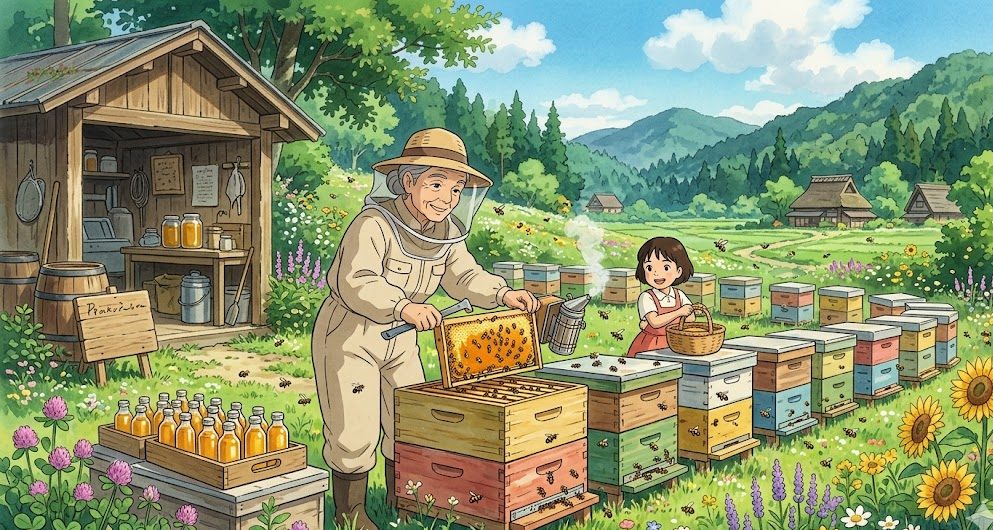
Apiculture has evolved from a traditional, low-yield backyard hobby into a highly sophisticated, multi-billion-dollar global agribusiness. Managed honeybees do far more than just supply the international market with high-quality honey and premium beeswax; they are fundamental pillars of global food security.
Approximately 75% of global food crops rely heavily on animal and insect pollinators, with honeybees representing the single most economically vital pollinator group across the globe (Kiprono, 2026; Manoj, 2026). Managed pollination services dramatically enhance both the yield and quality of core cash crops, boosting apple yields by up to 60% and watermelon outputs by a staggering 100% (Al-Ghamdi et al., 2017; Manoj, 2026).
For commercial entrepreneurs and modern agriculturalists, building a resilient apiculture operation requires moving past outdated methods and adopting data-driven colony management, advanced hive mechanics, and smart extraction strategies.
1. Selecting the Ideal Commercial Hive System
The cornerstone of any high-output commercial apiary is the choice of hive infrastructure. While traditional log or clay hives require minimal upfront capital, they are highly inefficient and limit honey yield to just 2 to 5 kg per colony annually (Manoj, 2026). Modern commercial operations rely on engineered, scalable frame systems that dramatically maximize output.
[ Traditional Log Hives ]  ──► 2 - 5 kg Honey / Year (Low Efficiency)
[ Modern Langstroth    ]  ──► 20 - 60 kg Honey / Year (Commercial Scale)
The Langstroth Hive (The Industry Standard)
The Langstroth hive remains the world’s most dominant commercial beekeeping setup (Manoj, 2026). It utilizes vertically stacked boxes containing removable hanging frames designed precisely around “bee space” (approximately 9.5 mm). This precise gap prevents bees from gluing components together with propolis or building wild comb.
The modular design allows beekeepers to add upper boxes, known as “honey supers,” during heavy nectar flows, giving the colony unlimited room to store honey without disturbing the lower brood nest.
The Improved Top-Bar Hive (Kenyan / Frame Variations)
Often used in specific agro-ecological zones and developmental commercial projects, top-bar systems offer an intermediate approach. They yield roughly 50% more honey than traditional setups and provide an accessible entry point for low-input, sustainable operations (Al-Ghamdi et al., 2017).
However, for high-capacity extraction machinery, the standard Langstroth box setup is preferred because its rigid, wire-reinforced frames can withstand high centrifugal forces during extraction.
2. Advanced Colony Management and Seasonal Strategies
Maximizing honey production is directly tied to managing the population curve of the colony. A commercial apiary must ensure that hive populations peak exactly when local floral nectar flows begin, rather than after they end.
Precision Queen Rearing and Genetics
Commercial operations cannot rely on wild, unpredictable queens. Successful apiaries source or breed specific production strains—such as Italian (Apis mellifera ligustica) for their rapid spring buildup and gentle temperament, or Carniolan (Apis mellifera carnica) for their exceptional overwintering capabilities and thriftiness. Queens are systematically replaced every 1 to 2 years to prevent a decline in egg-laying capacity, which directly causes colony population crashes.
Swarm Prevention and Strategic Splitting
Swarming is a honeybee colony’s natural method of reproduction, where the old queen and half the worker population fly off to find a new home. For a commercial producer, a swarm represents a massive loss of potential harvest labor. Beekeepers mitigate this through:
- Reversing Brood Boxes: Moving the lower, crowded brood box to the top in early spring to give the queen immediate room to lay eggs.
- Making Splits (Nucleus Colonies): Intentionally removing several frames of bees and brood from an ultra-strong colony to create a new “nucleus” colony, effectively reducing crowding while expanding the apiary’s total hive count.
3. Technology Integration: Precision Apiculture (PA)
The modern commercial apiary is experiencing a significant digital transformation. High annual colony losses—which reached an alarming 55.6% in certain regions during recent tracking periods (Giacobino, 2025)—have forced commercial operators to adopt Precision Beekeeping (PB) techniques to protect their livestock and secure predictable yields (Ratnayake, 2026).
| Technology Tool | Metrics Monitored | Operational Advantage |
| In-Hive Micro-Sensors | Internal temperature, relative humidity, and acoustic frequency (Ratnayake, 2026). | Alerts apiary managers to early swarming behavior, queenlessness, or predator entries without opening the hive (Ratnayake, 2026). |
| Electronic Smart Scales | Total hive weight patterns over time (Ratnayake, 2026). | Pinpoints the exact start and end of a local nectar flow and flags sudden honey theft by predatory wasps or neighboring hives. |
| UAV & Satellite Mapping | Normalized Difference Vegetation Index (NDVI) of surrounding flora (Atanasov, 2026). | Allows large-scale operations to map regional blooming cycles, helping optimize migratory apiary placement (Atanasov, 2026). |
4. Comprehensive Integrated Pest and Disease Management
Commercial bee colonies face constant biological pressure from invasive pests and viruses. A single unchecked outbreak can cause widespread colony collapse disorder (CCD) across entire apiary regions (Atanasov, 2026).
Dealing with Varroa destructor Mites
The parasitic Varroa mite is the single greatest biological threat to commercial apiculture, feeding on bees and transmitting lethal viral pathogens like Deformed Wing Virus (DWV) (Atanasov, 2026). Commercial strategies avoid continuous synthetic chemical use to prevent the mites from building resistance. Instead, they deploy an Integrated Pest Management (IPM) framework combining:
- Cultural Controls: Utilizing screened bottom boards to allow mites to fall completely out of the hive, and practicing drone brood removal (since mites selectively breed inside drone cells).
- Biogenic Treatments: Applying natural organic acids—such as oxalic acid vaporizations during broodless periods or formic acid pads during warm active seasons—which effectively kill mites without leaving toxic chemical residues in the honey or beeswax (Atanasov, 2026).
Managing Regional Predators
Depending on the geographical location of the commercial enterprise, distinct regional pests present major operational challenges. In tropical and sub-Saharan zones, predators like the wax moth, large hive beetle, and aggressive ant colonies can destroy up to 50% of managed hives if unmanaged (Piiru et al., 2025). Commercial operations secure these hives using elevated, grease-coated hive stands and strict physical entry guards to preserve hive structural integrity.
5. Post-Harvest Processing, Extraction & Quality Optimization
The final yield and profitability of a commercial operation depend entirely on post-harvest execution. Industrial honey processing must preserve the natural enzymes, delicate volatile flavors, and organic properties that command premium market prices (Kiprono, 2026).
The Commercial Extraction Line
- Uncapping: Filled honey frames are passed through automated mechanical uncapping machines that cleanly slice off the protective wax cappings covering the cells.
- Centrifugal Extraction: Uncapped frames are placed into large, food-grade stainless steel radial extractors. High-speed spinning throws the liquid honey out against the drum walls while keeping the wax frame perfectly intact so it can be safely returned to the bees for immediate reuse.
- Settling and Clarification: The liquid honey is transferred into large bulk settling tanks where micro-bubbles, stray wax particles, and residual pollen naturally float to the surface over a 48-to-72-hour period, avoiding the need for heavy, nutrient-destroying heat filtration.
Diversifying the Apiary Revenue Stream
To maximize profitability, a commercial operation should look beyond raw honey. Harvesting secondary apiculture goods creates highly resilient, diversified revenue streams (Piiru et al., 2025):
The Full-Value Apiary: While honey provides steady baseline revenue, collecting cosmetic-grade beeswax, nutrient-dense bee pollen, premium royal jelly, and immune-supporting propolis can significantly boost overall farm margins (Manoj, 2026; Piiru et al., 2025). Additionally, leasing strong hives to commercial fruit and nut growers for managed seasonal pollination services often generates substantial, guaranteed upfront revenue before the honey season even begins (Manoj, 2026).
Conclusion
Commercial apiculture is a highly technical agribusiness that demands a careful balance of biological expertise, structural precision, and modern technology. By upgrading from traditional infrastructure to scalable frame systems, integrating IoT tracking tools, and executing a proactive pest management strategy, operators can easily maximize their honey yields. Ultimately, investing in advanced apiculture techniques preserves local biodiversity while building a highly lucrative, climate-resilient commercial enterprise.