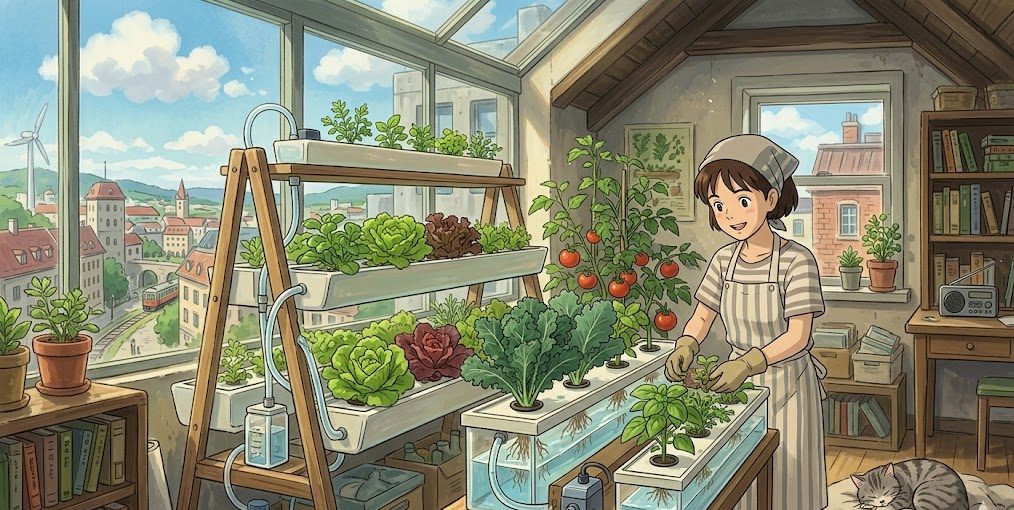
For centuries, the formula for growing food was simple: seed, soil, and water. However, as we move deeper into the 21st century, our traditional methods are being challenged by shrinking arable land, water scarcity, and unpredictable weather patterns. Enter Modern Hydroponics—a revolutionary method of cultivation that allows anyone to grow nutrient-dense, fresh vegetables without using a single handful of soil.
Hydroponics is not just a futuristic concept for scientists; it has become a viable, highly profitable, and sustainable solution for commercial farmers and home gardeners alike. This comprehensive guide will walk you through the world of soil-less farming, explaining how it works, why it’s efficient, and how you can start your own system.
1. What is Hydroponics? The Science of Soil-less Growth
The word “Hydroponics” stems from the Greek words hydro (water) and ponos (labor). In a traditional garden, soil acts as a reservoir for nutrients and a physical anchor for roots. However, plants don’t actually “need” the soil itself; they need the minerals and oxygen trapped within it.
In a hydroponic system, the soil is replaced by an inert growing medium (like perlite, clay pebbles, or rockwool) and a precisely balanced nutrient solution. This water-based solution is delivered directly to the roots, allowing the plant to spend less energy “searching” for food and more energy growing lush leaves and heavy fruit.
2. Why Hydroponics? The Benefits of Modern Farming
The shift toward hydroponics is driven by its remarkable efficiency. When compared to traditional soil farming, the advantages are clear:
- 90% Less Water Usage: It sounds counterintuitive, but hydroponics uses far less water than soil. In traditional farming, most water evaporates or seeps deep into the ground where plants can’t reach it. Hydroponic systems recirculate water, making it incredibly sustainable.
- Faster Growth Rates: Because plants have constant access to oxygen and nutrients, they grow roughly 30-50% faster than those grown in soil.
- Space Optimization: Hydroponic systems can be stacked vertically. This “Vertical Farming” allows you to grow ten times the amount of food in the same footprint as a traditional garden.
- No Soil-Borne Pests: Most garden pests and diseases live in the soil. By removing the dirt, you eliminate the need for harsh chemical pesticides, making your produce cleaner and safer to eat.
- Year-Round Production: By controlling the environment (especially indoors), you can grow summer vegetables like tomatoes and cucumbers in the middle of winter.
3. Popular Hydroponic Systems for Beginners
If you are looking to start, you don’t need a high-tech laboratory. There are several types of systems ranging from simple to advanced:
A. The Kratky Method (Passive)
This is the easiest entry point for beginners. The plant sits in a net pot suspended over a reservoir of nutrient water. As the plant grows and drinks the water, the water level drops, creating an “air gap” that allows the roots to breathe oxygen. No pumps or electricity are required.
B. Deep Water Culture (DWC)
In a DWC system, the plant roots are permanently submerged in a highly oxygenated nutrient solution. An air pump (like the ones used in fish tanks) bubbles oxygen into the water. This is perfect for fast-growing leafy greens like lettuce and basil.
C. Nutrient Film Technique (NFT)
This is a popular commercial method. A constant, thin “film” of nutrient water flows over the tips of the roots, which are housed in long sloped channels or pipes. This system is highly efficient but requires a water pump to run 24/7.
D. Ebb and Flow (Flood and Drain)
In this system, the grow tray is periodically flooded with nutrient solution and then drained back into a reservoir. This “tidal” action pulls fresh oxygen into the root zone every time the water drains.
4. Essential Components of a Hydroponic Setup
To be successful, you need to manage the “Big Five” of hydroponics:
- Water Quality: Start with clean, filtered water. High levels of chlorine or heavy metals can stunted plant growth.
- Nutrients: You cannot use regular fertilizer meant for soil. You must use hydroponic-specific nutrients that are water-soluble and contain all the essential micro and macro-minerals.
- pH Level: Plants can only “eat” when the water is at the right acidity level. For most vegetables, the sweet spot is between 5.5 and 6.5 pH.
- Light: If growing indoors, you will need LED grow lights that mimic the sun’s spectrum. Outdoors, 6-8 hours of sunlight is essential.
- Growing Media: Instead of dirt, use Coco Coir (coconut husks), Expanded Clay Pebbles (Hydroton), or Perlite to support the plant’s weight.
5. What Can You Grow?
While you can grow almost anything hydroponically, some crops are more “profitable” and easier for beginners:
- Leafy Greens: Lettuce, Spinach, Kale, and Bok Choy.
- Herbs: Basil, Mint, Cilantro, and Chives.
- Vining Crops: Tomatoes, Cucumbers, and Bell Peppers (these require more support and larger systems).
- Strawberries: One of the most popular hydroponic fruits due to their high market value and ease of harvest.
6. Hydroponic Crop Comparison Table
| Crop | Ease of Growth | Growth Cycle | Best System | Market Value |
|---|---|---|---|---|
| Lettuce | Very Easy | 30–45 Days | DWC / NFT | Moderate |
| Basil | Easy | 25–40 Days | Kratky / DWC | High |
| Tomatoes | Moderate | 70–90 Days | Ebb & Flow | High |
| Strawberries | Moderate | 60–80 Days | NFT / Drip | Very High |
| Kale | Easy | 40–50 Days | DWC | Moderate |
Export to Sheets
7. The Future of Food: Urban and Vertical Farming
As our cities grow, the distance between the farm and the table increases. Modern hydroponics allows for Hyper-Local Farming. Imagine a grocery store that grows its own lettuce on the roof, or a restaurant that picks basil from a vertical wall in the kitchen.
This reduces “food miles,” ensures the produce is incredibly fresh, and eliminates the carbon footprint associated with long-distance shipping. For the entrepreneur, this presents a massive opportunity to provide fresh greens to urban centers where traditional farming is impossible.
8. Conclusion: Start Small, Think Big
Modern Hydroponics is a bridge between nature and technology. It empowers individuals to take control of their food supply, regardless of whether they have a backyard or a high-rise apartment balcony.
For beginners, the key is to start small—perhaps with a simple Kratky jar or a small DWC bucket. As you learn how your plants respond to the nutrient solution and the environment, you can scale up to larger, automated systems. The transition away from soil is not just a trend; it is a smarter, cleaner, and more productive way to feed the world.
The future of gardening is liquid. Are you ready to dive in?