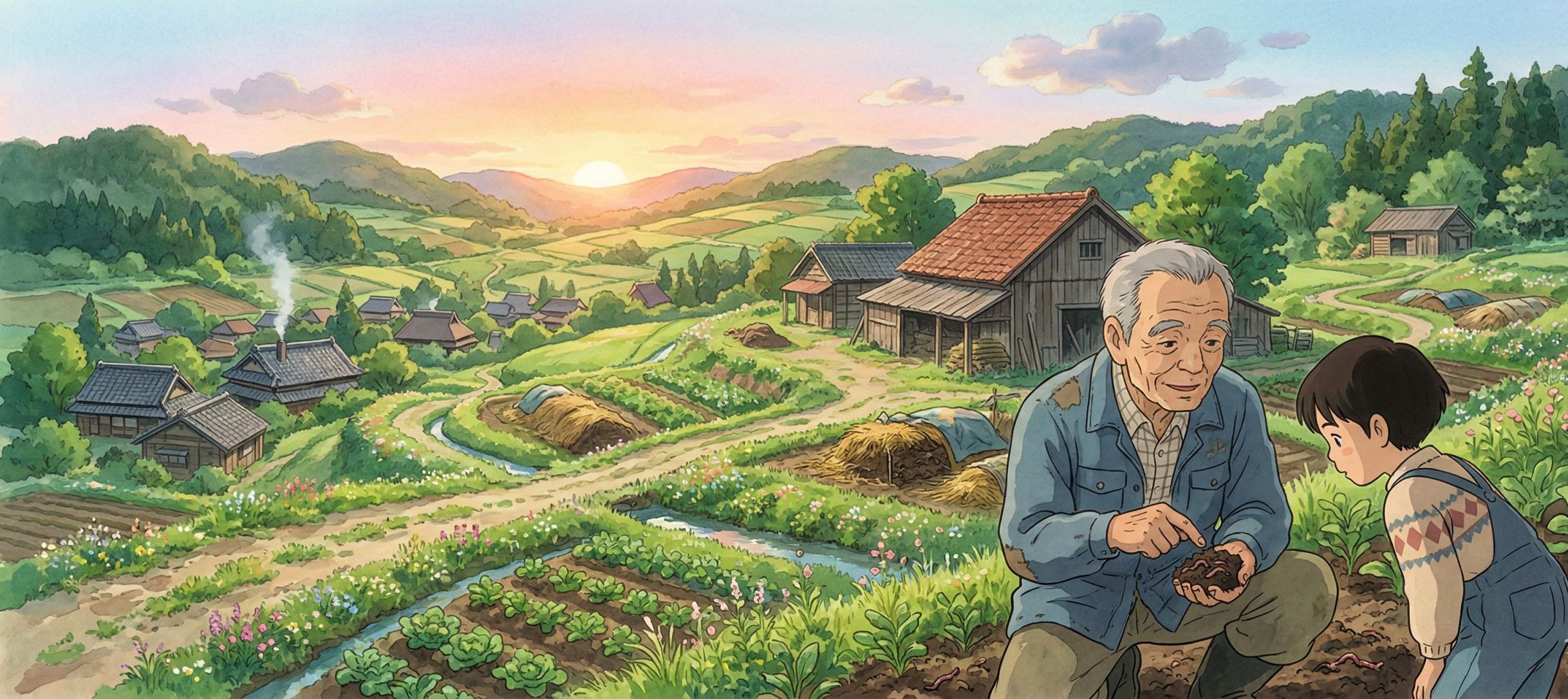
Did you know that the world’s topsoil—the very foundation of our food system—is eroding at a rate 10 to 40 times faster than it can naturally replenish itself? If current industrial practices continue, some scientists suggest we may only have roughly 60 harvests left before our land becomes too degraded to support life. This staggering statistic isn’t just an environmental warning; it’s a direct threat to the quality and cost of the food on your dinner table.
The challenge we face today is a “broken cycle” where modern agriculture prioritises short-term yields over long-term survival, relying heavily on chemical fertilisers that strip the earth of its natural vitality. Sustainable farming serves as the ultimate solution to this crisis, shifting our focus from “mining” the land to “nurturing” it. This guide will take you on a journey through the fundamentals of sustainable agriculture, explaining why it is the most important shift in human history and providing a practical roadmap for how you can participate—whether you have an acre of land or a small backyard.
Understanding Sustainable Farming: Key Concepts and Importance
Sustainable farming is an integrated system of plant and animal production practices that satisfy human food needs while enhancing the natural resource base. Unlike conventional farming, which often views the farm as a factory, sustainable farming views the farm as a living ecosystem. It is built on three main pillars: environmental health, economic profitability, and social equity.
To understand the technical side, think of a farm like a bank account. Conventional farming is like constantly withdrawing money (nutrients) and only making deposits in the form of high-interest loans (synthetic chemicals) that eventually lead to bankruptcy (dead soil). Sustainable farming is like a high-yield savings account; you only harvest the interest while constantly reinvesting in the principal through natural processes like composting and crop rotation.
Historically, this isn’t a “new” invention. It is a return to ancestral wisdom combined with modern ecological science. Today, it includes diverse methods such as regenerative agriculture, permaculture, and organic farming. The goal is simple: to produce food today without compromising the ability of future generations to do the same. By promoting biodiversity and soil health, we create a resilient system that can withstand pests, droughts, and climate fluctuations naturally.
Why It Matters: The Top Benefits of Sustainable Farming
Transitioning toward sustainable methods isn’t just about “saving the planet”—it’s about creating a more robust, nutritious, and ethical food chain for everyone.
- Restoration of Soil Fertility: By avoiding harsh tilling and chemical runoff, sustainable farming allows complex fungal networks (mycorrhizae) to thrive, creating “living soil” that naturally filters water and stores carbon.
- Nutrient-Dense Produce: Studies consistently show that crops grown in healthy, microbially active soil contain higher levels of antioxidants, vitamins, and minerals compared to those grown in depleted, chemically-dependent soil.
- Climate Change Mitigation: Sustainable farms act as carbon sinks. Practices like planting cover crops and holistic grazing can pull massive amounts of $CO_2$ out of the atmosphere and store it safely in the ground.
- Economic Resilience for Farmers: By reducing the need for expensive external inputs like synthetic pesticides and patented seeds, farmers can lower their overhead costs and become more self-reliant.
Pro Fact: Sustainable farming uses approximately 30% less energy per unit of crop produced than conventional industrial farming, largely because it eliminates the energy-intensive manufacturing of nitrogen-based fertilisers.
How to Get Started: A Practical Guide for Beginners
You don’t need a tractor to be a sustainable farmer. Here is a 5-step actionable plan to implement these principles on a small scale.
Step 1: Embrace “No-Dig” Gardening
Stop turning over your soil. Tilling destroys the delicate ecosystem beneath your feet. Instead, layer organic matter (like compost and cardboard) on top. This mimics the forest floor, where nutrients move from the top down.
Step 2: Implement Crop Rotation
Never grow the same family of plants in the same spot two years in a row. For example, follow “heavy feeders” like tomatoes with “soil builders” like peas or beans, which naturally add nitrogen back into the earth.
Step 3: Start a Composting System
Sustainable farming is a “closed-loop” system. Instead of throwing away kitchen scraps, turn them into “black gold.” Composting recycles nutrients that would otherwise rot in a landfill and produce methane.
Step 4: Prioritise Biodiversity
Avoid “monocultures” (growing just one thing). Plant flowers like marigolds or lavender alongside your vegetables to attract beneficial insects that will eat your pests for you, eliminating the need for sprays.
Step 5: Conserve Water with Mulching
Cover your soil with straw, wood chips, or dried leaves. This “skin” protects the soil from the sun, reduces evaporation by up to 70%, and eventually breaks down into rich humus.
Beginner’s Tip: Don’t aim for a “perfectly clean” garden. A few weeds and some fallen leaves provide habitats for the bugs that keep your ecosystem in balance. A little bit of mess is a sign of a healthy, living farm!
Overcoming Challenges and Looking into the Future
The biggest hurdle for beginners is the Transition Period. Soil that has been treated with chemicals for years is essentially “addicted.” It takes time for the natural biology to return, and you may see lower yields in the first year or two. The solution is patience and heavy applications of high-quality compost. Another challenge is Labour Intensity; sustainable farming often requires more observation and hand-work than simply spraying a field.
Looking forward, the future of sustainable farming lies in Agro-Technology. We are seeing the development of “precision agriculture” tools that help small farmers monitor soil moisture and nutrient levels via smartphone apps. Furthermore, Vertical Farming and Aquaponics are extending sustainability into urban centres, allowing us to grow food in the heart of our cities. As consumers demand more transparency, the “Farm-to-Fork” movement will likely become the global standard, making industrial chemical farming a relic of the past.
Conclusion
Sustainable farming is more than a set of techniques; it is a philosophy of respect for the Earth. By choosing to grow food in a way that gives back to the soil, you are taking a stand for the future of our planet and the health of your family. The shift from “consumer” to “steward” is the most powerful change an individual can make.
Your Task: Start a small compost bin or a “No-Dig” garden bed this weekend. Even a single square metre of healthy, sustainable soil makes a difference in the global effort to restore our land.
The Earth has spent millions of years learning how to grow; it’s time we started listening to its wisdom.
Frequently Asked Questions (FAQs)
1. Is sustainable farming the same as organic farming?
Not exactly. While they share many goals, “Organic” is a legal certification with specific rules about what you can’t use. “Sustainable” is a broader term that focuses on the long-term health of the entire ecosystem, including social and economic factors.
2. Can sustainable farming really feed the whole world?
Yes. While industrial farming is good at producing high volumes of a few crops (like corn and soy), sustainable small-scale farms actually produce more food per acre when you measure total nutrition and diverse crops.
3. Do sustainable farms use pesticides?
Most avoid synthetic chemicals entirely. Instead, they use “Integrated Pest Management,” which involves using predatory insects, trap crops, and natural oils (like Neem) to manage pests without harming the environment.
4. How can I support sustainable farming if I don’t garden?
The best way is to “vote with your fork.” Buy from local farmers’ markets, join a CSA (Community Supported Agriculture) program, and choose products that are certified “Regenerative” or “Fair Trade.”