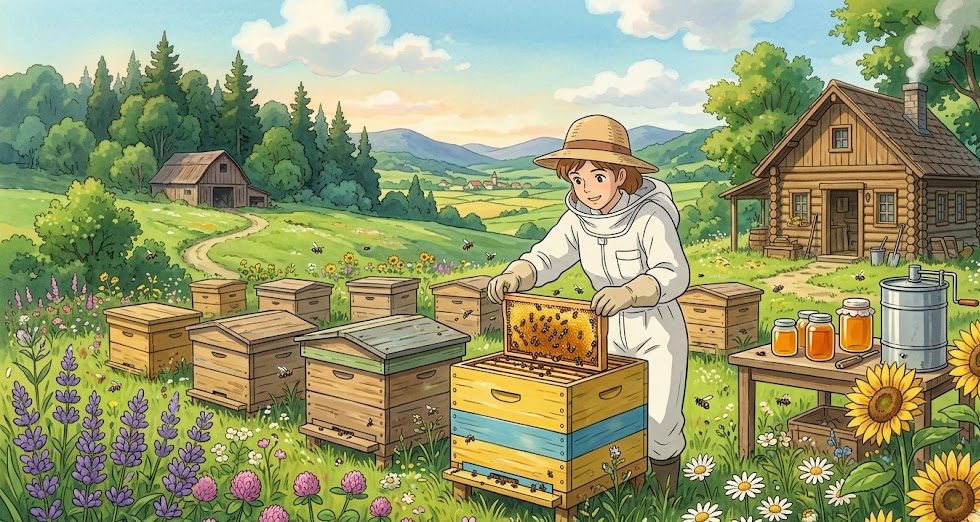
There is something deeply satisfying about cracking open a fresh piece of honeycomb and watching pure, golden honey pour out. For centuries, beekeeping was treated as a mysterious backyard hobby or a well-kept family secret. Today, it has grown into a highly respected branch of modern agriculture.
Whether you want to generate a steady side income or add a powerful pollination boost to your homestead, starting a bee yard is an incredibly rewarding venture.
However, diving into the world of bees without a clear plan can quickly lead to empty hives and frustrated stings. Success does not happen by accident; it requires an understanding of colony behavior, seasonal hive management, and proper honey extraction techniques.
This professional beekeeping guide breaks down the essential honey production methods every modern apiarist needs to build a thriving, sweet-yielding operation.
1. Choosing Your Setup: Langstroth vs. Top Bar Hives
Before you buy your first buzz of bees, you need to provide them with a proper home. While there are several niche designs available, professional honey production relies almost entirely on two main styles.
The Industry Standard: The Langstroth Hive
If your primary goal is maximizing your honey harvest, the Langstroth hive is the undisputed champion. This design consists of stackable wooden boxes containing removable hanging frames.
As the colony grows, you simply add more boxes (called “supers”) on top. The bees build their wax comb inside these rigid frames, which allows you to extract the honey cleanly without destroying the structural comb itself.
The Low-Lift Alternative: The Top Bar Hive
Top bar hives are horizontal systems where bees build comb downward from simple wooden bars laid across the top of a long trough.
- Pros: There are no heavy boxes to lift, making it much easier on your back. It offers a highly natural environment for the bees.
- Cons: Because the bees must rebuild their wax comb completely from scratch every time you harvest, your total annual honey yield will be significantly lower than a Langstroth setup.
2. Managing the Colony: The Three Golden Pillars
A hive is a finely tuned superorganism made up of three distinct castes: the single Queen, thousands of female Worker bees, and a few hundred male Drones. To keep this community producing honey efficiently, you must manage three specific priorities throughout the year.
Queen Rightness
Your queen is the engine of the entire hive, capable of laying up to 2,000 eggs every single day. During your bi-weekly hive inspections, you don’t necessarily need to spot the queen herself. Instead, look for evidence of her presence: tight, uniform patterns of healthy brood (larvae) and freshly laid eggs that look like tiny grains of rice at the bottom of the cells.
Swarm Prevention
When a hive becomes overcrowded in the spring, the bees naturally split the colony in half. The old queen takes half the workforce and flies away to find a new home, taking your potential honey harvest with them.
To prevent this, give your bees plenty of room by adding fresh honey supers early. You should also routinely inspect the bottom of the frames for large, peanut-shaped “swarm cells” where new queens are being raised, removing them to keep the colony unified.
Pest and Disease Defense
The greatest threat to modern beekeeping is the Varroa destructor mite. These microscopic parasites attach themselves to your bees, draining their energy and spreading deadly viruses.
Professional beekeepers use organic treatments like oxalic acid vapor or thymol strips during the late summer to keep mite populations low, ensuring the colony stays strong enough to survive the winter.
3. Honey Production Methods: Maximizing the Flow
Honey is simply plant nectar that bees have collected, evaporated down to a low moisture content, and sealed with a thin layer of white wax. To harvest this liquid gold efficiently, you need to time your management with nature’s schedule.
Tracking the “Honey Flow”
The honey flow occurs during the specific weeks of spring and summer when local flowers, trees, and clover are blooming in massive quantities.
During a strong flow, a healthy colony can fill an entire 10-frame deep box with honey in less than a week. Keep a close eye on the landscape and make sure you have extra supers stacked on the hive before the major blooms begin.
Utilizing a Queen Excluder
To ensure your honey is clean and free of developing bee larvae, insert a flat metal grid called a queen excluder between the lower brood boxes and the upper honey supers.
The spaces in the grid are wide enough to let the smaller worker bees pass through with their collected nectar, but too narrow for the plump queen to crawl through. This keeps your honey supers 100% pure honey.
4. The Extraction Process: From Hive to Bottle
Once your bees have filled the supers and capped at least 80% of the cells with clean white wax, it is finally time to harvest.
Step 1: Removing the Bees
You cannot harvest frames covered in defensive bees. Use a specialized “bee brush” to gently sweep them off, or insert a one-way escape board beneath the honey super the night before harvest. The bees will crawl down into the brood box overnight and won’t be able to find their way back up.
Step 2: Uncapping the Comb
Bring your honey supers into a clean, enclosed space. Use a heated uncapping knife or a plastic scratcher fork to slice away the thin layer of wax capping covering the cells. Try to cut as cleanly as possible to preserve the underlying structure of the comb.
Step 3: Spinning the Extractor
Place your uncapped frames into a centrifugal honey extractor. As you turn the manual crank or spin the electric motor, centrifugal force pulls the liquid honey out of the cells and flings it against the inner walls of the drum.
The honey drains down to the bottom valve, passing through a dual-stage stainless steel strainer to catch any stray bits of wax or propolis before flowing directly into your storage buckets.
Conclusion: The Ultimate Partnership
Beekeeping is far more than a basic agricultural chore; it is an active partnership with one of nature’s most organized creatures. By choosing the right hive style, keeping a watchful eye on queen health, managing varroa mites, and extracting your honey with care, you can build a sustainable apiary that sweetens your table and stabilizes your local ecosystem. Start small with just two hives, learn the natural rhythm of your local flora, and watch your sweet investment grow season after season.
Frequently Asked Questions (FAQs)
1. How much honey can I realistically expect from one hive per year?
On average, a healthy, established Langstroth hive can produce anywhere from 40 to 100 pounds (roughly 18 to 45 kilograms) of harvestable honey per year. Your exact yield will depend heavily on your local weather, the density of surrounding floral blooms, and how well you manage winter survival.
2. Can I start a honey bee hive in a small suburban backyard?
Yes, suburban beekeeping is highly successful because neighborhood gardens and landscaped yards offer a diverse, steady source of flowers. However, you should always check your local city ordinances first, keep your hives placed behind a tall fence so the bees’ flight path stays above human eye level, and ensure your neighbors are comfortable with the setup.
3. Do I need to feed my bees sugar water?
You do not need to feed bees when natural flowers are blooming during a honey flow. However, new colonies starting out in the spring, or established hives facing a severe late-summer drought, often require a 1:1 or 2:1 sugar syrup mixture to help them build wax comb and store enough food reserves to survive the cold months.
4. Does raw honey ever spoil or go bad over time?
Pure, raw honey with a moisture content below 18.6% will never spoil. Because of its unique chemical makeup and low water level, bacteria and organisms cannot grow inside it. Archaeologists have actually found pots of honey inside ancient Egyptian tombs that are thousands of years old and still perfectly edible!
5. What is the difference between raw honey and store-bought commercial honey?
Raw honey comes straight from the extractor, passing through a simple mesh screen to remove large debris while keeping all the beneficial pollen, enzymes, and natural antioxidants intact. Many cheap, commercial supermarket honeys are heavily pasteurized (ultra-heated) and micro-filtered, which destroys the natural health benefits and strips away the unique local flavor profiles.