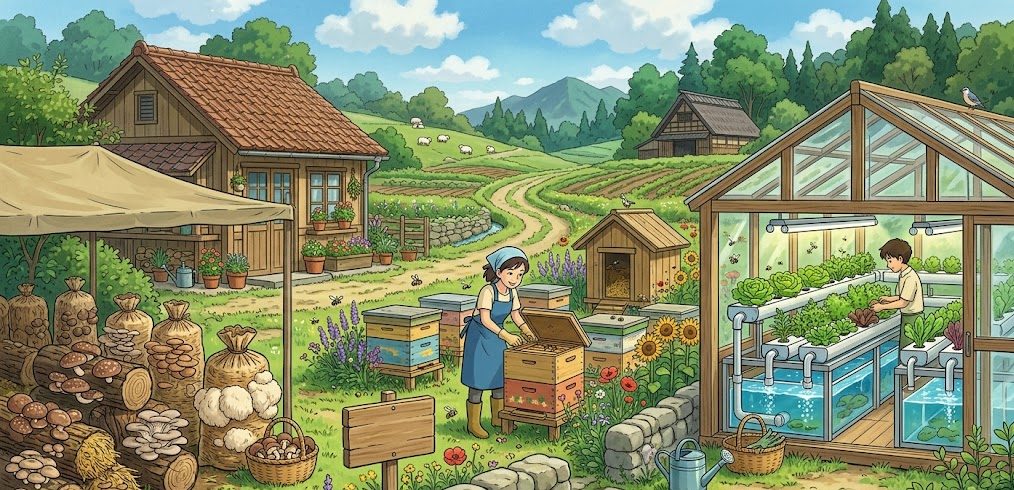
In 2026, the agricultural landscape has shifted. Massive industrial farms are being challenged by Micro-Farms—specialized, tech-driven operations that focus on high-value yields rather than volume. For the modern digital entrepreneur or small-scale land owner, the integration of Beekeeping, Hydroponics, and Mushrooms creates a resilient, multi-stream income model that thrives in both rural and peri-urban environments.
1. Beekeeping (Apiculture): The “Liquid Gold” Business
Beekeeping is the backbone of a micro-farm, offering high ROI with relatively low daily labor requirements.
Why It’s Profitable:
- Diverse Revenue Streams: You aren’t just selling honey. Profit comes from Beeswax (cosmetics), Propolis (health supplements), Royal Jelly, and Pollination Services for local orchards.
- Low Maintenance: Once the hives are established, they require only weekly inspections during peak season.
Key Strategies for Success:
- Niche Honey Production: Don’t compete with supermarket blends. Focus on Monofloral Honey (e.g., Acacia, Manuka, or Wildflower) which commands a premium price.
- The “Hive-to-Table” Brand: Use minimalist, clean packaging to sell directly to consumers at premium rates.
2. Hydroponics: The Precision Engine
Hydroponics allows you to grow crops in a nutrient-rich water solution, bypassing the limitations of soil quality and seasonal weather.
The Micro-Farmer’s Advantage:
- Vertical Stacking: You can grow 10x more produce in the same footprint by stacking grow trays vertically.
- Fast Turnover: Crops like Arugula, Basil, and Microgreens can go from seed to harvest in as little as 10–21 days.
Top Performers for 2026:
- Gourmet Herbs: Fresh Basil, Mint, and Cilantro are staples for high-end restaurants.
- Specialty Peppers: Habaneros or Thai Chilies grown hydroponically have a more consistent heat profile and command higher B2B prices.
- Medicinal Greens: Growing kale or spinach in a controlled environment ensures they are free from heavy metals often found in traditional soil.
3. Mushroom Cultivation: Converting Waste to Wealth
Mushroom farming is perhaps the most space-efficient form of agriculture. It thrives in dark, humid environments, making it perfect for basements, shipping containers, or sheds.
The “Vertical” Growth Model:
- Substrate Utilization: Mushrooms grow on agricultural waste—sawdust, straw, or even coffee grounds. This keeps your input costs incredibly low.
- High Market Demand: Exotic varieties like Oyster, Lion’s Mane, and Shiitake have replaced the basic button mushroom in gourmet cooking and the wellness industry.
Profitability Factors:
- Fresh vs. Dried: Fresh mushrooms sell for a premium at farmers’ markets, while surplus can be dried or powdered (supplements) to eliminate waste and extend shelf life.
- Medicinal Value: Lion’s Mane is currently seeing a surge in demand as a “nootropic” (brain-booster), allowing farmers to enter the health and wellness market.
4. The Synergy: Creating a Circular Ecosystem
The true power of micro-farming lies in how these three pillars interact:
- Pollination: If your hydroponic setup includes flowering plants (like tomatoes or strawberries), your bees provide free, natural pollination, increasing your fruit yield.
- Waste Management: Spent mushroom substrate (the material left after harvesting) is an elite organic fertilizer. While it can’t be used directly in hydroponic water, it can be sold as high-end potting soil or used in “Soil-Based” buffer zones.
- Climate Control: The humidity required for mushrooms and the heat generated by hydroponic grow lights can be managed via integrated ventilation systems to reduce energy costs.
5. Modern Tools & Automation
To manage a 1,000-word-level operation efficiently, you must leverage technology:
- Smart Sensors: Use IoT devices to monitor water pH in hydroponics, humidity in mushroom rooms, and hive temperature.
- Automated Dosing: Systems that automatically add nutrients to your water tanks ensure your plants never face a “deficit.”
- Digital Marketing: Use SEO-optimized content and social media to showcase the “Ghibli-style” aesthetic of your farm—clean, vibrant, and natural—to attract eco-conscious buyers.
6. Financial Outlook & ROI
Micro-farming is a “front-loaded” investment.
- Initial Capital: High for hydroponic lighting and climate-controlled mushroom rooms.
- Operational Costs: Low. Your main costs are electricity, seeds/spores, and bee feed during winter.
- Break-even Point: With high-turnover crops like microgreens and oyster mushrooms, most micro-farms see a return on investment within 12 to 18 months.
7. Challenges: The Micro-Farmer’s “Watch List”
- Bio-Security: In mushroom and hydroponic setups, a single mold or bacterial outbreak can ruin an entire harvest. Strict sterilization is mandatory.
- Colony Collapse: Bees are sensitive to pesticides used in neighboring fields. Building relationships with nearby farmers is essential.
- Regulatory Compliance: Ensure you have the correct licenses for food handling and honey processing in your local jurisdiction.
8. Conclusion: The Future is Small
Profitable agriculture in 2026 isn’t about owning thousands of acres; it’s about maximizing the value of every square inch. By combining the ancient art of beekeeping with the modern precision of hydroponics and the efficiency of mushroom cultivation, you create a diversified, sustainable, and highly profitable business.
Micro-farming allows you to be more than just a grower—you become a specialist in a world that is increasingly hungry for high-quality, transparently sourced food.
Pro-Tip for New Farmers:
Start Small, Scale Fast. Begin with one “hub” (e.g., a small hydroponic rack and two hives). Once you master the biology of those systems, use your profits to automate and expand. The market for gourmet, local, and tech-grown food is only going to grow.