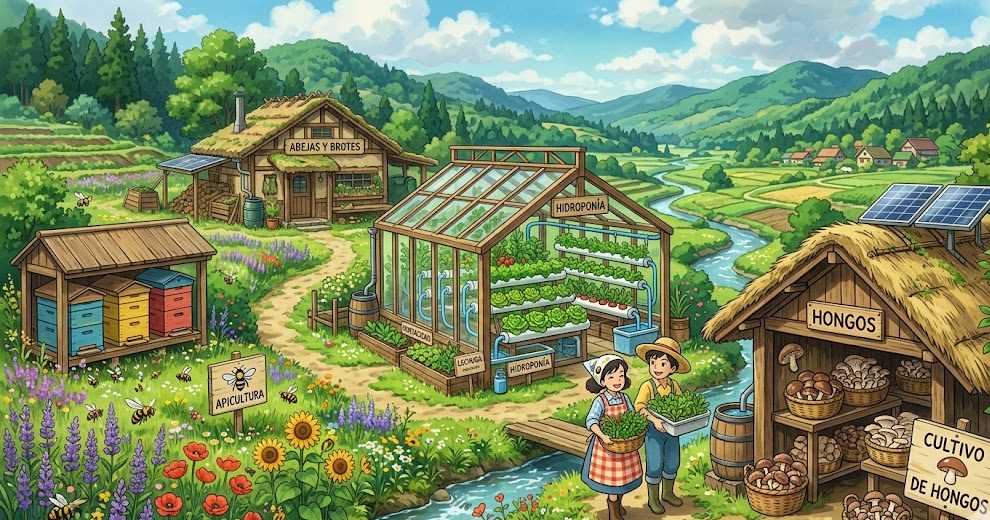
In the modern agricultural landscape, the most successful entrepreneurs are those who look beyond traditional monoculture. Today’s profit-driven, eco-conscious farmer understands that true sustainability lies in integration. By combining water-efficient systems, aquaculture, and high-value exotic crops, you can transform a standard plot into a high-yield, diversified “Integrated Farming System” (IFS).
This guide explores how to build a farming operation that saves water, maximizes protein production through fish farming, and captures premium market prices with exotic vegetables.
1. The Power of Integrated Farming Systems (IFS)
An Integrated Farming System is essentially a closed-loop ecosystem. In nature, nothing is wasted; the waste of one component becomes the fuel for another. By mimicking this cycle, you drastically reduce your dependence on external inputs like synthetic fertilizers and expensive feed, while simultaneously creating multiple streams of revenue.
Why Diversification is the Key to Profit
- Risk Mitigation: If the market price for one crop drops, your fish or other vegetable varieties provide a financial safety net.
- Resource Optimization: Water used for fish farming is often rich in nutrients, making it the perfect fertilizer for your plants.
- Increased Sustainability: By cycling resources on-site, you reduce your environmental footprint, which is becoming a major selling point for modern consumers.
2. Mastering Water Efficiency: Every Drop Counts
Water is becoming the world’s most precious commodity. For a sustainable farm, inefficient water use isn’t just an environmental issue—it’s a massive financial drain.
Smart Irrigation Strategies
- Drip Irrigation: Unlike flood irrigation, which wastes water through evaporation and runoff, drip irrigation delivers water directly to the plant’s roots. This can reduce water consumption by 50-70%.
- Rainwater Harvesting: Build catchment systems on your sheds or greenhouses. Storing rainwater during the monsoon for use in the dry season ensures you have a consistent supply without relying on groundwater extraction.
- Mulching: Covering the soil with organic materials like straw, wood chips, or biodegradable film significantly reduces evaporation, keeping the soil cool and moist for much longer.
3. Aquaponics: The Synergy of Fish & Plants
One of the most innovative systems in modern agriculture is Aquaponics, which combines aquaculture (raising fish) with hydroponics (growing plants in water).
How it Works
- The Fish Tank: You raise fish (such as Tilapia or Carp) in a controlled tank. The fish produce waste rich in ammonia.
- The Bio-Filter: Beneficial bacteria in the system convert that ammonia into nitrates—which are essentially natural plant food.
- The Plant Bed: The water is pumped to the plant beds, where the crops absorb the nitrates, cleaning the water in the process.
- The Loop: The clean, oxygenated water is pumped back into the fish tank, and the cycle continues.
This system uses up to 90% less water than traditional soil farming and produces both a protein source (fish) and a high-value produce source simultaneously.
4. Exotic Vegetable Farming: Capturing High Margins
While staple crops like wheat or rice have thin margins, exotic vegetables—such as bok choy, kale, bell peppers, broccoli, or rare herbs—command premium prices in urban markets and high-end restaurants.
Tips for Success with Exotic Crops
- Target the Niche: Don’t just grow “anything.” Research the demand in your nearest city. Are local restaurants struggling to find fresh basil? Is there a shortage of organic colored bell peppers?
- Controlled Environment: Many exotic crops are sensitive to climate fluctuations. Using a low-cost polyhouse or shade net allows you to control the environment, ensuring you can produce high-quality harvests even in the off-season.
- Focus on Quality: Because these are high-value crops, appearance and taste are paramount. Use organic pest control methods to ensure your produce is “clean,” allowing you to market them at a higher price point.
5. Designing Your Layout: A Practical Plan
To manage an integrated system effectively, you need a disciplined layout.
The “Zonal” Approach
- Zone 1 (Core): The fish tanks and the central pump house. This is where your water management and monitoring happen.
- Zone 2 (Greenhouse): Located immediately adjacent to the fish tanks so that the nutrient-rich water can be pumped with minimal energy.
- Zone 3 (Outer Perimeter): Traditional soil-based rows for hardier crops or fruit trees that can benefit from the overflow water and compost produced by the core system.
6. The Economics of Sustainability
Transitioning to an integrated system requires an initial investment, but the return on investment (ROI) is significant:
- Lower Operational Costs: Your fish waste replaces expensive commercial fertilizers, and your water efficiency keeps electricity bills low.
- Year-Round Production: By integrating greenhouse technology, you can farm through all four seasons, ensuring consistent cash flow.
- Brand Value: You aren’t just selling “crops”; you are selling a story of sustainable, integrated, and high-quality production. This allows you to build a loyal customer base.
Conclusion: The Future is Integrated
The future of agriculture lies in moving away from industrial, resource-heavy farming and toward intelligent, integrated, and sustainable systems. By mastering water efficiency, utilizing the natural synergy between aquaculture and hydroponics, and focusing on high-value exotic crops, you turn your farm into a diversified business that is capable of thriving in any market condition.
Sustainable farming isn’t just about preserving the planet; it’s about ensuring that your business remains profitable and relevant for generations to come.